ATM is the maximum loaded mass your trailer can weigh, including the down‑weight it pushes onto the tow vehicle’s towball. GVM is the maximum loaded mass your tow vehicle can weigh, on its own, with everything in and hitched up. Get either number wrong and you’re not just risking a fine. You’re risking a rig that handles badly at highway speed.
The legal test comes down to three checks, all backed by Vehicle Standards Bulletin 1 and enforced by state transport authorities and the NHVR:
- Your loaded trailer must sit at or under its ATM.
- Your loaded tow vehicle, hitched and with passengers aboard, must sit at or under its GVM.
- The combined outfit must not exceed the Gross Combination Mass (GCM), where the manufacturer specifies one.
None of these are things you estimate. Before you tow, get the fully loaded rig across a weighbridge. It’s the only way to know where you actually stand against the compliance plate.
Key Takeaways
Meeting Australian towing law requires the loaded trailer to sit under ATM, the loaded tow vehicle under GVM, and the combined outfit under GCM, verified by weighing, not by assumption.
| Point | Details |
|---|---|
| ATM covers the whole trailer | It’s the trailer’s maximum loaded mass, including the down‑weight transferred to the tow vehicle. |
| GVM covers the whole vehicle | Includes passengers, gear and tow‑ball weight once hitched, not just the vehicle’s own mass. |
| Tow‑ball weight bridges both | Roughly 10% of ATM as a rough guide, but measure it with a towball scale rather than assuming. |
| Weigh before you travel | Use a weighbridge for the fully loaded, hitched outfit, checking ATM, GTM, GVM and GCM. |
| Regencyfloats designs to these limits | Floats built with tare and axle specs that leave genuine payload room within rated ATM and GTM. |
Table of Contents
- ATM vs GVM trailer: what each rating actually means
- How ATM and GVM interact with your towing limits
- How to weigh your rig before you tow
- The mistakes that turn a legal rig illegal
- Why Regencyfloats builds to these numbers from the ground up
- Find a horse float built to genuine ATM and GVM ratings
- Sources
- FAQ
ATM vs GVM trailer: what each rating actually means
ATM stands for Aggregate Trailer Mass. It’s the maximum mass of the trailer fully loaded, sitting on its own wheels with nothing coupled to a tow vehicle. VSB1 defines it as a manufacturer‑specified rating, set through engineering calculations on the chassis, axles, tyres and suspension, not something you can measure directly. A weighbridge tells you your trailer’s actual mass; you then check that figure against the ATM stamped on the trailer’s compliance or VIN plate.
GVM, or Gross Vehicle Mass, is the maximum mass your tow vehicle can legally weigh when loaded, sitting on its own tyres. It includes the driver, passengers, fuel, camping gear, dogs in the back and, critically, the tow‑ball down‑weight transferred from the trailer once it’s hitched. That last part catches people out constantly.
GTM, Gross Trailer Mass, is different again. It’s the mass transferred to the ground through the trailer’s own axles when hitched to the tow vehicle, and it will always be lower than ATM because part of the trailer’s weight is riding on the towball instead. Subtract GTM from ATM and you get the tow‑ball down‑weight, a relationship VSB1 sets out explicitly.
Tare mass is the trailer’s weight empty, as it left the factory, with no water, gas or gear aboard. Subtract tare from ATM and you get your payload allowance, the amount you can actually load before you hit the ceiling.
| Term | What it measures | Where to find it |
|---|---|---|
| ATM | Maximum loaded trailer mass, uncoupled | Trailer compliance/VIN plate |
| GTM | Trailer mass on its own axles when hitched | Trailer compliance plate or handbook |
| GVM | Maximum loaded tow vehicle mass | Vehicle compliance plate, owner’s manual |
| Tare | Trailer’s empty weight from the factory | Trailer compliance plate |
| GCM | Maximum combined mass of vehicle + trailer | Vehicle owner’s manual |
How ATM and GVM interact with your towing limits
A legal trailer and a legal tow vehicle don’t automatically add up to a legal outfit. That’s what Gross Combination Mass exists to catch: it’s the ceiling on the combined mass of vehicle plus trailer, hitched and loaded, and it’s usually lower than simply adding GVM and ATM together.
Three things determine whether your combination actually works:
- The braked or unbraked towing rating. Most vehicles carry a much higher braked towing capacity than unbraked, and that figure is capped further by whichever is lower, the vehicle’s rated towing capacity or its towbar’s rating, as RACQ explains.
- The tow‑ball down‑weight. A commonly cited rule of thumb puts this at roughly 10% of ATM, though actual figures vary by how the trailer is loaded and should always be measured, not assumed.
- The GCM ceiling itself. If your vehicle’s manual doesn’t list one, Transport for NSW advises treating that as a reason to load more conservatively, not less.
Here’s where it gets counterintuitive. A trailer sitting comfortably under its ATM can still push a tow vehicle over its GVM, because that tow‑ball weight lands squarely on the back axle of the car. Owners are routinely surprised that their perfectly legal caravan or horse float has quietly turned their ute into an overloaded vehicle, a trap GVM Central regularly sees in the field. The reverse happens too: a vehicle with plenty of GVM headroom can still be towing a trailer that’s over its ATM, simply because nobody weighed it loaded with full water tanks and gear.
How to weigh your rig before you tow
Guessing gets people fined and, worse, gets people into unstable outfits at 100km/h. Here’s the sequence that actually works:
- Weigh the trailer uncoupled, sitting on its jockey wheel with water tanks and gas bottles full, gear loaded as it would be for the trip. Compare this figure against the ATM on the compliance plate.
- Weigh the trailer hitched to get your GTM reading, then subtract that from your uncoupled figure to confirm your actual tow‑ball down‑weight.
- Weigh the tow vehicle loaded and hitched, with driver, passengers and gear aboard, and check the total against GVM.
- Add vehicle and trailer weights together and check against GCM, where your manual specifies one.
A portable towball scale is worth owning if you tow often. It gives you the down‑weight figure on the spot, in your driveway, without a trip to a weighbridge, though Transport for NSW still recommends a full weighbridge check before any long trip.
As a worked example: say your trailer’s tare is 1,400kg and its ATM is 2,500kg, giving you 1,100kg of payload. Loaded with water, gear and a horse, it weighs in at 2,350kg uncoupled, within ATM. Hitched, it reads 2,150kg on the drive axles (GTM), meaning your tow‑ball down‑weight is 200kg. That 200kg now counts against your tow vehicle’s GVM.

Pro Tip: Weigh with full water tanks and gas bottles, not empty ones. Every litre of water adds roughly 1kg, and a full 9kg gas bottle swings your figures more than most owners expect.

The mistakes that turn a legal rig illegal
Most overloading problems aren’t dramatic. They creep in through habit.
- Topping up water tanks and gas bottles without recalculating payload, then wondering why the rig sits low on its springs.
- Loading heavy gear behind the trailer’s axle group, which increases tow‑ball down‑weight and raises sway risk.
- Assuming a GVM upgrade on the tow vehicle automatically lifts towing capacity or GCM, when in most cases it does neither.
- Never re‑weighing after fitting a bullbar, canopy, drawer system or long‑range fuel tank, all of which eat into GVM headroom.
Pro Tip: If you’ve modified your tow vehicle or trailer since it last saw a weighbridge, re‑weigh it. Accessories add up faster than most owners realise, and a re‑rating under VSB6 must be done by an accredited engineer, not assumed from a catalogue spec sheet.
Why Regencyfloats builds to these numbers from the ground up
With over 20 years designing Australian horse floats, Regencyfloats builds every model around real ATM and GTM figures rather than treating them as an afterthought. Lightweight aluminium construction, correctly matched axle groups and tyre ratings, and coupling choices suited to the load all work together to give owners genuine payload headroom, not a number that only balances on paper.
- Floats engineered so tare mass leaves real payload room for gear, water and float fit‑out.
- Axle and coupling specifications matched to rated capacity, not generic off‑the‑shelf assumptions.
- Practical towing capacity guidance and a pre‑trip checklist for owners preparing to hit the road.
Find a horse float built to genuine ATM and GVM ratings
Buying new means you’re choosing a set of numbers, not just a colour scheme. Regencyfloats gives you a float where tare mass, ATM and axle ratings are engineered together from the start, so the payload figure on the compliance plate reflects what you can actually pack for a weekend at the grounds or a season of competition.
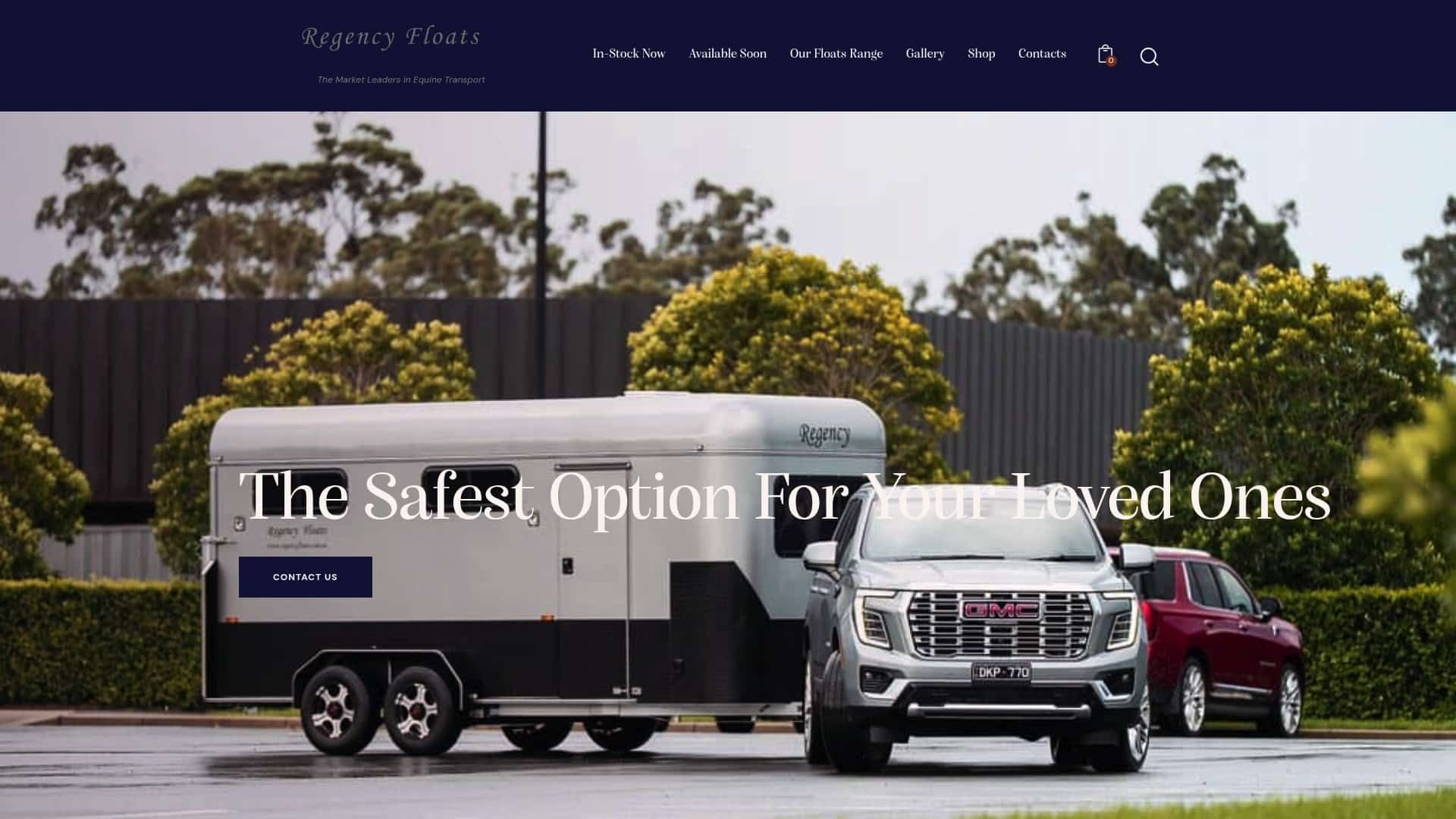
Every float comes with a ten‑year warranty on the flooring system and customisable fittings, so you’re not locked into a generic layout that ignores how you actually load water, tack and gear. If you’re comparing options, start with the guide to choosing the right float for you and your horse, or browse current stock and delivery options to see what’s ready to tow home.
Sources
- Vehicle Standards Bulletin 1 (Revision 6) — Trailers with an ATM of 4.5 tonnes or less
- Caravans — Transport for NSW
- Trailer and tow vehicle specifications — RACQ
FAQ
Can your ATM be higher than your towing capacity?
Yes, and this is one of the most common legal traps. Your tow vehicle’s rated towing capacity, set by the manufacturer, is the real ceiling regardless of what ATM the trailer is built to.
Are GVM and ATM the same thing?
No. GVM is the tow vehicle’s maximum loaded mass; ATM is the trailer’s maximum loaded mass, and they’re governed by separate compliance plates on separate vehicles.
What is ATM on a trailer, and how does it relate to GVM?
ATM is the trailer’s maximum loaded mass including its tow‑ball down‑weight, while GVM is the tow vehicle’s maximum loaded mass, and that same tow‑ball weight counts against GVM once hitched.
What is the ATM of a trailer, exactly?
It’s a manufacturer‑specified rating stamped on the trailer’s compliance or VIN plate, calculated from chassis, axle and tyre limits rather than measured directly, per VSB1.
How do I check whether my float or caravan is within its ATM?
Weigh it fully loaded and uncoupled on a weighbridge, with water tanks and gas bottles full, then compare the reading against the figure on the compliance plate.