Australian horse float manufacturers specialize in building safe, durable, and fully customizable horse transport trailers designed for the specific demands of Australian roads, climates, and equestrian lifestyles. The industry term is “horse float” in Australia, equivalent to a horse trailer in North American usage. Regencyfloats, with over 40 years of experience, stands as Australia’s leading manufacturer, combining European luxury design with advanced safety technology and a ten-year flooring warranty. Choosing the right float builder means understanding what separates a well-engineered unit from one that looks good but fails on the road.
1. Top criteria for evaluating Australian horse float manufacturers
The best horse float builders Australia offers share a common foundation: non-negotiable safety systems, proven construction methods, and genuine customization capability. Evaluating these three pillars before you commit to a purchase protects both your horses and your investment.
Safety technology
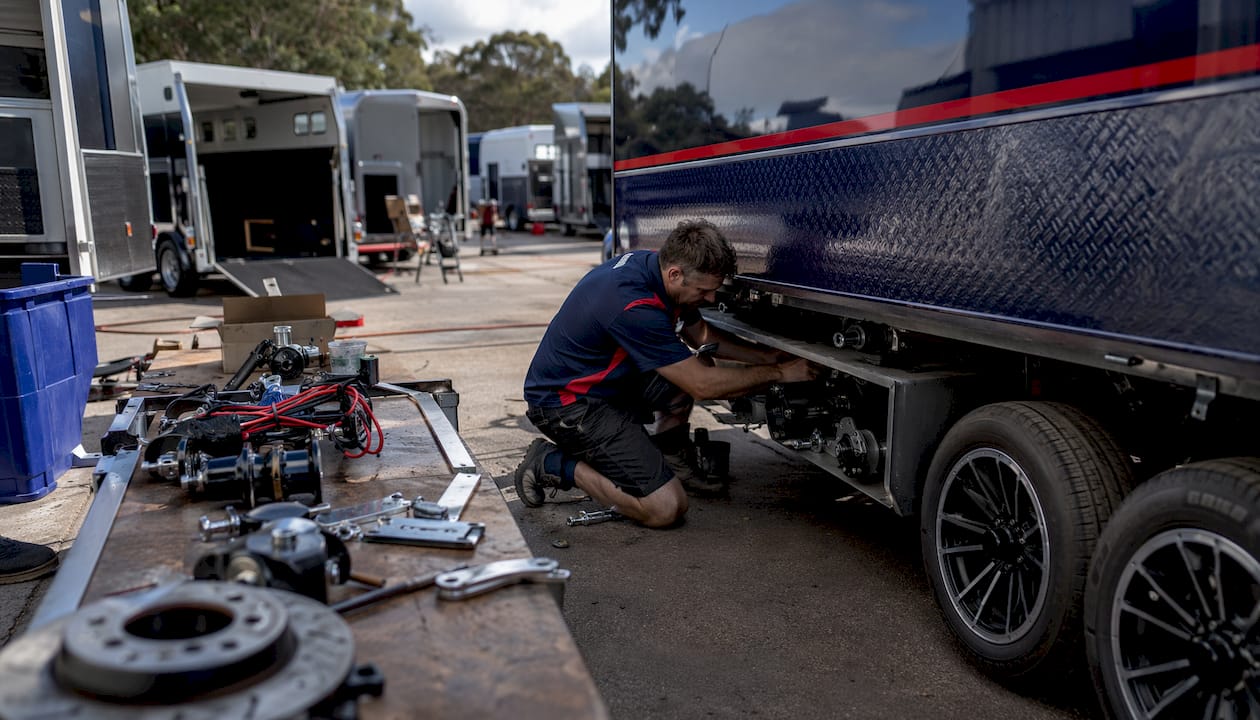
4-wheel electric brakes are the baseline safety requirement for any float carrying horses on Australian roads. A loaded float can weigh well over two tonnes, and standard trailer brakes cannot handle that mass reliably. A breakaway system, which automatically applies the brakes if the float separates from the tow vehicle, is equally non-negotiable.
Chassis construction
Hot-dip galvanizing is the industry gold standard for steel chassis rust protection in Australia’s harsh coastal and tropical climates. Galvanized frames outperform painted or powder-coated alternatives over a five- to ten-year period. A galvanized chassis adds years of reliable service life with minimal maintenance.
Flooring durability
10–12mm rubber matting on floors and ramps prevents slipping and protects the metal surface underneath. Thinner matting works for walls, but the floor and ramp carry the full weight of loading and unloading. Flooring failure is one of the most common and preventable causes of horse injury during transport.
Weight management
A typical two-horse angle load float with living quarters carries a GVM of 3,500kg and a tare weight around 2,150kg. Exceeding 3,500kg GVM triggers higher licensing and towing requirements under Australian vehicle regulations. Manufacturers that use FRP roofs and aluminum components keep the tare weight low, preserving usable payload for horses, gear, and water.
Customization capability
The best horse float suppliers offer genuine build-to-order options, not just color choices. Look for adjustable bay dividers, integrated water tanks, and premium interior linings as standard offerings, not expensive add-ons.
Pro Tip: Ask every manufacturer for the actual tare weight certificate, not an estimated figure. Tare weight directly determines how much horse and gear you can legally carry.
2. What sets leading horse float builders apart
Australia’s horse float manufacturing sector ranges from small regional workshops to large-scale operations producing hundreds of units per year. The strongest builders share specific traits that go beyond marketing claims.
Years in the industry
Longevity matters in manufacturing. A builder with decades of production history has refined its designs through real-world feedback from equestrians across every Australian state. Regencyfloats’ 40-plus years of manufacturing experience reflects that kind of accumulated knowledge. Newer entrants may offer attractive pricing but lack the design refinement that comes from long-term field testing.
Design focus and float types
Leading manufacturers offer multiple float configurations to match different transport needs:
- Angle load floats: Horses stand at an angle to the direction of travel. Many horses load more willingly into angle load designs, and the layout suits floats with living quarters.
- Straight load floats: Horses face forward or backward in individual stalls. Straight load designs are common for two-horse configurations and tend to be more compact.
- Living quarters floats: These combine horse transport with a self-contained living area for the driver, including kitchens, beds, and bathroom facilities. They suit long-distance competition travel.
- Three-horse floats: Larger configurations for trainers and professional competitors who move multiple horses at once. The Regencyfloats 3-horse float range covers this segment with in-stock options and Australia-wide delivery.
Premium materials and safety innovations
Integrating advanced braking systems and corrosion-resistant chassis technology is what separates premium Australian float trailers from budget alternatives. Manufacturers that invest in these systems at the design stage produce floats that hold their value and perform reliably over a decade or more. Regencyfloats backs its flooring systems with a ten-year warranty, a commitment that reflects genuine confidence in the build quality.
Equine safety standards
Australian equine safety standards prioritize secure dividers, adequate ventilation, and anti-slip flooring as core design requirements. The best manufacturers build to these standards as a baseline, not as optional extras. When you inspect a float, check that dividers are solid and adjustable, that roof vents are functional, and that the floor surface provides real grip under wet conditions.
3. Understanding customization options for horse floats in Australia
Customization in a quality horse float goes well beyond paint color. The right configuration directly affects horse welfare, driver comfort, and the float’s long-term practicality.
Here are the customization categories worth prioritizing:
- Separate living and horse areas. A dedicated living quarter keeps the driver’s gear, food, and sleeping space completely separate from the horse area. This matters on multi-day trips where cross-contamination of hay dust and personal belongings creates real problems.
- Gas struts on rug racks. Gas struts and marine carpet linings are practical features that reduce wear on expensive rugs and make daily loading and unloading faster. These are not luxury extras. They extend the life of your gear.
- Adjustable bay dividers. Fixed dividers suit one horse size. Adjustable dividers let you configure the float for different horses, from a compact pony to a 17-hand warmblood. Custom options like adjustable dividers and integrated water tanks are standard offerings from the best manufacturers.
- Integrated water tanks. A built-in water supply is critical for long-distance travel. Horses need regular water access, and carrying external containers is inefficient and adds unbalanced weight.
- Enhanced ventilation. Roof vents, side windows, and adjustable airflow panels keep horses cool during summer transport across Queensland, Western Australia, and the Northern Territory. Poor ventilation causes heat stress, which is a serious welfare risk.
- Interior linings. Marine carpet and padded wall linings protect horses from injury during sudden stops or turns. They also reduce noise inside the float, which lowers horse stress during travel.
Pro Tip: Customization affects weight distribution. Always ask your manufacturer to calculate the loaded weight after adding your chosen options. A heavily customized float can push close to the 3,500kg GVM limit before you add a single horse.
4. Selecting the right float for your transport needs
Choosing between float types comes down to your horses, your tow vehicle, and the distances you travel. The table below outlines the key differences to guide your decision.
| Float type | Best for | Key advantage | Key limitation |
|---|---|---|---|
| Angle load (2-horse) | Competition riders, weekend travel | Easier loading, suits living quarters | Wider footprint |
| Straight load (2-horse) | Casual riders, shorter trips | Compact, lower tare weight | Less horse movement freedom |
| 3-horse angle load | Trainers, multi-horse transport | High capacity, configurable | Requires larger tow vehicle |
| Living quarters float | Long-distance, multi-day events | Self-contained travel | Higher GVM, more licensing |
Angle load vs. straight load
Angle load designs give horses more lateral movement, which many horses find less stressful. Straight load designs are narrower and easier to maneuver in tight spaces, which suits urban equestrians with limited parking. Neither design is universally better. The right choice depends on your horses’ loading behavior and your most common travel routes.
Tow vehicle matching
Your tow vehicle’s rated towing capacity must exceed the float’s GVM with a safety margin. A 3,500kg GVM float requires a tow vehicle rated for at least that weight, and ideally more. Check your vehicle’s towing capacity in the owner’s manual, not on a forum. Mismatched towing setups are a leading cause of float accidents on Australian highways.
Regional conditions
Equestrians in Queensland and Western Australia face extreme summer heat, making ventilation a top priority. Tasmania and Victoria riders deal with wet conditions, making anti-slip flooring and sealed chassis protection more critical. Regencyfloats delivers horse floats across Australia, with regional pages for Brisbane and Queensland, Perth and Western Australia, and Tasmania that reflect local conditions and requirements.
Key takeaways
The most reliable Australian horse float manufacturers combine hot-dip galvanized chassis, 4-wheel electric brakes, and genuine customization to deliver floats that protect horses and hold their value over a decade.
| Point | Details |
|---|---|
| Safety is non-negotiable | Require 4-wheel electric brakes and a breakaway system on every float you consider. |
| Galvanized chassis lasts longer | Hot-dip galvanizing outperforms painted frames in Australian conditions over five to ten years. |
| Weight management matters | Keep tare weight low with FRP and aluminum components to stay under the 3,500kg GVM threshold. |
| Customization improves welfare | Adjustable dividers, ventilation, and rubber matting protect horses and reduce stress during transport. |
| Match float type to your needs | Angle load suits competition riders; straight load suits casual riders with compact tow vehicles. |
My take on choosing the right float manufacturer
After spending years around the Australian equestrian industry, I’ve noticed one pattern that separates buyers who are happy with their floats from those who regret their purchase. The buyers who regret it almost always prioritized price or aesthetics over construction fundamentals.
A float that looks stunning in a showroom but has a painted steel chassis will cost you far more in repairs within five years than the premium you would have paid for a galvanized frame upfront. The same logic applies to braking systems. A float without proper 4-wheel electric brakes is not a bargain at any price. It is a liability.
The other thing I’d push back on is the idea that customization is a luxury. Adjustable dividers, proper ventilation, and quality flooring are welfare decisions, not lifestyle upgrades. A horse that arrives calm and injury-free at a competition performs better. That has a direct financial value for any serious competitor.
My honest recommendation: test drive before you buy, ask for the tare weight certificate, and inspect the chassis welds in person. A manufacturer confident in their build quality will welcome that scrutiny. One that deflects those questions is telling you something important.
— Clint
Regencyfloats: quality horse floats for Australian equestrians
Regencyfloats has built its reputation over 40 years by putting safety and construction quality ahead of everything else. Every float combines European luxury design with advanced safety technology, including state-of-the-art flooring systems backed by a ten-year warranty.
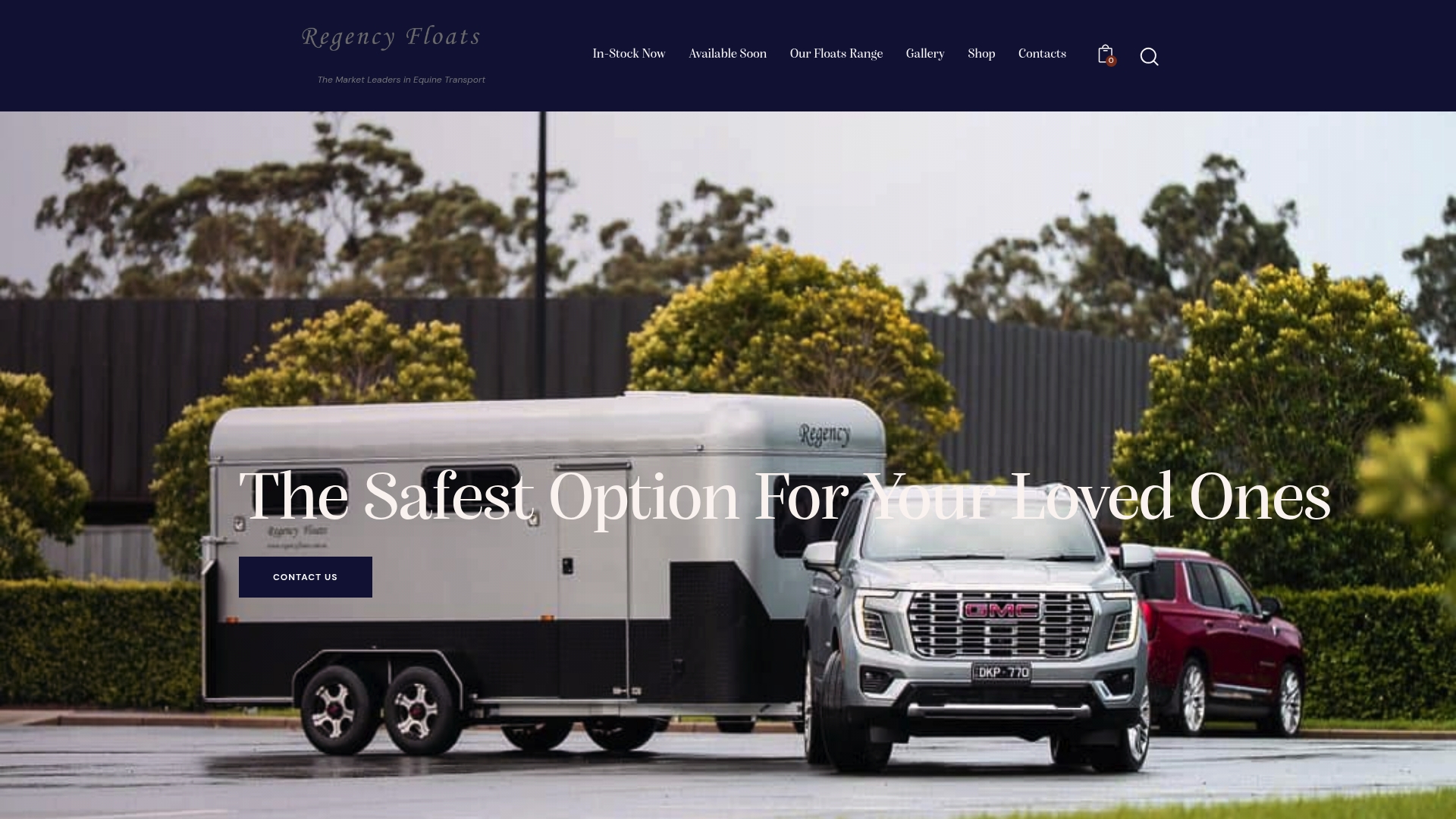
Whether you need a two-horse float for weekend competition or a fully configured living quarters model for the show circuit, Regencyfloats offers in-stock floats with Australia-wide delivery. Regional options are available for equestrians in Adelaide and South Australia, with expert consultation available to help you match the right configuration to your horses, tow vehicle, and travel needs. Current in-stock specials are listed on the website with delivery available nationwide.
FAQ
What are the most important safety features in a horse float?
4-wheel electric brakes and a breakaway system are the two non-negotiable safety features for any Australian horse float. Anti-slip rubber flooring of at least 10–12mm thickness on floors and ramps is equally critical for preventing injury during loading.
What is the difference between angle load and straight load horse floats?
Angle load floats position horses at an angle to the direction of travel, which many horses find less stressful and which suits living quarters configurations. Straight load floats are more compact and easier to maneuver in tight spaces.
Why does GVM matter when buying a horse float?
A GVM above 3,500kg triggers higher licensing and towing requirements under Australian vehicle regulations. Manufacturers use lightweight materials like FRP and aluminum to keep tare weight low and preserve usable payload for horses and gear.
How does hot-dip galvanizing protect a horse float chassis?
Hot-dip galvanizing bonds a zinc coating to the steel at a molecular level, providing rust protection that outlasts painted or powder-coated finishes by years in Australia’s coastal and tropical conditions.
Can I customize a horse float after purchase?
Most manufacturers offer post-purchase modifications, but factory-built customization produces better weight distribution and structural integrity. Specifying adjustable dividers, water tanks, and ventilation options at the build stage delivers a safer and more practical result.