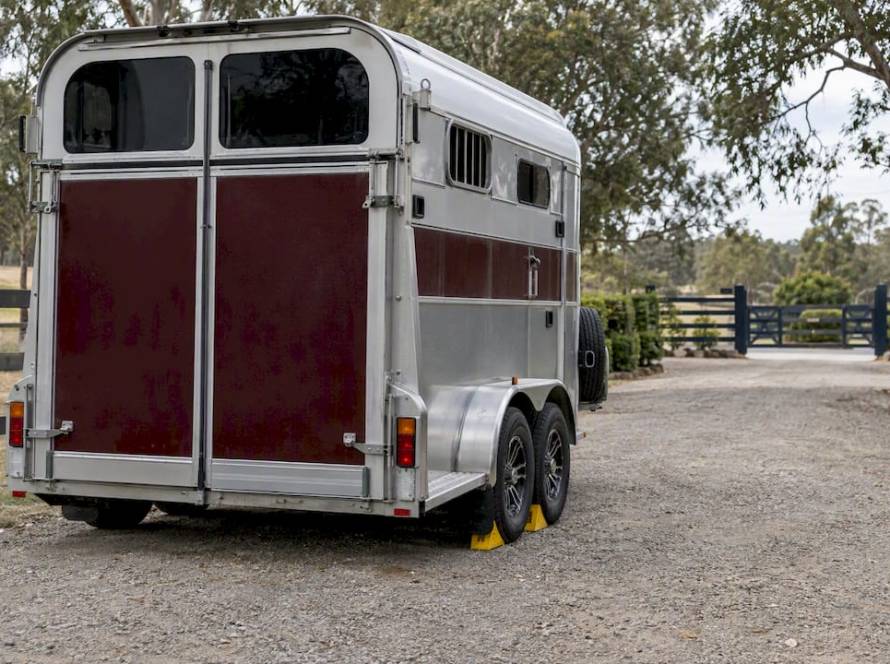
Which camera system actually works inside a moving horse float?

For horse float monitoring, wired cameras are the clear frontrunner. They deliver near-perfect stream reliability, outperforming wireless which has somewhat lower and less consistent reliability, run continuously on Power over Ethernet without battery swaps, and stay immune to the signal interference that plagues wireless systems inside metal-enclosed trailers. Wireless cameras install faster and cost less upfront, but they make real compromises in exactly the conditions horse transport creates.
The core trade-offs at a glance:
- Reliability: Wired cameras provide uninterrupted 24/7 recording; wireless cameras depend on Wi-Fi and battery charge, risking feed loss at critical moments.
- Power: PoE wired systems draw constant power from a single cable; wireless cameras need battery replacement every 3–6 months or a nearby outlet.
- Transport environment: Metal float bodies act as Faraday cages, severely weakening Wi-Fi signals for wireless cameras during transit.
- Installation: A 4-camera wired system takes 4–8 hours professionally installed; wireless goes up in 30–60 minutes.
- Resolution: Wired systems support up to 12MP or higher; wireless tops out at 4K and can degrade under bandwidth congestion.
Table of Contents
- How wired and wireless camera systems differ technically
- Why the horse float environment is uniquely hostile to wireless cameras
- What professionals recommend for horse float camera installation
- How Regencyfloats integrates safety camera technology
- Camera integration examples in horse floats
- What wired and wireless cameras actually cost
- Security and privacy considerations
- Battery life and backup power for wireless cameras
- Scaling your camera system across multiple horses
- Key Takeaways
How wired and wireless camera systems differ technically
Power over Ethernet delivers both power and data through a single cable, meaning a wired camera never goes dark mid-journey. That matters when your horse is stressed, shifting weight, or showing early signs of distress at 100 km/h on the highway.
Wireless cameras split into two categories: plug-in Wi-Fi models that still need an outlet, and fully battery-powered units. The battery-powered type conserves charge by recording only on motion triggers, which means a continuous event like a horse leaning hard against a partition wall may not be captured in full.
Latency is the hidden danger. Wireless systems introduce 2 or more seconds of delay in live feeds. Wired PoE cameras deliver near-instant video. In a transport emergency, two seconds is not a rounding error.
- Recording duration: Wired cameras record continuously for the life of the system; wireless battery cameras record in motion-triggered clips.
- Operational lifespan: Wired systems run 5+ years without battery changes; wireless require replacements every 3–6 months.
- Resolution stability: Wired cameras maintain full resolution regardless of network load; wireless resolution can drop under congestion.
- Wi-Fi dependency: Wired cameras operate as standalone systems; wireless cameras fail when the network drops.
Why the horse float environment is uniquely hostile to wireless cameras
Metal horse floats create a near-perfect Faraday cage. Wi-Fi signals degrade severely inside steel-framed enclosures, regardless of what the camera’s spec sheet claims about range. A wireless camera that performs well in a backyard loses much of its signal the moment the float doors close.
Vibration compounds the problem. Constant road movement stresses battery connections, loosens mounts, and causes signal dropouts that a stationary home installation never experiences. Vehicle electronics, including the tow vehicle’s own systems, add radio frequency interference that further disrupts wireless feeds.
- Faraday cage effect: Steel float bodies block Wi-Fi signals, causing feed loss during transit.
- Vibration: Road vibration degrades battery contacts and wireless signal stability over time.
- RF interference: Tow vehicle electronics create additional signal noise for wireless systems.
- Weather exposure: Australian transport conditions include extreme heat, dust, and humidity. Camera housings need IP66 or higher weather resistance ratings for outdoor-facing positions.
- Remote locations: Wi-Fi dependency is a fatal flaw when traveling through rural Australia where cellular and network coverage is sparse.
Wired cameras sidestep every one of these issues. No Wi-Fi needed, no batteries to drain, no signal to lose.
What professionals recommend for horse float camera installation

Industry professionals consistently favor wired PoE systems for critical transport monitoring. Over 85% of new professional commercial installations in 2026 use wired IP/PoE cameras, and the reasoning applies directly to horse floats: you need an unbroken timeline, not 30-second motion clips.
Wired cameras store footage locally on NVRs, keeping high-resolution video intact and admissible as evidence if an incident occurs during transport. Cloud-dependent wireless footage is compressed and can disappear entirely if connectivity fails.
- Professional installation handles cable routing through the float’s structure, centralized power management, and integration with the vehicle’s 12V system.
- Hybrid setups use wired cameras as the primary backbone, with wireless units added only where running cable is genuinely impractical.
- NVR local storage protects footage integrity without relying on internet connectivity or cloud subscriptions.
- Maintenance advantage: Once installed, a wired system needs virtually no attention for years. Wireless systems require ongoing battery management, firmware updates, and Wi-Fi troubleshooting.
How Regencyfloats integrates safety camera technology
With over 40 years of horse float manufacturing experience, Regencyfloats builds camera integration into the float’s design rather than treating it as an afterthought. The float’s structure, wiring channels, and power systems are planned from the ground up to support reliable monitoring.
Regencyfloats’ approach prioritizes wired camera reliability for primary coverage, with selective wireless flexibility where the float layout makes cabling impractical. Their wireless camera options are specified for the horse float environment, not repurposed home security products.
- 40+ years of manufacturing expertise informing camera placement for optimal horse visibility.
- European luxury design with structured wiring channels that keep installations clean and protected.
- Customizable floor plans that accommodate multi-camera wired setups across different float configurations, including the 3-horse float range.
- Accessories supporting camera power, including 12V power supply options compatible with PoE systems.
- 2026 industry standards applied to weather resistance, resolution, and recording continuity requirements.
Camera integration examples in horse floats
A typical Regencyfloats wired setup places one camera at the front of the horse bay facing rearward, capturing all horses simultaneously, with a second camera covering the rear ramp area. Both feed to an NVR mounted in the tack compartment, accessible via the cab monitor.
For larger configurations, a 3-horse float may run three cameras: one per bay, each on a dedicated PoE cable. The driver sees all feeds on a split screen without any Wi-Fi dependency. A hybrid variation adds a single wireless camera to the external rear for reversing assistance, where brief signal interruptions carry lower risk than interior monitoring.
What wired and wireless cameras actually cost
A 4-camera wireless system runs roughly a few hundred Australian dollars for DIY installation, while an equivalent wired PoE system is significantly more costly upfront due to professional installation and hardware complexity. The upfront gap is real.
Over five years, the math shifts. Wireless batteries cost AU$50–$150 per replacement cycle, multiplied across cameras and replacement frequency. Cloud storage subscriptions add AU$5–$20 per camera per month. Wired systems carry no recurring fees once installed and require minimal maintenance.
Security and privacy considerations
Wired cameras transmit data over a closed cable network, making them significantly harder to intercept or hack than Wi-Fi-connected devices. Wireless cameras, particularly those using cloud storage, expose footage to network vulnerabilities if passwords are weak or firmware is outdated.
For horse float monitoring, local NVR storage on a wired system keeps footage entirely within your control. No third-party cloud server holds your transport records.
Battery life and backup power for wireless cameras
Wireless camera batteries typically last 2–6 months per charge, depending on recording frequency and resolution settings. High-traffic environments with frequent motion triggers drain batteries faster. Solar panel add-ons extend life but add complexity and cost.
For backup power on wired systems, a single UPS unit in the tack compartment keeps every PoE camera running through a power interruption, something no wireless plug-in camera can match.
Scaling your camera system across multiple horses
Wired PoE systems scale cleanly. Adding a camera means running a cable to the NVR or PoE switch, with no impact on existing feeds. A managed PoE switch handles 8, 16, or more cameras on a single network without performance degradation.
Wireless systems hit a ceiling fast. Most consumer Wi-Fi routers handle 8–12 devices reliably before performance drops. A multi-camera wireless float setup risks dropped frames and frozen feeds precisely when you need them most.
Regencyfloats’ horse floats available nationwide are designed with scalability in mind, so adding cameras as your needs grow is a planned option, not a retrofit headache.

Key Takeaways
For horse float monitoring, wired PoE cameras deliver the reliability, resolution, and continuous recording that wireless systems cannot match inside metal-enclosed, moving trailers.
| Point | Details |
|---|---|
| Reliability gap is significant | Wired cameras reach 99.9% stream reliability; wireless systems deliver 95–98% with dropout risk. |
| Wireless latency creates risk | Wireless feeds lag by 2 or more seconds; wired PoE provides near-instant live video for transport safety. |
| Float bodies block Wi-Fi | Metal horse floats act as Faraday cages, severely degrading wireless camera signals during transit. |
| Battery life adds maintenance | Wireless camera batteries typically last 2–6 months per charge, depending on usage; wired systems run 5+ years without battery changes. |
| Wired scales without limits | PoE systems handle 16+ cameras cleanly; wireless networks degrade beyond 8–12 connected devices. |