A basic 2-horse float starts in the mid-twenty-thousand dollar range, mid-range models with better suspension and flooring cost more, and premium or gooseneck floats with living quarters can be significantly more expensive, sometimes reaching well into six figures for a full luxury camper build. If you’re buying once and keeping it a decade, a premium aluminium float with a strong flooring warranty almost always works out cheaper per year than a cheap float you replace or repair twice.
- Entry level (2-horse, steel or basic aluminium): starts around the mid-twenty-thousand dollar range
- Mid-range (2-3 horse, upgraded suspension and flooring): typically higher than entry level with variations
- Premium and gooseneck/camper floats: at the higher end of the market, including luxury campers with full fittings
Whatever number you land on, add insurance, registration, and annual servicing to your budget before you sign anything.
Pro Tip: Don’t just compare sticker prices side by side. A $28,000 float with a two-year flooring warranty and a $34,000 float with a ten-year warranty aren’t really the “same” purchase once you price in the floor replacement you’ll eventually need.
Key Takeaways
Buying a premium aluminium float with a long flooring warranty costs more upfront but consistently reduces total ownership cost across Australian coastal and inland conditions alike.
| Point | Details |
|---|---|
| 2026 price bands | Entry floats start near $25,000, mid-range sits at $32,000 to $50,000, premium and camper builds exceed $60,000. |
| Materials drive cost | Aluminium resists corrosion better than steel, lowering long-term maintenance in wet or coastal regions. |
| Used floats need inspection | Check bearings, brakes, flooring, and service history before assuming a used float is genuine savings. |
| Budget beyond the purchase | Add finance, insurance, registration, servicing, storage, and eventual upgrades to your real cost. |
| Regency Floats | Over 40 years of Australian manufacturing, full aluminium builds, backed by a ten-year flooring warranty. |
Table of Contents
- Horse float prices 2026: what you’ll pay by type and configuration
- What actually drives the price of a horse float?
- Is a used horse float actually cheaper once you factor in repairs?
- What will a horse float actually cost you to own, not just buy?
- Why ventilation and routine checks matter more than most buyers realise
- How do you match a float to your horse and tow vehicle?
- Why Regency Floats delivers better long-term value
- How long does buying a horse float actually take?
- What does a horse float really cost over its lifetime?
- Ready to find the right float for your budget and horse?
- Sources
- FAQ
Horse float prices 2026: what you’ll pay by type and configuration
Prices vary more by configuration than most first-time buyers expect. A basic tandem-axle 2-horse steel float with painted panels and standard rubber matting is the cheapest entry point, and dealer stock listings commonly show these starting from around $25,000 in 2026. Step up to aluminium panels, independent suspension, and better flooring, and you’re in the $32,000 to $50,000 bracket for a 2-3 horse float.

Three-horse and angle-load configurations generally sit above straight-load 2-horse floats because they need a longer chassis and more axle capacity. Gooseneck floats, which hitch over the tow vehicle’s rear axle rather than behind the bumper, add cost for the coupling hardware and chassis reinforcement but tow more stably at highway speed, which matters if you’re regularly on the Hume or Bruce Highway with a loaded float behind you.

Luxury camper floats are where the range really opens up. Once you’re paying for a fitted kitchenette, shower, air conditioning, and sleeping quarters on top of the horse bay, $60,000 to $100,000+ is normal, and some fully custom builds go well past that.
What you’re actually paying for at each band:
- Entry: basic suspension, rubber matting over ply or aluminium, minimal insulation, standard tie rails
- Mid-range: independent suspension, upgraded flooring systems, internal padding, better ventilation design
- Premium/luxury: full aluminium construction, warrantied flooring, custom fit-outs, living quarters, advanced safety features like breakaway systems and reversing cameras
Regional dealer stock and display yards across Queensland, Western Australia, and South Australia show similar spreads, so the bands above hold up whether you’re shopping in Perth, Adelaide, or Brisbane.
What actually drives the price of a horse float?
Materials are the biggest lever. Aluminium costs more up front than steel but resists the corrosion that eats steel floats parked near the coast or used through wet Australian winters, which is why most premium builds, including our best horse floats in Australia range, are aluminium throughout.
Suspension is the next big cost driver. Basic leaf-spring setups are cheaper but transmit more road shock to the horse; independent or air-assisted suspension costs more but noticeably reduces the jolting that makes horses plant their feet and brace on a long trip.
Flooring and ventilation are where corners get cut, and where they shouldn’t be. Modern honeycomb fibreglass or aluminium plank flooring with thick rubber matting resists rot far better than timber, which is a genuine safety issue once a floor starts to soften underneath a moving horse.
- Aluminium chassis and panels: higher cost, lower long-term corrosion risk
- Independent suspension: higher cost, better ride comfort over distance
- Warrantied synthetic flooring: higher upfront cost, lower lifetime repair cost
- Ventilation design: adds engineering cost, directly affects horse welfare
Pro Tip: Ask any seller specifically what the flooring warranty covers and for how long. A ten-year warranty on the flooring system tells you more about build confidence than almost any other spec sheet line.
Is a used horse float actually cheaper once you factor in repairs?
Sometimes, but not as often as the price tag suggests. A lightly used 2-3 year old float typically sells for 15% to 25% below its new price, but that gap narrows fast once you account for bearing repacks, brake servicing, and any rust in the frame joints that transport repair specialists flag as common failure points on older units.
Before you hand over a deposit on any used float, work through this:
- Check the service history. No records is a red flag, not a negotiating point.
- Inspect the bearings and brakes. Grinding, excessive play, or uneven wear means an immediate spend.
- Get under the float and check the chassis and floor joints for rust. This is where hidden repair bills hide.
- Ask if it’s ever been in an accident. Frame straightening after a rollover or reversing incident is a common, costly repair.
- Compare the asking price against a new equivalent before assuming you’re saving money.
Floats built from quality aluminium and finished with a real flooring warranty tend to hold resale value better than budget steel builds, simply because buyers trust them more at resale time.
What will a horse float actually cost you to own, not just buy?
Most buyers finance a float rather than paying cash, and asset finance secured against the float itself is the standard approach in Australia. Specialist lenders typically offer terms from three to seven years, with longer terms lowering your monthly repayment but increasing the total interest paid.
Beyond repayments, budget for:
- Insurance: varies by float value and use, and is worth reading up on before you buy — our horse float insurance guide breaks down what’s typically covered
- Registration: set by your state transport authority based on float weight and configuration
- Annual servicing: bearing repacks, brake adjustment, and flooring checks are recurring costs, not one-offs
- Early-exit fees: always check before signing a finance contract, since comparing lender panels rather than approaching one bank often turns up meaningfully better rates
A float that looks cheaper on the showroom floor can cost more over five years once financing and servicing are added in.
Why ventilation and routine checks matter more than most buyers realise
Airflow inside a float isn’t a comfort feature, it’s a safety one. Heat, humidity, and ammonia build up fast in an enclosed space, and horses that can’t get enough fresh air are at real risk of heat stress and respiratory irritation on longer trips.
A 2-horse float needs a complete change of air roughly every seven minutes to manage heat, humidity, and ammonia buildup, according to Pony Club Australia’s guidance on transport welfare. Poor ventilation design increases the risk of heat stress and respiratory problems in transit.
That seven-minute figure is worth remembering because it explains why vent placement and airflow design cost more to engineer properly, and why cheaper floats sometimes skimp on it. Pair good ventilation with a maintenance fund for the mechanical basics: brakes, bearings, and floor integrity checked at least annually, more often if you’re covering serious distance.
How do you match a float to your horse and tow vehicle?
Getting the dimensions wrong is one of the most common, and most expensive, mistakes buyers make. Work through this before you inspect anything:
- Measure your horse’s height at the withers, and for horses over 15hh, look for an interior height around 2.23 metres to avoid head strikes and travel stress, a benchmark industry guidance points to repeatedly.
- Check bay width against your horse’s breed and build. A warmblood needs more shoulder room than a pony.
- Calculate total loaded weight, adding the horses, tack, water, and feed, not just the float’s tare weight, and confirm it against your tow vehicle’s rated Aggregate Trailer Mass.
- Decide your suspension and flooring priority based on how often and how far you’ll actually travel; occasional local trips need less than regular interstate hauls.
- Ask any seller or finance provider directly: what’s the flooring warranty, what’s included in the asking price, and what’s the total repayment over the finance term?
Our horse float size guide walks through the exact measurements to take before you commit to a model.
Pro Tip: Bring a tape measure and your horse’s actual weight (not a guess) to every inspection. Sellers respect a buyer who checks payload math on the spot.
Why Regency Floats delivers better long-term value
Over 40 years building floats for Australian conditions has taught us where corners get cut and what it costs owners later. Every Regency float uses full aluminium construction, backed by a ten-year flooring warranty, because flooring failure is one of the most common and preventable safety risks on the road.
- Full aluminium panels and chassis, built to resist coastal corrosion
- Ten-year warranty on flooring systems
- Customisable fit-outs and colours to suit your horses and travel style
- Safety-first design informed by decades of Australian road and climate conditions
That build quality holds resale value better than budget steel floats, because buyers at resale time are checking for exactly the corrosion and flooring issues our construction is designed to avoid.
| Point | Details |
|---|---|
| Build material matters | Aluminium costs more upfront but resists corrosion far better than steel in coastal or wet regions |
| Warranty signals confidence | A ten-year flooring warranty reflects genuine build quality, not just a sales line |
| Regency Floats | Over 40 years building Australian floats, aluminium construction throughout, backed by a ten-year flooring warranty |
How long does buying a horse float actually take?
Budget four to eight weeks from deciding to buy to driving away, longer if you’re ordering a custom build. Rushing this timeline is where buyers end up with the wrong dimensions or a finance deal they didn’t shop around for.
Week one: work out your budget and price band, measure your horse and check your tow vehicle’s ATM rating, and start shortlisting models in your price range.
Week two: get finance pre-approval sorted if you’re borrowing, since knowing your approved amount and rate upfront stops you falling for a float outside your real budget. Compare a few lenders here, since asset finance panels that pit multiple lenders against each other often land better rates than a single bank approach.
Weeks three and four: inspect floats in person. Photos hide rust, floor softness, and bearing wear, so this step isn’t optional even if you’re buying interstate and need to fly or drive to view it.
Week five onward: finalise the purchase, arrange insurance before you take delivery (not after), and register the float with your state transport authority. Custom or luxury camper builds add four to twelve weeks of manufacturing time on top of this, so factor that in if you want a float ready for a specific competition season or breeding schedule.
Don’t skip the insurance step between purchase and delivery. A float sitting on a truck or in a yard without cover is a real gap, not a formality.
What does a horse float really cost over its lifetime?
Depreciation is the biggest hidden cost: a float loses the bulk of its value in the first three to five years, then flattens out, which is exactly why quality construction and a strong warranty matter so much at resale time.
Storage is easy to overlook and genuinely adds up. If you don’t have space at home, secure storage yards typically charge ongoing fees, and that’s before you factor in the cost of driving to and from wherever it’s parked every time you need it.
Upgrades are the other sneaky line item. Owners commonly add reversing cameras, upgraded tie rails, extra padding, or a small tack locker within the first couple of years, and none of that shows up on the original price tag.
Add it up across a decade: purchase price, finance interest, insurance, registration, annual servicing, occasional bearing and brake work, storage, and at least one or two upgrades. A float bought cheap and patched repeatedly across ten years frequently costs more in total than a well-built float bought once. That’s the real argument for spending more upfront on materials and warranty coverage rather than chasing the lowest sticker price in the yard.
Ready to find the right float for your budget and horse?
If you’ve been working through price bands and specification checklists, the next practical step is looking at real models against your actual numbers, not just averages. Regencyfloats builds every float in full aluminium with a ten-year flooring warranty as standard, which means the ownership costs you’ve just budgeted for (corrosion repairs, floor replacement, resale value loss) are exactly what our construction is designed to minimise.
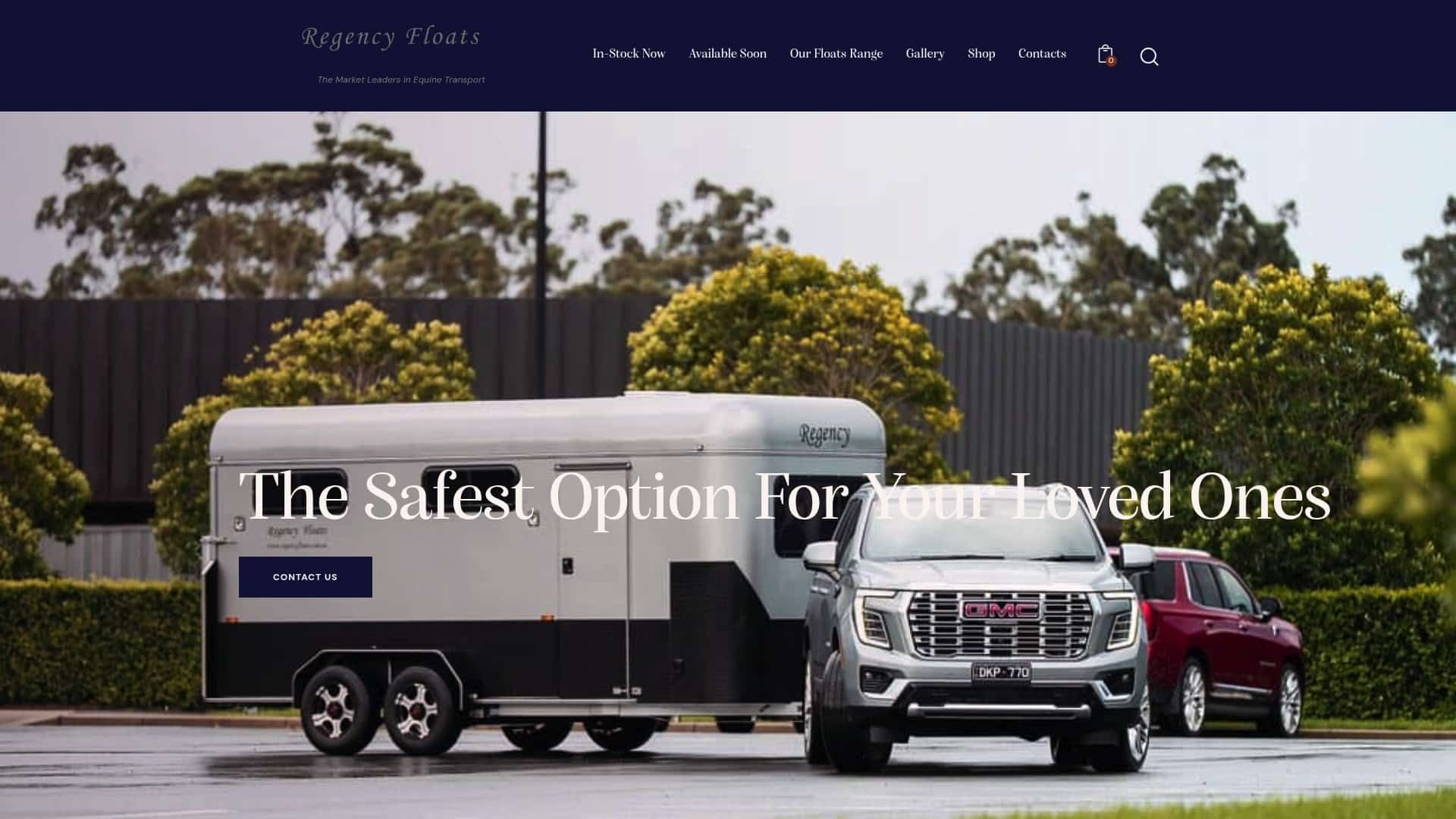
Whether you need a straightforward 2-horse float for weekend trail rides or a fully fitted gooseneck camper for a competition season, our range covers straight load, angle load, warmblood, and custom builds. Browse horse floats for sale to compare current stock against the price bands and specifications covered in this guide, and if you’re weighing up towing setups, our breakdown of gooseneck versus bumper pull options is worth a read before you decide. Get in touch for a quote tailored to your horse’s dimensions and your tow vehicle’s rating, and we’ll talk you through finance options alongside the build itself.
Sources
- Welfare on the road: keeping horses safe & comfortable in transit — Pony Club Australia
- What to consider when buying a horse trailer — Good Horsemanship
- How to choose the right new horse float & finance it — Horse Float Loans
- Horse float finance in Australia with competitive rates — iCREDIT
- Restoring horse float safety with post-accident repairs — Royans
FAQ
How much does a horse float usually cost in 2026?
Entry-level 2-horse floats start around $25,000, mid-range models with better suspension and flooring run $32,000 to $50,000, and premium or luxury camper floats exceed $60,000, sometimes past $100,000 for fully fitted builds.
What are the best horse floats in Australia?
The strongest options combine full aluminium construction, independent suspension, warrantied flooring, and proven ventilation design; Regencyfloats builds to this standard with a ten-year flooring warranty across its range.
What are the most common problems with horse floats?
Rust in chassis and floor joints, worn bearings and brakes from deferred servicing, and softened or rotted timber flooring are the most frequent issues, particularly on older or budget steel floats.

Is it cheaper to buy a used horse float than a new one?
How do I know what size horse float I need?
Measure your horse’s height at the withers and aim for interior height around 2.23 metres for horses over 15hh, check bay width for your breed, and confirm your tow vehicle’s ATM rating against the loaded float weight.