
For regular long-distance horse hauling or multi-horse loads, choose a gooseneck. For occasional local trips with one or two horses, a bumper pull is the smarter, more affordable starting point.
- Gooseneck wins on: stability at highway speeds, payload capacity (GVWR reaching high weight ratings), and suitability for living-quarters setups
- Bumper pull wins on: lower purchase cost, truck compatibility, and ease of use for lighter, shorter hauls
TL;DR: Match the hitch to the mission. If you haul frequently, carry three or more horses, or need living quarters, go gooseneck. If you haul occasionally with a half-ton truck and two horses or fewer, a bumper pull gets the job done for less money.
Table of Contents
- How gooseneck and bumper pull hitches actually differ
- Side-by-side strengths and weaknesses
- What your truck must have before you buy a trailer
- Backing and turning: what to expect on the road
- Safety checklist and U.S. regulatory basics
- Which hitch usually wins for hauling horses?
- Why trailer design often matters more than hitch type
- Typical costs: purchase, installation, and maintenance
- How to choose: a practical decision checklist
- Key Takeaways
- The case for putting build quality ahead of hitch type
- Regencyfloats: built for horses that travel far
- Useful sources and where to verify U.S. rules
How gooseneck and bumper pull hitches actually differ
The physical difference is straightforward: a bumper pull trailer connects to a ball hitch mounted in your truck’s rear receiver, behind the bumper. A gooseneck trailer connects to a ball mounted in the truck’s bed, directly over or near the rear axle.

That single change in hitch location changes everything downstream. Because the gooseneck’s coupling sits over the rear axle, the trailer’s weight is distributed across the truck’s frame rather than leveraged off the back end. The result is less yaw (side-to-side rotation), better tracking, and noticeably less sway at highway speeds. Bumper pull trailers pivot at the rear of the truck, which creates a longer lever arm and more opportunity for trailer sway, especially when the loaded trailer approaches or exceeds half the tow vehicle’s weight.
Tongue weight tells the story in numbers. Gooseneck pin weight is generally higher as a percentage of total trailer weight than bumper pull tongue weight, which contributes to stability. On capacity, bumper pulls tend to have lower GVWR limits compared to goosenecks, which usually have higher maximum GVWR.
Capacity at a glance: Gooseneck hitches generally have higher towing capacity compared to standard bumper pulls, often required for heavy multi-horse or living-quarters loads.
Side-by-side strengths and weaknesses
| Factor | Bumper Pull | Gooseneck |
|---|---|---|
| Stability / sway resistance | Good under 10,000 lbs; sway risk increases with load | Excellent at all weights; over-axle hitch eliminates most sway |
| Max GVWR (typical) | Lower typical GVWR range | Higher typical GVWR range |
| Maneuverability / turning | Wider arc; easier for beginners in open spaces | Tighter turning radius despite larger overall length |
| Truck bed access | Full bed available | Partially blocked by in-bed hitch hardware |
| Hitch setup cost | — | $300–$800 for professional hitch installation |
| Minimum truck class | Half-ton | 3/4-ton recommended; 1-ton diesel for heavy LQ loads |
| Price premium over base | Base price | Typically $800 more than comparable bumper pull |
| Best use cases | 1–2 horses, local/weekend hauling, campers, light cargo | 3+ horses, long-distance circuits, living quarters, heavy equipment |
Bumper pull pros:
- Works with half-ton trucks and even some SUVs, so no truck upgrade required
- Lower purchase price and zero hitch installation cost
- Easier to learn for first-time trailer owners
- Full truck bed remains available for hay, feed, and gear
Bumper pull cons:
- Sway risk increases significantly when trailer weight approaches tow-vehicle weight
- Lower GVWR ceiling limits how many horses or how much gear you can carry
- Longer lever arm at the rear means more stress on the hitch ball and receiver under heavy loads
Gooseneck pros:
- Superior stability at highway speeds, even in crosswinds
- Much higher payload capacity for multi-horse or LQ setups
- Tighter turning radius makes maneuvering a large trailer more manageable
- Ball is visible from the driver’s seat, so hitching up solo is straightforward
Gooseneck cons:
- Requires a pickup truck with an in-bed hitch; SUVs and crossovers are out
- In-bed hitch occupies bed space, reducing room for hay and equipment
- Higher upfront cost for both the trailer and the hitch installation
- Steeper learning curve for backing, especially early on
What your truck must have before you buy a trailer
Payload, GVWR, and GCWR are three different numbers, and confusing them is one of the most common mistakes new trailer buyers make. Payload is the weight your truck can carry in the cab and bed, including tongue or pin weight. GVWR (Gross Vehicle Weight Rating) is the maximum your truck can weigh fully loaded. GCWR (Gross Combined Weight Rating) is the maximum combined weight of truck plus trailer. Tongue or pin weight counts against your truck’s payload first, so a gooseneck with a 3,000-lb pin weight eats 3,000 lbs of your truck’s available payload before you add a single passenger or bag of feed.
For bumper pull trailers, a half-ton truck (Ford F-150, Ram 1500, Chevy Silverado 1500) handles most setups under 10,000 lbs GVWR comfortably. For goosenecks, a 3/4-ton truck is the practical minimum; large living-quarters goosenecks routinely require a 1-ton diesel dually to stay within GCWR and maintain safe braking performance.
Installing a gooseneck hitch means mounting a ball in the truck bed, typically through a frame-rail system that bolts to the truck’s frame. Professional installation runs $300–$800 depending on the truck and whether the manufacturer included a factory prep package. Some installations require drilling through the bed floor, which is worth knowing before you commit.
Also verify your truck’s front and rear axle ratings separately. A truck rated for 14,000 lbs GCWR with a weak rear axle can still be overloaded if the pin weight is too high, even when the combined weight looks fine on paper. Check the towing capacity and float weight relationship before finalizing any purchase.
Backing and turning: what to expect on the road
Goosenecks and bumper pulls behave very differently in reverse, and knowing why helps you adapt faster. A gooseneck pivots close to the truck’s center because the coupling is over the rear axle. That shorter effective pivot point means the trailer responds more quickly when you turn the wheel while backing. Once you’re used to it, you can place a large gooseneck trailer with surprising precision.

Bumper pulls pivot at the rear of the truck, which gives them a longer, slower response when reversing. Many drivers find this more intuitive at first because the trailer seems to follow more predictably in a straight line. The trade-off is that tight-space maneuvering, like backing into a narrow stall at a fairground, can actually be harder with a bumper pull because you have less control over where the trailer’s nose goes.
Five tips that apply to both hitch types:
- Use a spotter whenever you’re backing into an unfamiliar space. Even experienced drivers use them at busy events.
- Keep highway speed under 65 mph with a loaded trailer. Sway onset is speed-dependent, and slowing down is the fastest fix if you feel the trailer start to move.
- Check trailer tire pressure before every trip. Under-inflated tires are a leading contributor to blowouts and sway.
- Pre-check all lights and wiring at the connection point before pulling out of the driveway, not at the show grounds.
- Allow extra stopping distance. A loaded horse trailer can add 50–100% to your normal braking distance depending on weight and brake system.
Pro Tip: Find an empty parking lot and spend 30 minutes backing your trailer before you haul horses for the first time. Practice both straight reverses and angled entries. The muscle memory you build in 30 minutes of low-stakes practice is worth more than any written tip.
Safety checklist and U.S. regulatory basics
Safety with either hitch type starts with the same fundamentals: correct weight distribution, a functioning breakaway system, electric brakes on all axles (required when trailer GVWR exceeds 3,000 lbs in most states), and lighting that meets federal standards.
Pre-trip checklist:
- Confirm tongue or pin weight is within the truck’s payload rating
- Verify safety chains are crossed under the tongue and properly rated
- Test all trailer lights: brake, turn, running, and reverse
- Check that the breakaway battery is charged and the cable is attached to the truck
- Inspect tires for pressure, tread depth, and sidewall cracks
- Confirm all stall dividers and door latches are secure before loading horses
On the regulatory side, most private horse haulers in the U.S. operate well below the federal CDL threshold. Under federal FMCSA rules, a CDL is required when the combined GVWR of the tow vehicle and trailer exceeds 26,001 lbs, or when the trailer alone exceeds 10,001 lbs and the combination exceeds 26,001 lbs. State rules vary, so check your state’s DMV for any lower thresholds or additional endorsement requirements. New York’s driver license class descriptions are a useful model for understanding how states categorize towing combinations.
A trailer that is mechanically sound but improperly loaded is still a hazard. Weight distribution errors, not hitch type, are behind the majority of trailer sway incidents on U.S. highways.
Routine maintenance items that reduce long-term risk: repack wheel bearings annually or every 12,000 miles, inspect brake pads and drums each season, and check suspension components (leaf springs, torsion arms, or air bags) for wear or cracking before long hauls.
Which hitch usually wins for hauling horses?
The answer shifts depending on how many horses you move and how far you go.
- Single-horse, local trail rider: A bumper pull is the right call. Lower cost, compatible with a half-ton truck, and easy to manage on short trips. A well-built two-horse bumper pull with torsion axles handles this mission without overcomplicating the setup.
- Two-horse weekend competitor: Either hitch works, but a bumper pull still makes financial sense if your trips stay under a few hours. Bumper pulls are widely recommended for one- and two-horse owners precisely because the cost and truck requirements stay manageable.
- Three-or-more-horse circuit competitor: Gooseneck. The stability advantage at highway speeds, the higher payload, and the ability to add living quarters all point the same direction. Manufacturer and buyer guides consistently recommend goosenecks for three or more horses, frequent long hauls, or any setup requiring LQ amenities.
- Living-quarters needs: Gooseneck, full stop. LQ trailers routinely exceed 20,000 lbs GVWR loaded, and bumper pull hitches simply aren’t rated for that weight.
One practical advantage of goosenecks that often goes unmentioned: at multi-day events, you can disconnect the trailer and use the truck independently for errands, feed runs, or vet visits while the trailer stays on site. A bumper pull setup doesn’t offer that same operational flexibility at events.
Stall width, ventilation, and flooring matter as much as hitch choice for horse welfare. A wider stall (at least 30 inches per horse) reduces scrambling on turns; good ventilation prevents respiratory stress on long hauls; and a quality, non-slip floor surface protects legs and joints. These features are determined by the trailer’s build, not the hitch type, which is why the trailer itself deserves as much scrutiny as the coupling system.
Why trailer design often matters more than hitch type
The gooseneck vs bumper pull debate is real, but it can distract buyers from the factor that most directly affects horse welfare: suspension quality and floor design. A gooseneck trailer with worn leaf springs and a hard rubber floor will deliver a rougher, more stressful ride than a well-built bumper pull with torsion axles and a warrantied composite floor.
Equestrian experts and manufacturers consistently emphasize that torsion or air suspension systems absorb road shock more effectively than standard leaf springs, reducing fatigue and leg stress on horses during long hauls. Torsion axles, in particular, provide independent wheel action so a pothole on one side doesn’t transmit the full impact to the other. For horses that travel frequently, that difference accumulates over hundreds of miles.
Frame stiffness matters too. A reinforced steel frame resists flex and torsional twist on uneven roads, keeping stall geometry consistent and reducing the micro-movements that unsettle horses. Pair that with a quality floor system and you’ve addressed the two biggest comfort variables before you even consider hitch type.
The best trailer for your horses is the one built to the highest standard your budget allows, with the hitch type matched to your truck and hauling frequency. Prioritizing hitch type over build quality is working the problem backwards.
Regencyfloats backs its flooring with a ten-year warranty, which is a meaningful signal in a category where floor failures are both common and expensive. When evaluating any trailer, ask the manufacturer three questions: What suspension system is standard? What is the floor construction and warranty period? What frame material and thickness is used? The answers tell you more about long-haul horse comfort than the hitch spec sheet. For a deeper look at suspension trade-offs, the torsion vs leaf spring comparison is worth reading before you finalize any purchase.
Pro Tip: Ask for the manufacturer’s written warranty terms before signing anything. A ten-year floor warranty and a one-year “limited” warranty are not the same product, even when the trailers look identical at the dealership.
Typical costs: purchase, installation, and maintenance
Costs vary widely by size, materials, and features, but these ranges give you a realistic starting budget.
Purchase price ranges:
- Bumper pull horse trailers: roughly $5,000–$25,000 for standard two- to four-horse models; more for aluminum construction or premium interiors
- Gooseneck horse trailers: roughly $15,000–$60,000+ depending on stall count, LQ amenities, and frame materials
- Living-quarters goosenecks: $40,000–$100,000+ for fully appointed models
| Cost Item | Bumper Pull | Gooseneck |
|---|---|---|
| Hitch installation | — | $300–$800 (professional install) |
| Truck upgrade (if needed) | Often none for half-ton | Possible upgrade to 3/4-ton or 1-ton |
| Annual bearing repack | $100 per axle | $100 per axle |
| Brake inspection/service | $150–$300 per season | $150–$300 per season |
| Suspension service (leaf) | $200 per service | $200 per service |
| Floor inspection/repair | $300 depending on damage | $300 depending on damage |
The gooseneck’s higher upfront cost is real, but so is its longer useful life when loaded frequently. A bumper pull hitch ball and receiver take more stress per pound of trailer weight than an in-bed gooseneck system, which can accelerate wear on both the hitch hardware and the truck’s rear frame over time. Factor that into a five-year cost comparison, not just the sticker price.

One often-overlooked cost: the gooseneck hitch occupies bed space permanently. If you regularly haul hay bales, feed, or equipment in the truck bed alongside the trailer, you’ll need to account for reduced bed utility or invest in a removable hitch system.
How to choose: a practical decision checklist
Work through these questions before you talk to a dealer.
Diagnostic questions:
- How many horses are you hauling regularly? (1–2: bumper pull likely fine; 3+: gooseneck)
- What is your typical trip length? (Under 2 hours local: bumper pull; highway long-haul: gooseneck)
- What is your truck’s actual payload rating? (Check the door jamb sticker, not the brochure)
- Do you need living quarters? (Yes: gooseneck required)
- How much bed space do you need for gear and feed? (High need: bumper pull preserves more bed)
Red flags to walk away from:
- Trailer GVWR that exceeds your truck’s GCWR
- No electric brakes or an unknown/non-functional braking system
- Tongue or pin weight specs not listed or unavailable from the seller
- Visible floor rot, soft spots, or delamination
- Suspension components that show rust, cracking, or uneven wear
Questions to ask a dealer or manufacturer:
- What is the trailer’s GVWR and tongue/pin weight at maximum load?
- What suspension system is standard, and what is the upgrade path?
- What is the floor construction, and what warranty covers it?
- What braking system is installed, and when was it last serviced?
- What dealer service support is available in my region?
Gooseneck trailers are the standard choice for frequent haulers and multi-horse owners, but the right trailer is the one that matches your truck, your horses, and your hauling pattern. A well-specified bumper pull from a reputable manufacturer beats an oversized gooseneck you can’t safely tow.
Pro Tip: Bring your truck’s door-jamb payload sticker and your GCWR figure to every dealership visit. Any dealer who can’t tell you the trailer’s tongue or pin weight at maximum load is not the right dealer.
For practical guidance on storage footprint and parking considerations that often affect the final hitch decision, the horse float storage guide covers real-world scenarios worth reading before you commit.
Key Takeaways
For most equestrians, the hitch type is the second decision; the trailer’s build quality and suspension are the first.
| Point | Details |
|---|---|
| Match hitch to mission | Gooseneck for 3+ horses or long hauls; bumper pull for 1–2 horses and local trips. |
| Gooseneck capacity advantage | Gooseneck GVWR typically reaches 14,000–30,000+ lbs vs. 7,000–14,000 lbs for bumper pull. |
| Verify truck payload first | Check the door-jamb sticker; pin or tongue weight counts against payload before passengers or gear. |
| Suspension beats hitch type for horse comfort | Torsion or air suspension reduces road shock more than hitch choice on long hauls. |
| Regencyfloats build and warranty | Regencyfloats backs its flooring with a ten-year warranty, a key differentiator for buyers prioritizing horse welfare on long hauls. |
The case for putting build quality ahead of hitch type
Most of the gooseneck vs bumper pull debate focuses on hitch mechanics, and that’s fair as far as it goes. But after reviewing the evidence, the stronger argument is this: the trailer’s build quality and suspension system determine how your horses actually feel after a four-hour haul, and those factors are independent of whether the hitch sits in the bed or at the bumper.
Regencyfloats has spent over 40 years refining exactly that side of the equation. The ten-year flooring warranty isn’t marketing language; it reflects a specific commitment to the component that takes the most abuse and most directly affects equine leg and joint health. European-influenced design and advanced safety technology mean the structural choices behind each float are deliberate, not just cost-driven. For buyers who haul horses regularly and want confidence that the trailer will perform five years from now the way it does today, that kind of manufacturer accountability matters more than any single spec comparison.
The hitch choice is a practical decision. The trailer choice is a long-term one. Get the trailer right first, then match the hitch to your truck and hauling frequency.
Regencyfloats: built for horses that travel far
If you’ve worked through the comparison above and your priority is horse comfort on long hauls, Regencyfloats offers a direct answer. The brand’s floats are built around the features that actually move the needle for horses in transit: torsion axle suspension for independent wheel action, a warrantied flooring system that protects legs and joints, and reinforced frames designed for the stresses of highway hauling.
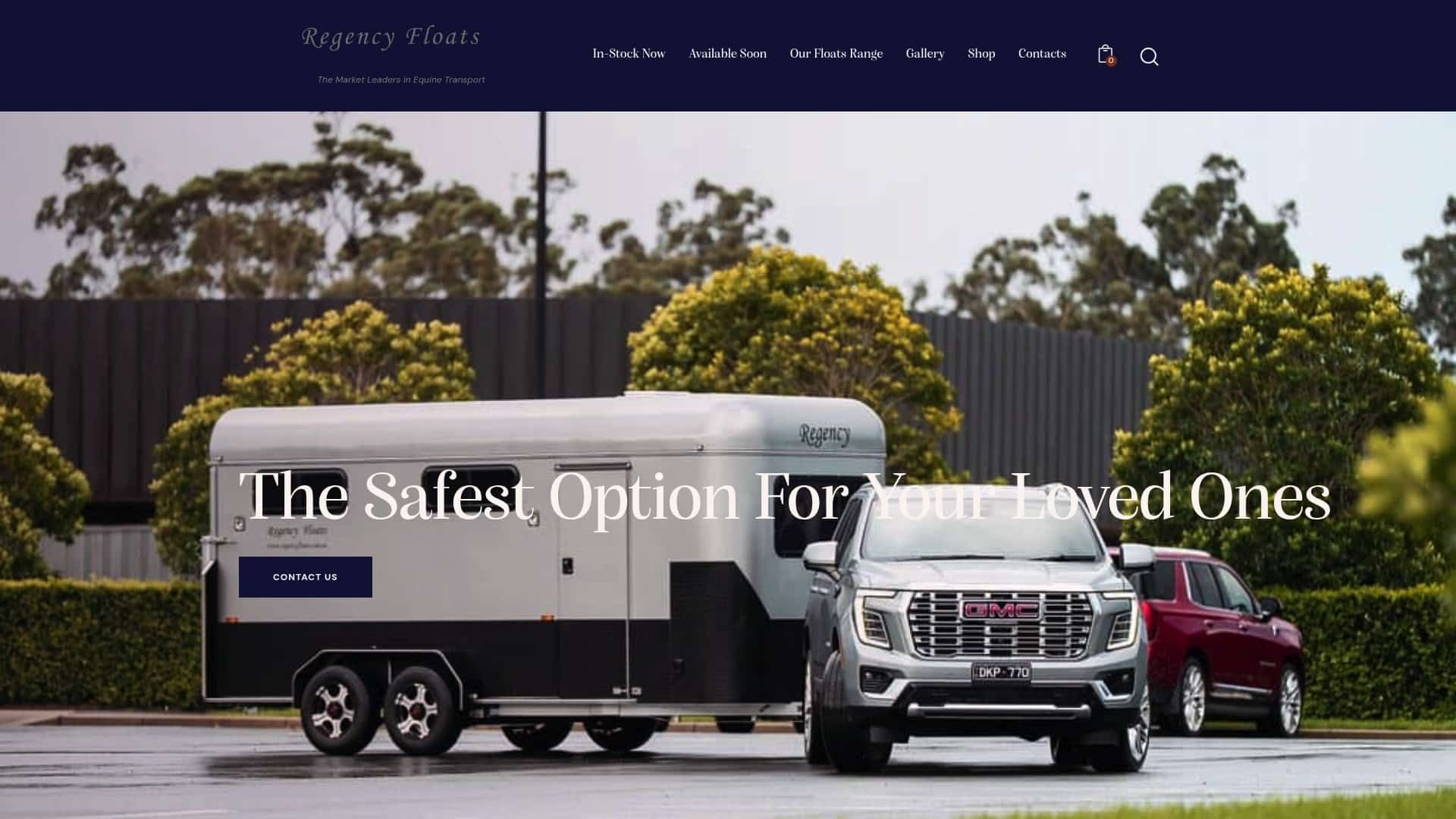
Whether you’re looking at a standard gooseneck configuration or a customized float with living quarters, Regencyfloats’ gooseneck range is worth a close look. The ten-year floor warranty and 40-plus years of manufacturing experience back every model. Browse the full range and request a quote at Regencyfloats to find the right float for your horses and your hauling schedule.
Useful sources and where to verify U.S. rules
Use these resources to check specifications, confirm state regulations, and verify manufacturer claims before you buy.
U.S. regulatory sources:
- FMCSA (Federal Motor Carrier Safety Administration): The primary federal source for CDL thresholds and commercial vehicle weight rules. Check fmcsa.dot.gov for current federal standards.
- Your state DMV: CDL thresholds and towing endorsement rules vary by state. New York’s driver license class descriptions and the NY DOT CDL reference are useful models; check your own state’s equivalent page for local rules.
Trailer specification resources:
- Trailer manufacturer spec sheets: Always request the GVWR, tongue/pin weight at maximum load, axle ratings, and braking system details in writing before purchasing.
- Truck door-jamb payload sticker: The single most important number for safe towing. It overrides any figure in a brochure or sales conversation.
- Transwest Horse Trailers buyer guidance: Covers gooseneck stability and capacity comparisons in plain language.
What to verify on any specification page:
- Tongue or pin weight as a percentage of GVWR (not just the raw number)
- Axle rating vs. actual loaded axle weight
- Braking system type (electric, hydraulic surge, or electric-over-hydraulic) and whether it meets your state’s requirements
- Floor material, construction method, and warranty period
Regulatory note: CDL thresholds, weight limits, and braking requirements differ by state. The federal 26,001-lb GCWR threshold is a floor, not a ceiling. Always confirm your state’s specific rules with your state DMV before hauling at or near that weight.

