
What’s the best horse float camera setup in Australia?
A two-camera setup with front and rear placement gives you full coverage of the horse compartment and is the configuration most industry experts recommend. For Australian conditions, the choice between wired and wireless systems comes down to your float’s construction, your travel distances, and how much installation work you’re willing to do.
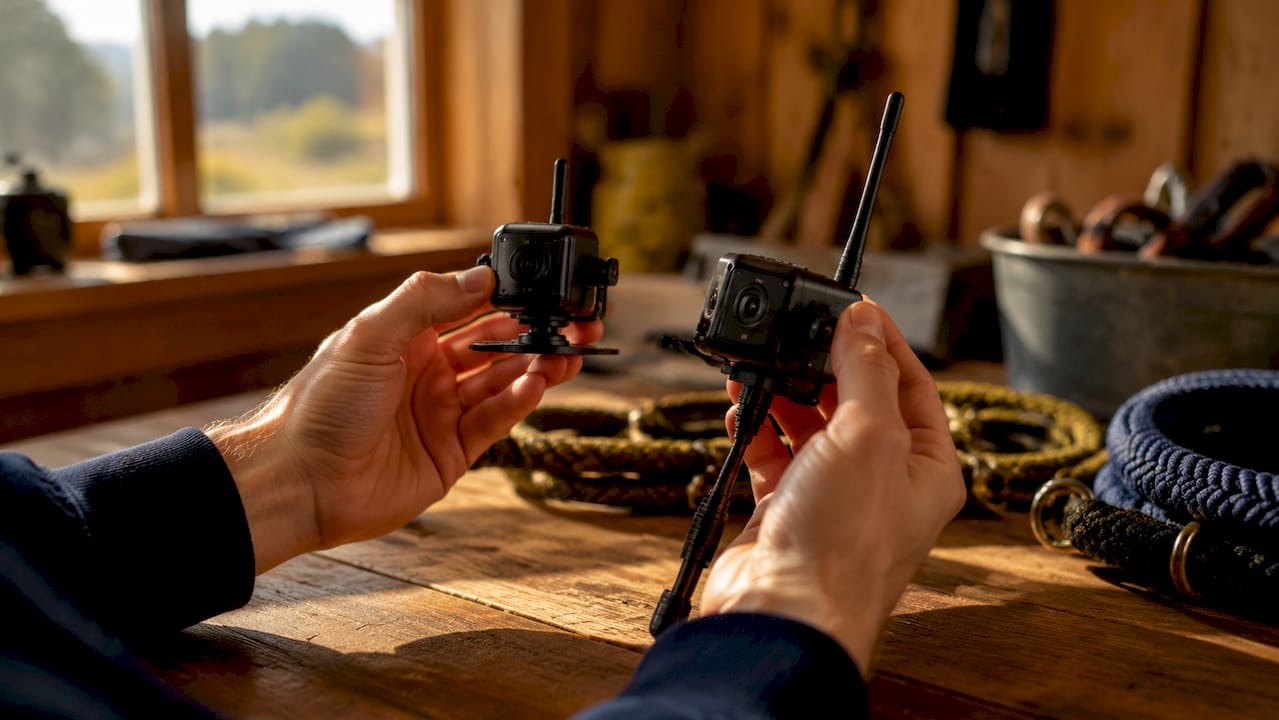
Wireless systems win on convenience. They’re plug-and-play, use magnetic or adhesive mounts, and most create their own local wireless network so you don’t need cellular service in remote areas. Wired systems trade that portability for a stable, interference-free signal that doesn’t drop on long hauls through metallic, fully-enclosed floats.
The two main Australian suppliers worth comparing are Regency Floats and On the Road. Both stock camera-compatible float solutions, but they serve different buyer profiles.
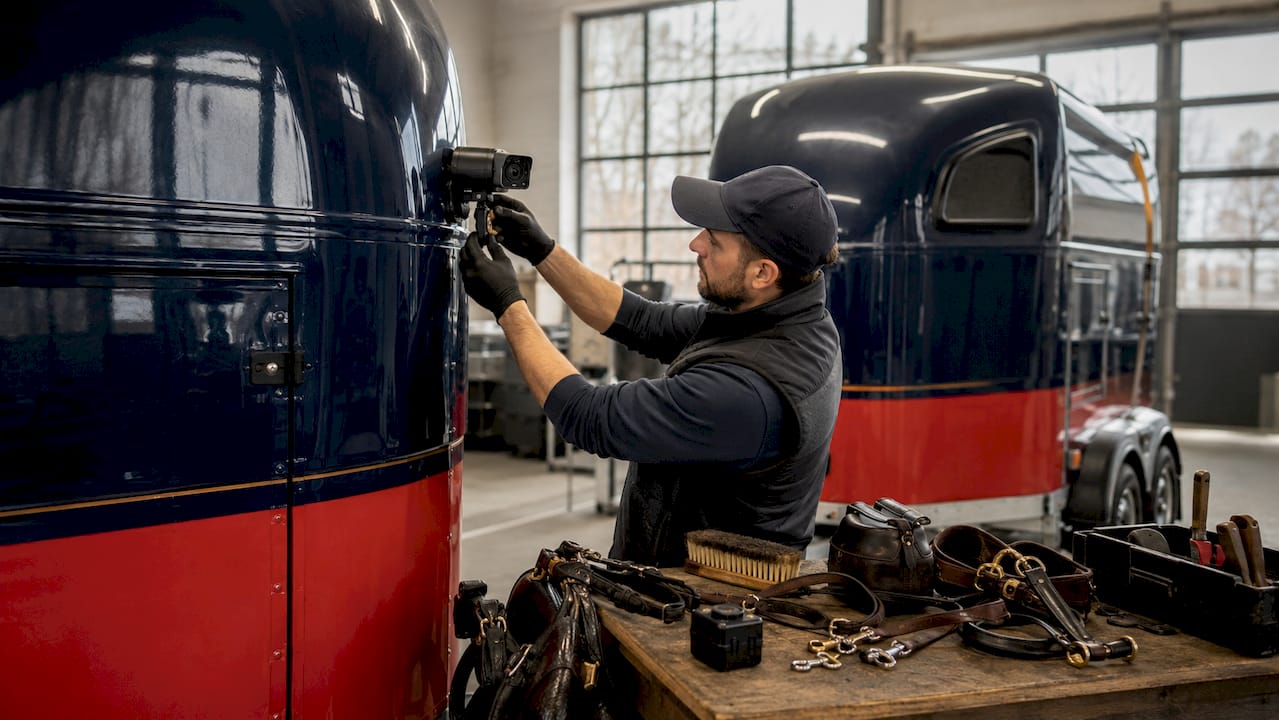
| Provider | Best for | Camera type | Video quality & night vision | Installation complexity | Warranty & support | Australian availability | Rating |
|---|---|---|---|---|---|---|---|
| Regency Floats | Premium customizable floats with integrated monitoring | Wired and wireless options | HD with infrared night vision | Low to moderate | 10-year floor warranty, strong local support | Nationwide | 4.9★ (226 reviews) |
| On the Road | Broad trailer range with camera equipment included | Wired and wireless options | HD capable | Moderate | Solid regional support | Multi-region | 4.8★ (71 reviews) |
How do Regency Floats and On the Road compare for camera systems?
Regency Floats is Australia’s leading horse float manufacturer with over 40 years of experience building floats designed around horse safety. Their floats are fully customizable, and the accessory range includes a wireless camera option that pairs directly with their float builds. For horse owners wanting a float and a monitoring system sourced from the same trusted manufacturer, with a ten-year floor warranty and nationwide delivery, Regency Floats is the strongest fit.
Key advantages for Regency Floats buyers:
- Floats built with camera integration in mind, not retrofitted
- Accessories including wireless cameras available directly through their store
- Ten-year floor warranty and dedicated Australian customer support
- Customizable configurations for two-horse and three-horse float layouts that suit front-and-rear camera placement
On the Road takes a broader approach. Their stock covers horse trailers alongside equipment trailers, cargo trailers, and utility haulers, so buyers who need a camera system bundled with a more general-purpose trailer will find more variety there. Their regional support is solid, and the range of trailer types means camera compatibility across different float sizes.
Pro Tip: If you’re buying a new float and want a camera system that fits without guesswork, purchasing both from the same supplier saves you compatibility headaches later.
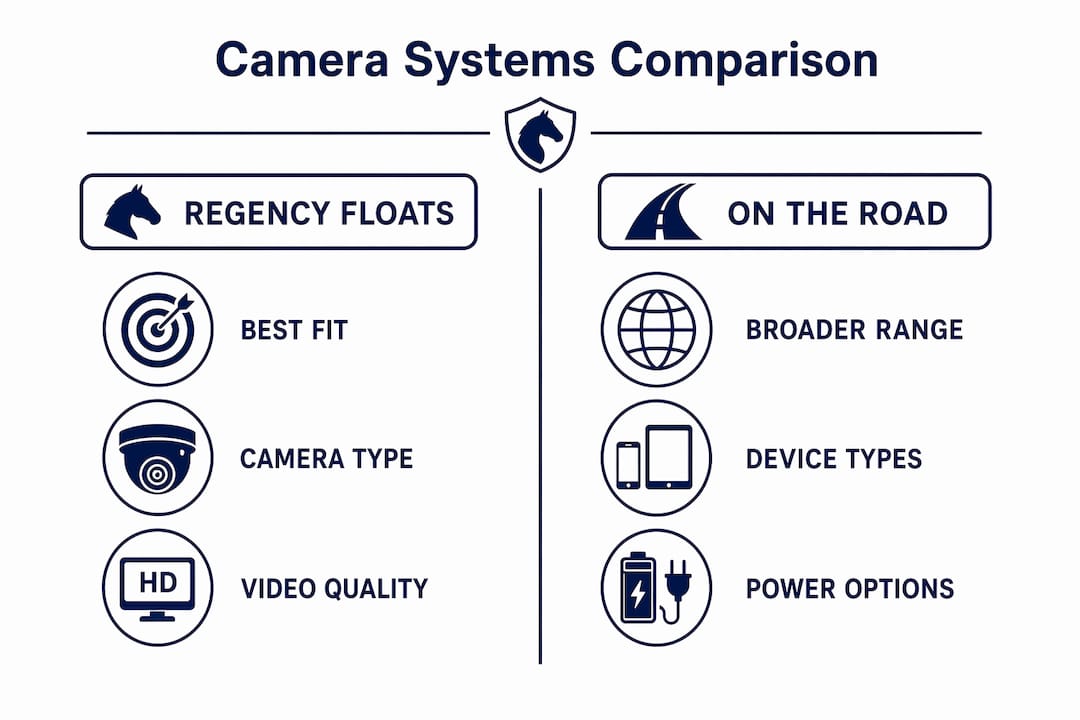
Battery life and power options differ across the camera models compatible with both suppliers. Wireless cameras in the Australian market typically offer multi-hour runtimes sufficient for day trips, with USB-C recharging now standard on newer units. For day trips, battery-powered wireless cameras are fine. For multi-day hauls, a hardwired connection to the float’s 12-volt system removes the recharging variable entirely.
How to choose and set up a horse float camera system
Key features to prioritize
Not every camera marketed for trailers performs well inside a horse float. The environment is dusty, humid, and subject to constant vibration. Look for:
- Video resolution: HD (720p minimum) so you can actually read your horse’s posture, not just confirm it’s still standing
- Night vision: Infrared LEDs are standard; check the stated range, since cheap units illuminate only a meter or two
- Waterproof rating: IP67 or IP68 for enclosed floats; IPX6 or better for open-sided floats exposed to rain
- Wireless range: A minimum of 500 feet (roughly 150 meters) for reliable signal from float to cab
- Mounting: Magnetic bases work on metal float frames with no tools; adhesive pads cover non-metal surfaces
Wired vs. wireless: the honest tradeoff
Wired systems deliver a stable, interference-free connection but require running a cable from the float to your monitor, which usually means professional installation. Wireless systems are plug-and-play and portable between floats, but large metallic float constructions can weaken the signal noticeably. If your float is a fully-enclosed aluminum or steel build, prioritize wireless cameras with external antennas or rated long-range capability.
Practical installation steps
- Place cameras at ceiling height, front and rear of the horse compartment, angled downward for a full view of each horse’s body
- Use magnetic mounts on metal frames or the supplied adhesive pads on fiberglass panels; never rely on suction cups inside a moving float
- Run wired cables through existing conduits where possible; keep power cables separate from trailer wiring to prevent electromagnetic interference causing video flicker
- Mount the in-cab monitor with a heavy-duty dash mount or adhesive fastener; suction cups fail on rough Australian roads and become a visibility hazard
- Connect to the float’s 12-volt system for hardwired setups, or fully charge battery units before departure
Pro Tip: For large or fully-enclosed metallic floats, choose a camera system with an external antenna. The metal walls act like a Faraday cage and can cut wireless range dramatically.
Testing and maintenance
Run a full pre-trip test before every journey: check the live feed, confirm night vision activates, and verify audio if your system includes it. Drive around the block and hit a few bumps to confirm the signal holds under real conditions. For ongoing maintenance, wipe the camera lens before each trip and inspect wired cable runs every few months for fraying, especially where cables pass through metal edges.
Why Australian expertise matters for horse float safety
Studies on equine transport report a 45% injury rate over two years, making in-transit monitoring one of the most practical safety investments a horse owner can make. A camera doesn’t prevent every incident, but it lets you spot stress, abnormal movement, or a horse down before a small problem becomes a serious one.
Regency Floats has built floats for Australian conditions for over four decades. Their understanding of how Australian roads, dust, and heat affect float construction directly informs the accessories they stock, including camera systems rated for those conditions. Buying from a local manufacturer means warranty claims, replacement parts, and technical support don’t involve international shipping or time-zone delays.
Australian regulations don’t currently mandate cameras in horse floats, but road safety guidelines consistently emphasize driver awareness of livestock in transit. A camera system that lets you monitor without stopping reduces both risk and travel time.
Regencyfloats builds floats ready for monitoring from day one
If you’re starting from scratch or replacing an aging float, the smarter move is a float designed with safety technology already considered, not one you retrofit later.
Regencyfloats manufactures customizable horse floats with European-influenced design, ten-year floor warranties, and accessory compatibility built in from the factory. Their wireless camera pairs directly with their float range, and their team can advise on placement for your specific configuration. Delivery runs Australia-wide, and their customer support is local. For horse owners who want a float and a monitoring setup that work together without compromise, Regencyfloats is worth a look before you buy anything else.
Key Takeaways
A two-camera front-and-rear setup on a float built for Australian conditions, sourced from a local manufacturer with warranty support, gives horse owners the most reliable monitoring solution in 2026.
| Point | Details |
|---|---|
| Two-camera placement | Front and rear ceiling-mounted cameras give full coverage of every horse in the compartment. |
| Wired vs. wireless tradeoff | Wired systems are more reliable in metallic floats; wireless suits portability but needs long-range capability for enclosed builds. |
| Pre-trip testing | Test live feed, night vision, and audio before every journey to catch failures before you’re on the road. |
| Transport injury risk | Studies report a 45% injury rate over two years in horse transport, making camera monitoring a practical safety tool. |
| Regencyfloats | Offers customizable floats with integrated wireless camera accessories, ten-year floor warranty, and Australia-wide delivery. |

