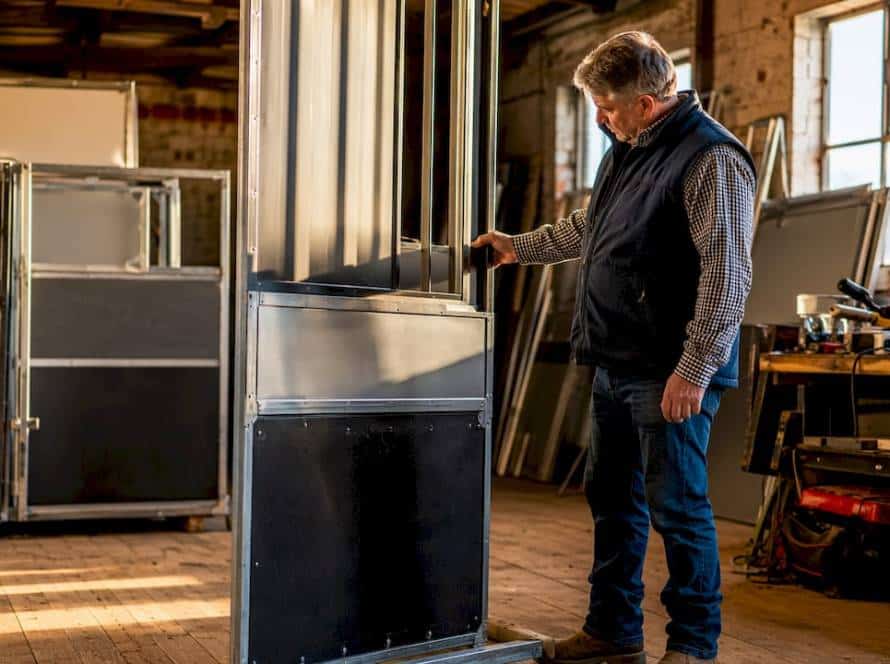
A storm door is a rear closure on a horse float. It shuts the back of the float above the ramp so rain, wind and road spray stay out, and on many floats it can also be braced ajar to let air through. It is not the same thing as a storm cover, which is a removable waterproof shell that goes over the outside of the float. If you are weighing up a storm door, the real question is how you want the rear of your float to behave in three situations: travelling in bad weather, standing in the heat, and loading a nervous horse. This guide covers each, then gives you a checklist to use before you buy or tow.
What a storm door is, and what it is not
The term gets used loosely in Australia, so it helps to pin it down. On a ramp-load float, the rear has to be closed off somehow once the horse is on board and the ramp is up. There are three common ways to do it:
- A storm door: a solid or part-solid door that closes the rear opening, often hinged at the top and lifting up, or hinged at the side. It protects the horse’s hindquarters and the interior from weather and is usually the main rear barrier.
- Barn doors: a pair of side-hinged doors that swing open. Some owners prefer them to a lift-up door because they are quiet and easy to manage alone. Listings and forum threads often frame the choice as barn doors versus a storm door.
- A breech bar or rump bar setup: the bars sit behind the horse’s rump and keep it off the ramp. They are a safety fitting, not a weather barrier, and they usually work alongside a door rather than replace one.
A storm cover is something else again. Suppliers describe it as a removable outer layer that protects the whole float from hail, UV, rain and dust, mostly while the float is parked or stored. A cover protects the float’s body. A storm door is part of the float’s structure and protects the horse and the interior while you are moving. Many owners end up wanting both: a well-designed door for the road and a cover for the paddock or shed, particularly in hail country.
Why the rear door matters more than it looks
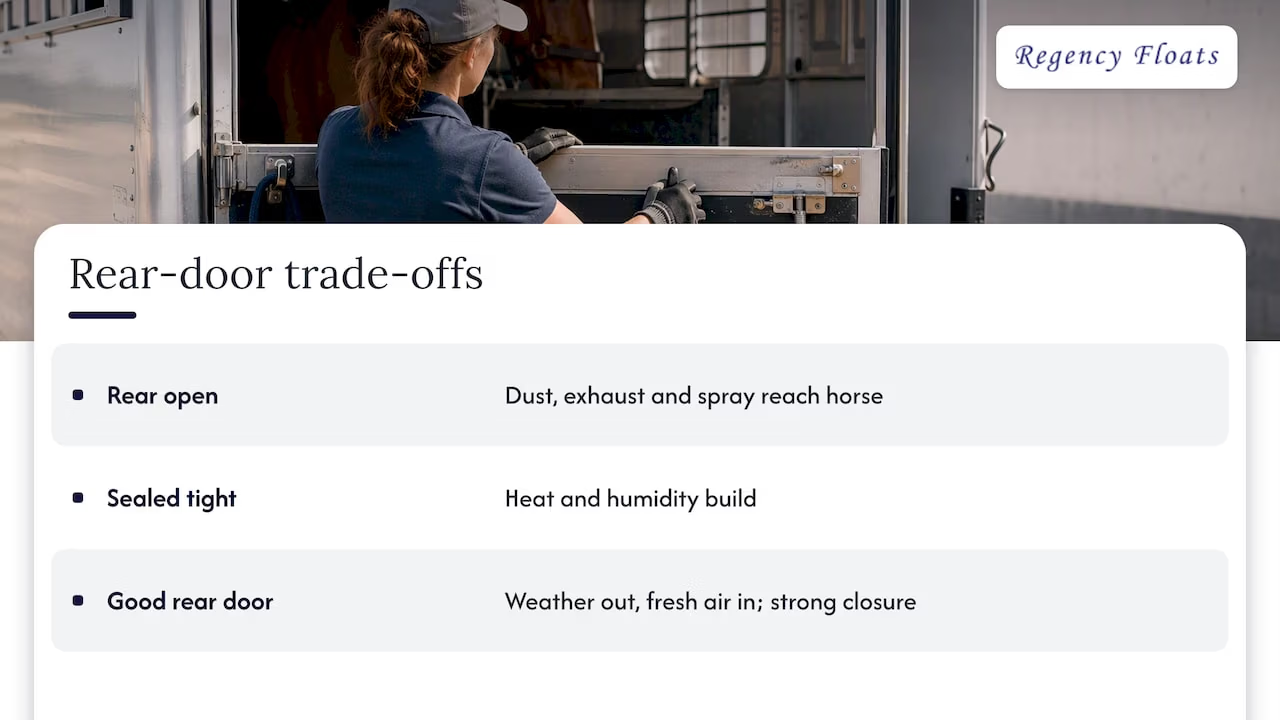
The back of a float is where the weather hits hardest. You tow forwards, so rain and road spray are driven at the front, but the rear sits in a pocket of turbulent air that pulls dust, exhaust and spray towards the opening. If the rear is open or poorly sealed, that mix can reach your horse. If it is sealed tight with nowhere for air to go, heat and humidity build.
Agriculture Victoria’s transport guidance says the area where horses travel should be clean and dry and free of pollution from the vehicle’s exhaust or other air contaminants. It also says each horse needs a natural standing position, adequate headroom and enough space between horses for air to circulate. A good rear door helps with the first point and has to be designed with the second in mind.
So a storm door is a balancing act. It must keep the weather out and let fresh air in, and it must do both without compromising the strength of the closure.
Ventilation: where storm doors help and where they get in the way
Pony Club Australia’s 2026 welfare guidance says poor airflow lets heat, humidity and dust build up, raising the risk of dehydration, heat stress and respiratory irritation. It adds that windows, roof vents and airflow openings should work properly and be adjusted to the weather and the number of horses on board.
That guidance is about the whole float, but the rear door is a big part of the picture. Here is how the common designs behave.
Lift-up doors that can be braced ajar
A lift-up rear door that can be held partly open gives you a controllable gap for airflow when the float is stationary, for example at a gymkhana or while you wait for a vet. Some builders design the rear so the door can be braced in an open or ajar position for exactly this reason. The benefit is real on a hot day. The catch is that a door held ajar is not a travelling position. Before you pull out onto the road, the door should be closed and latched, and any airflow you want should come from the vents and windows.
Solid doors with no vent paths
A fully solid rear door on a float with small windows and no roof vents can turn the float into an oven in summer. If you buy a float like this, check what else provides airflow. Roof vents, side windows and front openings all need to be working and easy to adjust.
Doors paired with screened vents and windows
This is the setup most owners are happiest with. The door handles weather, and screened openings handle air. Petcover advises that unscreened windows should be closed on the road because debris can injure a horse, while screened windows may stay open as long as the horse is securely contained. MC Equestrian says screened windows can be opened on hot days, and roof vents should be closed or angled to keep rain out.
If your float’s vents are not screened, a fly screen for vents is a cheap fix that lets you keep air moving without inviting insects or flying grit into the float.
Adjusting for the weather on the day
RANVet’s checklist puts it simply: windows and vents should be opened or closed according to the weather and the ventilation needed for the trip. In practice:
- Hot, still day: screened windows open, roof vents open, rear door closed and latched for travel. Plan stops where you can open up the float and offer water.
- Cold, wet day: vents angled or partly closed to keep rain out, but never sealed completely. Horses produce a lot of heat and moisture, and a shut-up float gets stuffy fast.
- Dusty gravel roads: close the openings that face the dust and keep the rear door tight. Dust in the float is a respiratory irritant, as the welfare guidance above notes.
Weather protection in Australian conditions
Australian floats face a wider spread of conditions than most. Tropical downpours in Queensland, hail on the east coast, 40-degree summer days in Western Australia and South Australia, and cold, wet winters in Tasmania and Victoria all put different demands on the rear closure.
A few practical points:
- Seals matter as much as the door. A door that closes but leaks along the edges lets water run onto the floor, and the floor and ramp should be non-slip and dry. Check the seals for gaps, cracks and perishing.
- Drainage and the ramp area. Water that gets past the door needs somewhere to go. Look at how the floor system handles moisture and whether the rear threshold collects water.
- Sun exposure. A dark solid door in full sun gets hot. Lighter colours and good insulation reduce the heat that radiates into the float, and colour is one of the choices on a customised float.
- Hail. A rear door will not save a float from a serious hailstorm. That is where a storm cover, a shed or a carport comes in. Our horse float storage ideas guide covers the options.
Safety: the door has to hold a horse in
Weather protection is secondary. The first job of the rear closure is to keep the horse inside. Agriculture Victoria says a float must be strong and secure enough to contain the horse and prevent escape, with smooth internal surfaces free of protruding hazards and a non-slip floor and ramp.
That translates into some specific things to look at on any storm door:
- Latches that cannot vibrate loose. A latch should engage positively, and you should be able to see or feel that it has. Check that it does not rely on a single pin that can work free over a long trip.
- Hinges and mounting points. Look for rust, elongated holes and cracked welds. A heavy lift-up door is a significant load on its hinges and supports.
- Door weight and lifting assistance. Springs or gas struts make a heavy door manageable. Parts such as door springs are rated by door weight, so replacements have to match the door. Our horse float parts guide explains what to inspect and repair.
- Sharp edges and protrusions. Anything the horse could scrape or catch itself on inside the rear, including bolt ends and door edges, is a hazard.
- Secure dividers and rump bars. RANVet advises checking that dividers and rump bars are secured and correctly positioned, with pegs or pins turned away from the horse.
- Ramp condition. The same checklist says to look for damage, upturned rubber, rust and poor footing, and to confirm the loaded ramp is latched securely. The door sits right above this area, so check both together.
- Capacity. Petcover points out that the combined weight of the horse and gear counts when you check float capacity. Hay, feed, tack and water all add up.
Loading: which rear design suits your horse
The door you choose changes how loading feels, and for some horses that matters more than anything else.
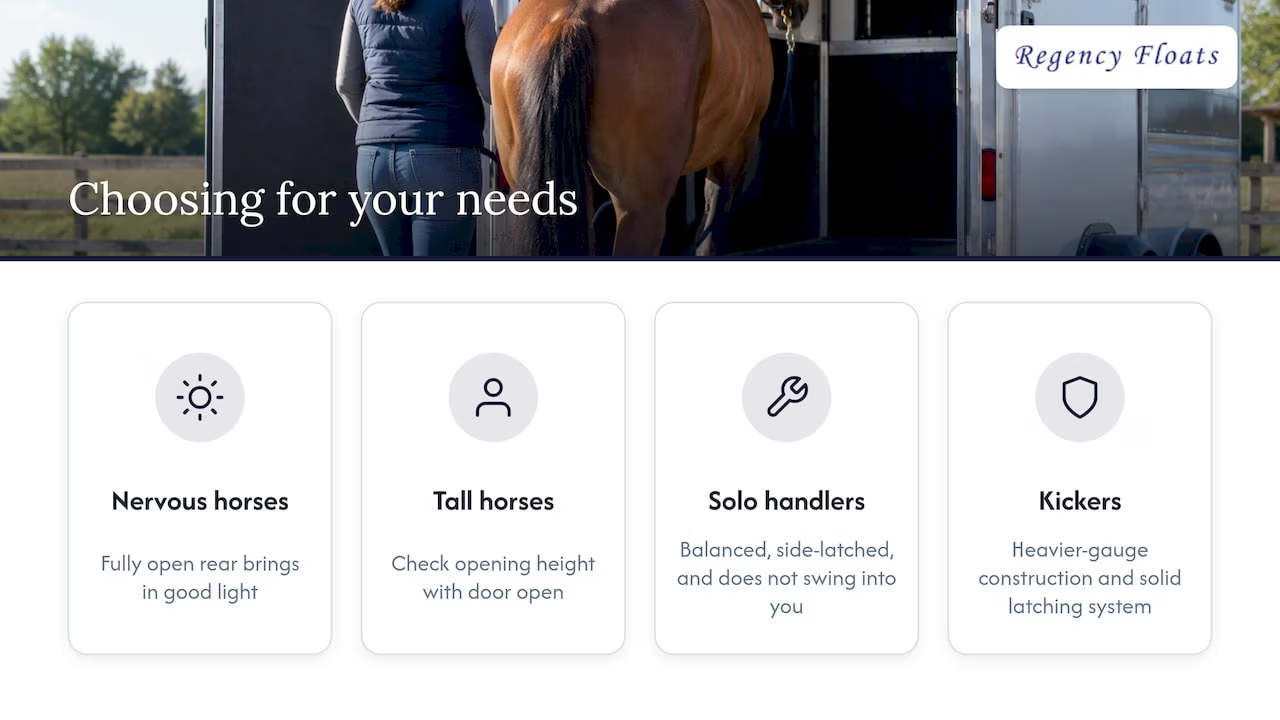
Nervous or inexperienced horses. Many horses dislike a dark, enclosed space and a ramp that rises into a closed box. A rear that can be opened wide, with good light coming in, makes the first few loads less frightening. Barn-style doors and lift-up doors that can be held fully open both help. The key is to load with the rear fully open and close it calmly once the horse is secured.
Big or tall horses. Thoroughbreds and warmbloods need generous headroom and a rear opening that does not make them duck. If you own a taller horse, check the opening height with the door open and the door’s lower edge when closed.
Solo handlers. If you usually load alone, think about how you will operate the door. A heavy lift-up door that needs two hands and a strong back is a poor fit. Look for a door that is balanced, easy to latch from the side and does not swing into you.
Horses that scramble or kick. The rear closure takes the load if a horse leans back or kicks. Heavier-gauge construction and a solid latching system are worth paying for.
For how all this fits into the layout inside the float, our horse float interior design guide covers floor plans, dividers and fittings.
How to use and maintain a storm door
A good door still fails if it is neglected. A routine takes a few minutes and catches most problems.
Before every trip
RANVet’s pre-departure advice includes checking that access doors are closed and latched, adjusting windows and vents for the conditions, securing dividers, inspecting and latching the ramp, and checking tie-up points, leads, chains, snaps and buckles for sound condition and easy operation. Our own horse float pre trip checklist walks through the full before-you-tow routine.
For the rear door specifically:
- Open and close it fully and watch for stiffness or catching.
- Check the latch engages on the first try.
- Look at the hinges and seals.
- Confirm that no vent or window is directing rain or dust onto the horse.
- Confirm that the door is closed for travel and not braced ajar.
After every trip
Wash off mud, manure and salt, particularly on hinges, latches and the lower edge of the door. Let the float dry before closing it up. Moisture trapped inside a closed float causes rust and mould.
Every few months
Grease hinges, check springs or struts, tighten fixings and look for rust at weld points. RANVet recommends regular servicing of the float for rust or structural problems, and that includes the rear door assembly.
If you use a storm cover
If you protect the float with a cover, a few habits stop it causing damage. Suppliers advise fitting a cover only to a clean, dry float, padding sharp edges, not overtightening straps, not forcing zips, checking the cover in windy conditions and inspecting for tears or stress points after you take it off. Do not put a cover on and leave it for months without looking underneath, because trapped moisture is the enemy.
Suppliers also note that heavy rain can get through zips to a limited extent, so treat a cover as a protective layer, not a sealed roof.
Buying checklist: questions to ask about the rear door
Whether you are buying new or pre-owned, ask these questions and inspect the answers yourself.
| What to check | What good looks like | Red flag |
|---|---|---|
| Door type | Suits your horse and how you load, with a choice of lift-up or barn-style where offered | Awkward to operate alone, or a design your horse already fears |
| Latching | Positive engagement, obvious when closed | Loose, worn or single-pin latches |
| Seals | Even contact, no gaps or cracks | Water marks inside the rear |
| Hinges and supports | Solid, no rust or cracked welds | Rust bleed, elongated holes |
| Airflow | Roof vents, screened windows and the option to open the rear when parked | Few or no vents, unscreened windows only |
| Floor and ramp | Non-slip, firm, no rot or rust | Soft spots, upturned rubber |
| Weight handling | Springs or struts matched to the door | Door that drops or is hard to lift |
| Servicing record | Regular checks for rust and structural issues | No history, or visible neglect |
If you are buying pre-owned, take the float for a test tow and open and close everything while you are there. A seller who is confident in the float will not mind.
Fitting a float to your needs
Rear door preference is one of many choices that make a float suit you. We build floats for owners who want safety, comfort and durability, and the range covers different loading styles and sizes. If you are comparing straight loads, angle loads, gooseneck models or smaller two-horse setups, the Regency Floats range is the place to see the options, and the 2 horse float range suits those who travel one or two horses.
We have been building floats for over 40 years, and our floats come with advanced safety technology, European luxury design and a flooring system backed by a ten-year warranty. Colours and fittings can be customised, so you can talk through the rear configuration, ventilation and weather protection that match where and how you travel.

If you are ready to talk about a float, start with the Regency Floats home page to see current in-stock specials with delivery Australia wide, or ask us about the rear door and ventilation options on the model you are considering. Security is another consideration once you own one, and our horse float security guide explains how to protect your float and horses.
Frequently asked questions
Is a storm door the same as a storm cover?
No. A storm door is part of the float’s rear closure and works as you travel, keeping weather out and the horse in. A storm cover is a removable waterproof layer that goes over the outside of the float to protect it from hail, UV, rain and dust, mostly while it is parked. Many owners use both.
Can I leave the rear door open for airflow while driving?
No. The rear should be closed and latched for travel, because the closure is part of what contains the horse. Get airflow from screened windows and roof vents instead, and open up the rear only when the float is stationary and the horse is safely tied or contained.
Do I need screens on the vents and windows?
It is a good idea. Petcover advises keeping unscreened windows closed on the road because debris can injure a horse, while screened windows can be left open if the horse is securely contained. Screens let you keep air moving on hot days without the risk.
How often should I check the rear door and latch?
Check the latch, hinges and seals before every trip, and give the whole door assembly a closer look every few months. After wet or muddy trips, clean and dry the hinges and latches so rust does not set in. A regular service should include the door, ramp and structure.
What matters most when choosing a rear door design?
Strength and secure latching come first, then ventilation, then how easy the door is to handle for you and your horse. A door that suits your loading routine and your climate will get used properly every time, and that is the real safety benefit.