
A horse float warranty in Australia is a manufacturer’s written promise to repair or replace specific components if they fail within a set period. That promise sits alongside a separate, stronger layer of protection: the consumer guarantees under the Australian Consumer Law (ACL), which are automatic, cannot be signed away, and may entitle you to a repair, replacement, or refund regardless of what the warranty document says. If you find a fault, contact the seller in writing first and keep every receipt and photo you have.
- Express manufacturer warranty: a voluntary promise, limited by its own terms and exclusions.
- ACL consumer guarantees: statutory rights that apply automatically to every float sold in Australia.
- Remedies available: repair, replacement, or refund, depending on whether the fault is major or minor.
- First action: notify the seller in writing, describe the fault clearly, and request a remedy.
Key takeaways
Understanding your horse float warranty in Australia means knowing that ACL consumer guarantees are your legal floor, and a manufacturer’s express warranty is an additional promise layered on top.
| Point | Details |
|---|---|
| ACL guarantees are automatic | Consumer guarantees cannot be signed away and may apply even after an express warranty expires. |
| Major faults give you the choice | For a major failure, you choose repair, replacement, or refund, not the supplier. |
| Documentation decides disputes | Dated service receipts, photos, and a signed logbook are your strongest evidence in any claim. |
| Exclusions are predictable | Wear and tear, overloading, and unauthorised repairs are the most common grounds for denial. |
| Regencyfloats warranty | Regencyfloats offers structural coverage and a ten-year flooring warranty, with service support to help owners maintain valid cover. |
Table of Contents
- What does a horse float warranty typically cover?
- What do manufacturers commonly exclude from cover?
- How do ACL consumer guarantees interact with your warranty?
- How to make a successful warranty or ACL claim
- Maintenance steps that protect your warranty and strengthen claims
- Are extended or third-party warranties worth it for horse floats?
- Pre-purchase warranty checklist: questions to ask before you buy
- Regencyfloats: warranty coverage built for Australian conditions
- Sources
- FAQ
What does a horse float warranty typically cover?
Manufacturer warranties for horse floats vary by builder, but most follow a tiered structure: longer cover for structural components, shorter cover for parts and workmanship, and little or no cover for consumables.
Typical components and coverage periods:
- Structural frame and chassis: usually the longest-covered item, often five to ten years for weld integrity and frame failure.
- Roof frame and wall panels: commonly covered for a few years against manufacturing defects.
- Flooring systems: coverage varies widely; premium aluminium flooring systems may carry extended warranties (Regencyfloats, for example, backs its flooring warranty as a specific product proof point).
- Axles and suspension components: typically covered for a limited period for manufacturing defects, separate from normal wear.
- Electrical wiring and 12V/240V appliances: usually covered for a period of time, often subject to authorised installation conditions.
- Paintwork and cosmetic finishes: commonly covered for about a year, frequently subject to a maintenance condition.
Warranty documents almost always include a use condition. The cover applies when the float is used as intended, serviced at the manufacturer’s recommended intervals, and repaired only by authorised technicians.
What do manufacturers commonly exclude from cover?
Exclusions are where most warranty disputes begin. Knowing them in advance is the difference between a successful claim and a frustrating rejection.
Common exclusions across Australian horse float warranties:
- Normal wear and tear on tyres, wheel bearings, rubber floor mats, and door seals.
- Cosmetic surface scratches, stone chips, and paint fading from UV exposure.
- Rust or corrosion where the owner failed to maintain protective coatings or drainage.
- Damage from overloading beyond the float’s rated capacity or from towing with an undersized vehicle.
- Repairs or modifications carried out by non-authorised repairers.
- Damage caused by accident, collision, or improper loading of horses.
- Electrical faults caused by aftermarket accessories wired without manufacturer approval.
The phrase “abnormal use” appears in most exclusion clauses and is interpreted broadly. Towing a two-horse float with three horses, or using a float on unsealed tracks beyond its rated specification, can be characterised as abnormal use even if the damage looks like a structural failure. Manufacturers will often request tow vehicle records and loading documentation when assessing a claim.
Claim denials for “neglect” are common when bearings fail and no service records exist. The rebuttal is straightforward: produce dated receipts showing the bearings were inspected and greased at the recommended intervals. Without those records, the manufacturer’s interpretation tends to prevail.
Pro Tip: Take dated photos of your float’s undercarriage, floor, and tyres every six months. A timestamped photo library showing the float’s condition over time is one of the most effective tools for rebutting a neglect-based denial.
How do ACL consumer guarantees interact with your warranty?
The ACL consumer guarantees are not a bonus on top of your warranty. They are a separate legal floor that exists regardless of what any warranty document says, and they cannot be contracted away.
Under the ACL, every horse float sold in Australia must be of acceptable quality: safe, durable, free from defects, and fit for the purpose of transporting horses. The ACCC has confirmed that consumer guarantees apply to caravans and similar vehicles, which includes horse floats, and that a major defect can entitle you to a remedy, even after the express warranty has expired.
Major vs minor failure:
- Major failure: the float is unsafe, substantially unfit for transporting horses, or has a problem a buyer would not have purchased knowing about. You can choose a refund or replacement.
- Minor failure: a defect that can be fixed. The supplier must repair it free of charge within a reasonable time. If they fail to do so, you can seek a refund or replacement.
The ACCC’s repair, replace, refund guidance is clear: for a major problem, the choice of remedy belongs to you, not the supplier. A supplier who insists on repeated repairs for what is plainly a major defect is not meeting their ACL obligations.
Courts and tribunals assess “acceptable quality” by weighing the price paid, the manufacturer’s representations, and the float’s intended use. A custom-built float priced at a premium carries a higher quality expectation than a budget entry-level model. A real example: in Helen Thompson v Stallion Floats Pty Ltd (VCAT, 2021), the tribunal ordered the supplier to pay rectification costs after finding the custom-built float was not of acceptable quality under section 54 of the ACL. That decision illustrates that the tribunal process works and that owners have real recourse.
Suppliers sometimes include limitation clauses in contracts for high-value or commercial goods. Under section 64A of the ACL, carefully drafted limitation clauses can be valid for non-consumer goods, but broad blanket exclusions are void. If a clause purports to remove your ACL rights entirely, it has no legal effect.
How to make a successful warranty or ACL claim
Speed and documentation decide most claims. Act the moment you find a fault.
Immediate steps:
- Stop using the float if the fault makes it unsafe for horses or road use.
- Photograph the fault from multiple angles with timestamps enabled.
- Save all purchase documents, delivery receipts, and any written representations made at sale.
- Write down what happened, when you first noticed the fault, and how the float was being used.
Contact the seller first, in writing. Email is preferable to a phone call because it creates a dated record. State the fault, when it appeared, and the remedy you are seeking. Keep the tone factual.
Documentation checklist:
| Document | Why it matters |
|---|---|
| Proof of purchase (invoice or receipt) | Establishes purchase date and price paid |
| Warranty booklet or written warranty terms | Defines what the manufacturer promised |
| Service history (receipts, logbook) | Rebutts neglect claims and shows compliance |
| Dated photographs of the fault | Provides evidence of the defect and its extent |
| Repair quotes from authorised repairer | Quantifies the cost of rectification |
| Written correspondence with the seller | Creates a dispute timeline |
Give the supplier a reasonable time to respond, typically ten to fifteen business days for an initial assessment. If they refuse a valid claim or stall without reason, escalate:
- ACCC: for national guidance and to report systemic issues.
- State consumer affairs: Consumer Protection WA, NSW Fair Trading, Consumer Affairs Victoria, and equivalents in each state offer local complaint tools and escalation pathways.
- VCAT or your state tribunal: for binding decisions, as demonstrated in the Thompson v Stallion Floats case above.
When a failure is major and renders the float unfit for use, you have the leverage to demand replacement or refund rather than accepting repeated repair attempts. If the supplier refuses, escalating to a fair-trading agency or tribunal is the appropriate next step.
Maintenance steps that protect your warranty and strengthen claims
A documented maintenance history often decides disputed claims. Manufacturers expect owners to follow the stated service schedule, and a gap in that record is frequently used to deny cover.
Key maintenance actions and why they matter:
- Initial service: most manufacturers require an early inspection after the first few months or kilometres of use to check fasteners, bearings, and flooring fixings. Missing this service can void structural cover.
- Regular bearing and axle inspections: typically every six to twelve months depending on use intensity; dated receipts from an authorised repairer are the evidence you need.
- Floor and drainage checks: inspect for water pooling, seal integrity, and floor fixing tightness; photograph and date each inspection.
- Electrical system checks: test lights, breakaway systems, and 12V appliances annually; note any replacements in the logbook.
- Lubrication of hinges, ramps, and couplings: a simple task that prevents corrosion-based claim denials.
Keep a physical or digital logbook with dated entries for every service, inspection, and repair. Attach receipts and photos to each entry. If a supplier later queries neglect, a logbook with twelve months of consistent entries is far more persuasive than a verbal account.
Pro Tip: Ask your repairer to sign and date the logbook entry at every service. A signed entry from an authorised technician carries significantly more weight in a dispute than an owner’s self-recorded note.
Maintenance-related claim rejections are almost always preventable. The most common scenario: a floor fixing corrodes and the floor shifts, the manufacturer attributes it to water ingress from inadequate drainage maintenance, and the claim is denied. Owners who can show quarterly drainage checks and sealed floor inspections rarely face that outcome.

Are extended or third-party warranties worth it for horse floats?
Extended warranties and third-party policies sit outside the manufacturer’s original promise and the ACL. They are contracts in their own right, and the terms vary considerably.
Types of cover:
- Manufacturer extended warranty: offered by the original builder, usually extending structural or parts cover by one to three years beyond the standard period. These tend to be the most straightforward because the same party who built the float is administering the claim.
- Dealer or retailer warranty: sometimes offered at point of sale as an add-on. Check whether the dealer is financially backing the promise or acting as an intermediary for a third-party insurer.
- Third-party extended warranty policies: available through specialist warranty providers. Cover levels, per-claim caps, excesses, and approved repair networks vary significantly. Some policies cap individual claims at amounts that may not cover a structural repair on a premium float.
When an extended warranty makes sense:
- High-mileage users covering long distances regularly, where mechanical wear accelerates.
- Commercial operators transporting horses professionally, where downtime has a direct cost.
- Owners of floats with complex electrical or hydraulic systems where repair costs are high.
Red flags to watch:
- Policies that exclude pre-existing conditions without a clear definition of what qualifies.
- Non-transferable policies that lapse if you sell the float, reducing resale value.
- Repair networks limited to one or two authorised repairers in your state.
- Caps that are too low to cover realistic repair costs for the float’s category.
Pro Tip: Before signing an extended warranty, ask the provider to confirm in writing which specific components are covered, the per-claim cap, the excess, and whether the policy transfers to a new owner. If they cannot answer those four questions clearly, the policy is not worth the premium.
Pre-purchase warranty checklist: questions to ask before you buy
Reading a warranty document before purchase takes fifteen minutes and can save thousands of dollars. Use this checklist at the point of sale.
Questions to ask the seller:
- What is the warranty period for the structural frame, panels, flooring, axles, and electrical components separately?
- Who honours the warranty: the manufacturer directly, the dealer, or a third party?
- What service schedule is required to keep the warranty valid, and who can perform those services?
- Is the warranty transferable to a new owner if I sell the float?
- What specific exclusions apply, and how is “abnormal use” defined in the policy?
- Is there a written warranty document I can take away before I commit to purchase?
On-site checks:
- Ask to see the warranty booklet and read the exclusions section yourself.
- Check whether a stamped service book is included and whether the initial service has been completed.
- Confirm the warranty start date: some policies begin at the date of manufacture, not the date of sale, which shortens your effective cover.
Sample email to send before purchase:
Getting answers in writing before purchase means those representations become part of the contract. Under the ACL, a seller’s written statement about a product’s qualities can form part of the basis for an acceptable quality claim if the product later fails to match that description. For more on what to inspect and compare across models, the horse float buying guide at Regencyfloats covers specification checks in detail.
Regencyfloats: warranty coverage built for Australian conditions
Forty-plus years of building horse floats in Australia means Regencyfloats has designed its warranty to reflect what Australian owners actually encounter: long distances, variable road conditions, and horses that need to arrive safe every time.
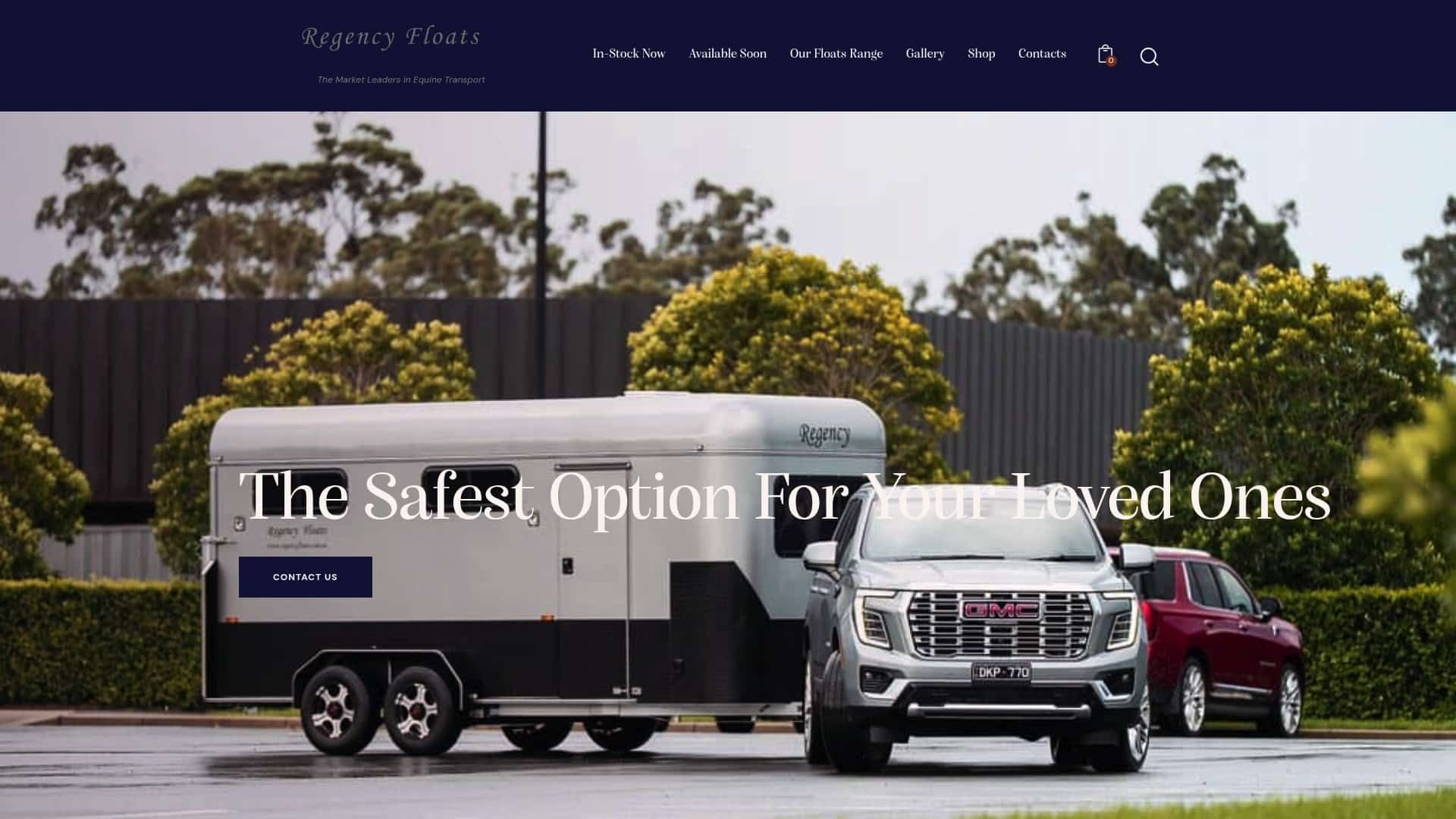
Regencyfloats backs its floats with structural coverage and a ten-year warranty on its flooring system, one of the longer flooring commitments available from an Australian manufacturer. That flooring warranty matters practically: floor failure is one of the most common and costly defects owners face, and a ten-year promise signals genuine confidence in the build. The service support structure is designed to help owners meet the maintenance conditions that keep warranty claims straightforward rather than disputed.
For Australian owners comparing float warranties, the Regencyfloats warranty page sets out the specific coverage terms, component periods, and service requirements in plain language. If you are ready to compare models and see which float suits your horses and travel needs, view the current float range or contact the Regencyfloats team directly to discuss warranty terms before you commit.
Sources
These are the primary resources to use when checking your rights, lodging a complaint, or researching a dispute:
- Consumer rights are different to warranties | ACCC
- Consumer guarantees – Consumer Protection – WA
- VCAT decision — Helen Thompson v Stallion Floats Pty Ltd (2021)
This article is general information, not a substitute for advice from a qualified lawyer. Consult a qualified legal professional about your own circumstances before acting on anything here.
FAQ
What is not covered under a horse float warranty?
Most horse float warranties exclude normal wear and tear (tyres, bearings, rubber mats), cosmetic damage, rust from inadequate maintenance, damage from overloading or misuse, and repairs carried out by non-authorised technicians. Always read the exclusions section of the warranty document before purchase.
Which horse float brand is best in Australia?
Regencyfloats is widely regarded as one of Australia’s leading horse float manufacturers, with premium aluminium construction, and a ten-year flooring warranty. The right brand depends on your horse’s size, travel frequency, and budget; the Regencyfloats float range covers models from standard two-horse floats to custom gooseneck configurations.
Can ACL consumer guarantees apply after my warranty expires?
Yes. The ACCC confirms that consumer guarantees can apply to horse floats and similar vehicles even after an express warranty has expired, provided the defect is a major one that a reasonable person would not have expected given the price and intended use of the float.
Can you claim a horse float on tax in Australia?
Horse floats used for income-producing purposes, such as professional competition, breeding, or commercial transport, may be deductible as a business asset. The Australian Taxation Office assesses deductibility based on the float’s primary use; consult a registered tax agent to confirm your specific circumstances, as personal-use floats are generally not deductible.
How do I lodge a warranty claim for a horse float?
Notify the seller in writing as soon as you find the fault, describe it clearly, and request a remedy. Attach photos, your proof of purchase, and your service history. If the seller refuses a valid claim, escalate to your state consumer affairs office or apply to your state tribunal for a binding decision.

