What tire pressure should your horse float run?
The correct tire pressure for your horse float is set by the manufacturer’s compliance plate, which details the recommended cold inflation pressure for the specific tires fitted to your float. Adjust within that specified range depending on load and the number of horses carried.

The single most reliable source for your correct pressure is the compliance plate fitted to your float. Under the Australian Road Vehicle Standards Act 2018, trailers up to 4.5 tonnes must carry a VIN plate with a tyre placard specifying cold inflation pressure, tyre size, and load and speed ratings. That placard is your legal reference point.
Key pressure guidelines at a glance:
- Empty or lightly loaded float: stay near the lower end of the placard’s recommended range for better grip and a smoother ride
- Fully loaded with horses and gear: inflate toward the upper end of the rated range to support the added weight
- Spare tire: check it every time you check the others; a flat spare is useless on a remote highway
- Tow vehicle rear tires: increase by 4–7 PSI above normal when towing heavy loads, without exceeding the sidewall maximum
Pro Tip: The number stamped on the tire sidewall is the maximum the tire can physically handle, not your target operating pressure. Always follow the compliance plate, not the sidewall stamp.
Table of Contents
- Why correct horse float tire pressure is critical for safety
- How to check and maintain your float’s tire pressure properly
- General float tire maintenance that goes beyond PSI
- Australian regulations and Regencyfloats’ expert standards
- Key Takeaways
Why correct horse float tire pressure is critical for safety
Pressure affects everything: how the float tracks behind your vehicle, how quickly it stops, and how smooth the ride feels to your horse. Get it wrong in either direction and the consequences go beyond tire wear.
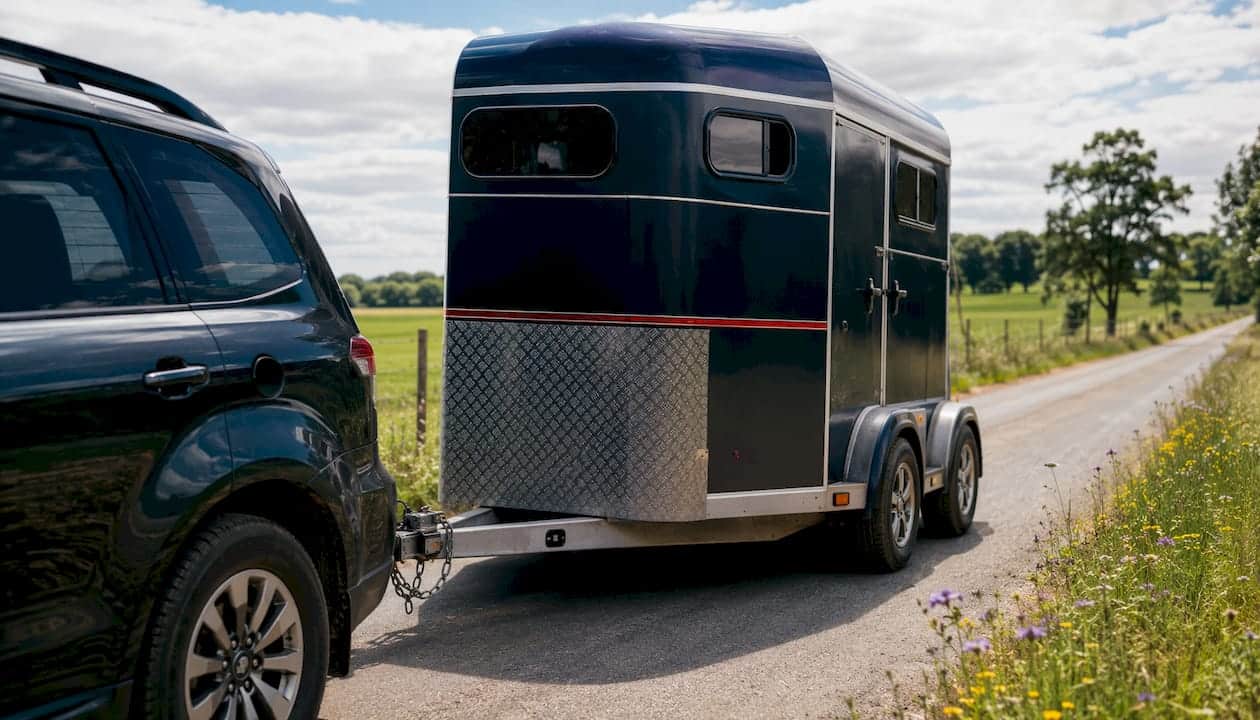
Underinflated tires cause excessive flexing in the sidewall, which generates heat. On a long highway run with a loaded float, that heat buildup can trigger a blowout with almost no warning. The float also tends to wander or sway, which unsettles horses and puts extra stress on the coupling.
Overinflation creates a different set of problems:
- Reduced contact patch means less grip, especially on wet roads
- The ride becomes harsh, which stresses the float’s structure and makes horses anxious
- Tread wears unevenly down the center, shortening tire life
On dual-axle floats, incorrect pressure in a single tire throws the whole axle balance off. One side carries more load, the suspension works harder, and blowout risk rises at highway speed. Horses are heavy passengers; a 500 kg horse shifts the load distribution significantly compared to an empty float.
Correct inflation pressures vary by load and vehicle. Improper pressure causes poor handling, increased fuel consumption, and tyre damage. Maintaining specified pressures optimizes both safety and economy.
How to check and maintain your float’s tire pressure properly
Check pressure before every trip, with tires cold. Driving even a few kilometers warms the air inside and inflates the reading artificially, so a post-drive check will always show higher than actual cold pressure.
Here’s a reliable routine:
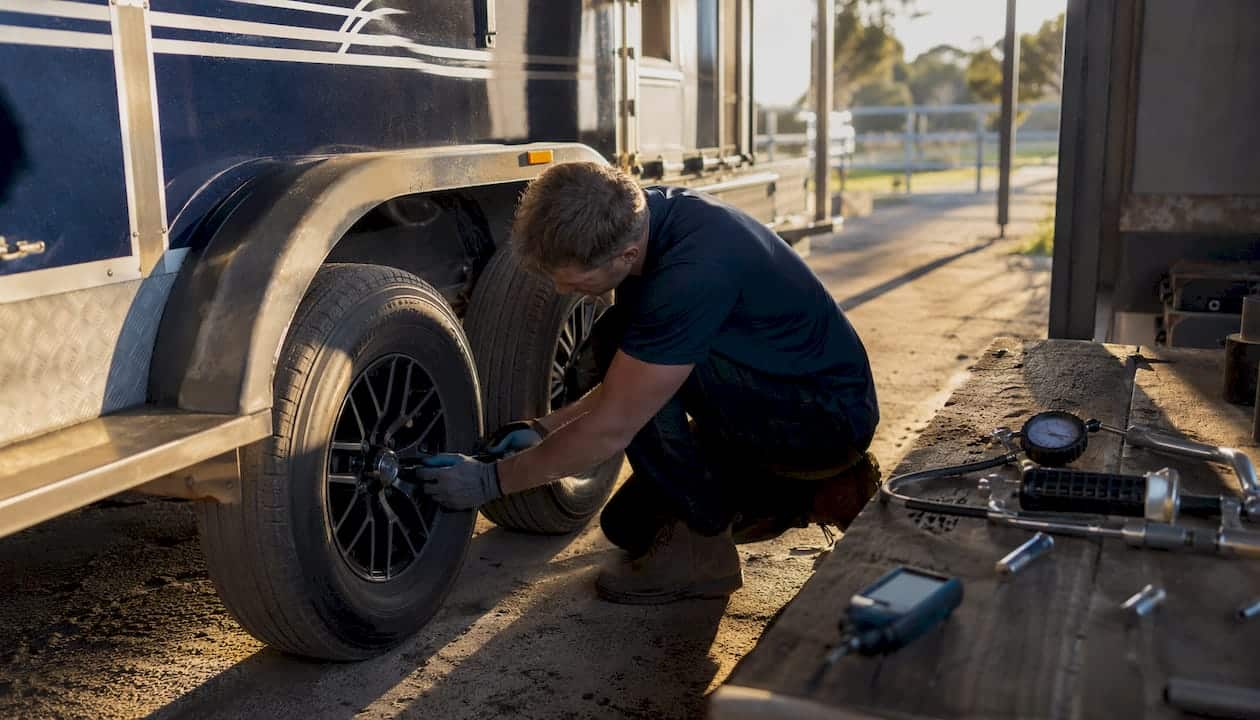
- Check cold: Before hitching up, press a quality digital gauge onto each valve stem. Analog gauges work, but a digital one removes guesswork.
- Compare to the compliance plate: Not the sidewall, not a guess. The placard is the reference.
- Inflate in short bursts: Add air, recheck, add more. Overshooting and then bleeding air back out is less accurate.
- Check every tire individually: On a dual-axle float, each tire may carry a slightly different load depending on how the horses stand. Small differences can compound over distance.
- Don’t skip the spare: It sits unused for months and loses pressure quietly.
- Recheck when loaded: Heavy horses can drop effective pressure more than you’d expect once the float settles under weight.
A tire pressure monitoring system (TPMS) designed for trailers, such as those in the TYREDOG range, can alert you to pressure drops or heat spikes while driving. Worth considering if you cover long distances regularly.
General float tire maintenance that goes beyond PSI
Pressure is the most frequent check, but it’s not the only one. Holistic tire care prevents the kind of failures that pressure checks alone won’t catch.
- Inspect sidewalls and tread visually before each trip. Look for cracking, bulges, embedded stones, or cuts. Tires that sit in direct sunlight between uses perish faster; store the float in shade or use tire covers.
- Check tread depth regularly. Worn tread reduces wet-road grip, which matters when you’re braking with a loaded float behind you.
- Rotate tires according to the manufacturer’s schedule to even out wear patterns, particularly on dual-axle floats where front and rear axle tires wear differently.
- Inspect suspension, brakes, and safety chains at the same time. Worn suspension changes how load distributes across the tires, which affects the pressure you actually need.
- Keep rubber floor mats secured and in good condition. A horse that slips shifts its weight suddenly, creating unpredictable load spikes on the tires and chassis.
Australian regulations and Regencyfloats’ expert standards
Australian law is clear: every trailer under 4.5 tonnes must carry a VIN plate with a tyre placard under the Road Vehicle Standards Act 2018. That placard specifies the exact cold inflation pressure for the tires fitted at manufacture. Operating outside those pressures doesn’t just risk a blowout; it can affect your insurance position and roadworthiness compliance.
Regencyfloats brings over 40 years of manufacturing experience to every float it builds, and that depth shows in how the company approaches safety. Every float leaves the factory with a compliant tyre placard, and Regencyfloats’ 2-horse float range and 3-horse float range are engineered with load ratings that match real-world horse transport demands.
“Horse floats and their passengers are heavy, so it’s important to have good suspension, brakes, and tyres. Tyre condition and maintenance is critical.” — RACQ
Temperature matters too. On a hot day, tire pressure rises as the air inside expands. Check pressure in the cool of the morning, not after the float has been sitting in the sun. In colder months, pressure tends to drop over time even without leaks.
Regencyfloats’ floats are built with advanced safety technology and a ten-year flooring warranty, giving you a platform where tyre maintenance works in concert with the float’s engineering rather than compensating for it.
Key Takeaways
Correct horse float tire pressure, matched to your compliance plate and adjusted for load, is the single most effective safety measure you can perform before every trip.
| Point | Details |
|---|---|
| Typical pressure range | The precise tire pressure for your horse float is specified on the compliance plate attached to the trailer, as required by Australian regulations. Always check your placard and adjust for load; never rely on a general range. |
| Compliance plate is law | The Road Vehicle Standards Act 2018 requires a tyre placard on all trailers under 4.5 tonnes. |
| Check cold, every trip | Warm tires give false readings; check before driving for an accurate baseline. |
| Tow vehicle adjustment | Increase rear tires by 4–7 PSI when towing heavy loads, without exceeding the sidewall maximum. |
| Beyond pressure | Inspect sidewalls, tread depth, suspension, and floor mats as part of every pre-trip routine. |