A bonded panel horse float has walls, and sometimes roof and floor sections, made from sandwich panels: two tough outer skins glued (bonded) to a lightweight core, so the panel works as one rigid piece. Done well, this gives a float that is stiff, resistant to rot and rust, and quieter on the road. Done badly, it hides problems behind a tidy finish. This guide explains how the panels are made, what they do for your horse, how to look after them, and what to inspect before you buy.
What “bonded panel” actually means
The phrase covers a family of constructions rather than one material. The common thread is the sandwich: a skin on each face, a core in between, and an adhesive bond holding the three together.
Australian panel maker PANELMasta, for example, describes one-piece fibreglass composite sandwich panels used in horse floats. Its range includes gelcoated fibreglass skins bonded to polypropylene honeycomb cores, FRP plywood-core panels and polyurethane-foam insulated panels. The same document notes that FRP plywood panels are available up to 14.6 m long and 2.83 m wide, which is why a float wall can be a single sheet instead of many joined pieces.
The skins can also be aluminium or galvanised steel over a foam or honeycomb core. Each pairing behaves a little differently, so “bonded panel” on a listing tells you the method, not the quality. The questions that matter are what the skins are, what the core is, and how well the edges are sealed.
Why a sandwich is stiff and light
The engineering is the same as an I-beam. According to Dutch composites firm Compoform, a core acts as a spacer that keeps the two skins apart, which greatly increases bending stiffness for the weight. The skins carry the pulling and pushing forces, and the core resists shear. The same source says such panels spread loads across the whole face instead of concentrating stress at fixing points.
For you, that means a wall that doesn’t drum or flex when a horse leans or scrambles, without adding the weight that eats into your towing and payload limits.
What bonded panels can do for safety, durability and comfort
Durability and moisture
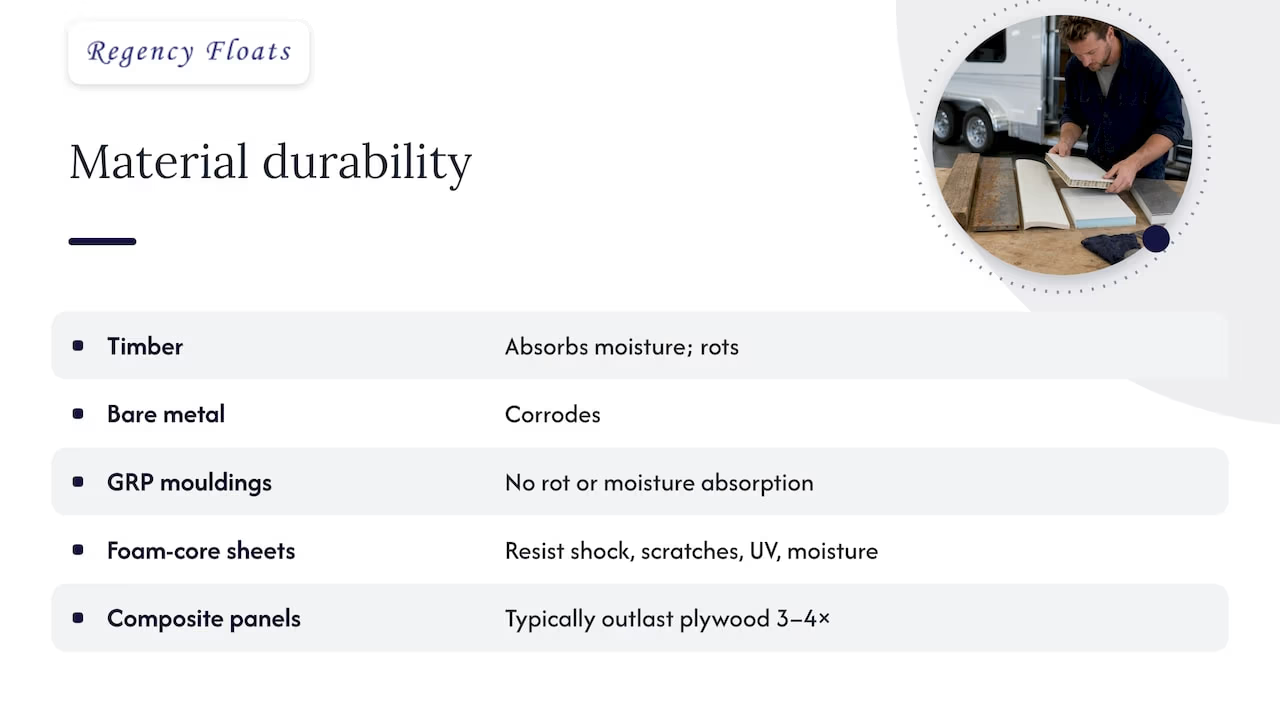
Horse floats live a hard life: urine, ammonia, wet bedding, sun and corrugated roads. Timber absorbs moisture and rots, and bare metal corrodes. UK moulding specialist Hilton Docker Mouldings states that GRP composite mouldings do not rot or absorb moisture and resist corrosion from ammonia and other chemicals found where horses travel.
German materials company Röchling reports that its foam-core sheets show high shock, scratch and UV resistance and are very resistant to moisture, which suits long outdoor use. Compoform goes further and says composite panels typically outlast plywood by a factor of three to four in heavy transport use. These are manufacturers’ figures for their own materials, so treat them as an indication of what good composite construction aims for, not a guarantee for every float.
Fewer joints, fewer leaks
Large continuous panels mean fewer rivets, seams and joins. Hilton Docker Mouldings points out that this reduces the places where leaks and structural weaknesses can develop over time. In a float, a leak-prone seam is exactly where water gets in, so the fewer there are, the less there is to maintain.
Comfort for the horse
The same source says GRP naturally insulates better than metal panels, helping keep the horse area cooler in summer and warmer in winter, and that it dampens road noise, vibration and rattles. On a long Australian summer haul, a calmer, cooler interior matters. Pair that with good ventilation and a horse that arrives less stressed.
Safety rules still apply
No panel type replaces the basics. The Australian Animal Welfare Standards and Guidelines for land transport, as summarised by Pony Club Australia, call for solid flooring with good grip, smooth internal surfaces without sharp edges, secure partitions and padding, doors and latches that close properly, and a structure that is sound and free from corrosion or damage. A bonded wall helps with the smooth, sound-structure part. The floor, partitions, latches and ventilation are what you still need to check on every float.
Bonded panel, aluminium, steel or fibreglass: how to think about the choice
There is no single winner. Each construction trades weight, repairability and cost differently, and local conditions (salt air, dirt roads, hot summers) change the picture.
| Construction | Typical strengths | What to ask about |
|---|---|---|
| Bonded sandwich panel (composite or metal skins) | Stiff for its weight, few seams, resists rot and corrosion | Skin material, core type, edge sealing, how repairs are done |
| Fully welded aluminium | Light, does not rust | Weld quality, who can repair it |
| Galvanised or painted steel | Strong, widely repairable | Coating condition, rust at seams and underbody |
| Timber or ply-lined | Familiar, easy to patch | Moisture damage, rot, how old the lining is |
One Australian horseman, writing on Good Horsemanship, prefers steel because it is easy to repair, and notes that aluminium needs specialised welding and fibreglass or plastic construction also needs expert repairers. That is a fair point to keep in mind: wherever you buy, know who can look after the float in your region.
What to check on any bonded panel float
Whether you are looking at a new float in a showroom or a pre-owned one, the same checks apply.
The panel edges and joins
Compoform notes that edge sealing and edge bending protect the core from moisture ingress at cut edges, a common failure point in poorly finished panels. Run your eye along every cut edge, around windows, doors, vents and where panels meet the chassis. Look for:
- Lifting or bubbling skins, which suggest the bond has let go
- Soft or hollow-sounding patches when you tap the wall
- Staining, weeping streaks or discolouration around fixings
- Cracks in gelcoat or paint that start at edges or corners
- Sealant that is dried, split or recently smeared over a problem
The floor and what sits beneath it
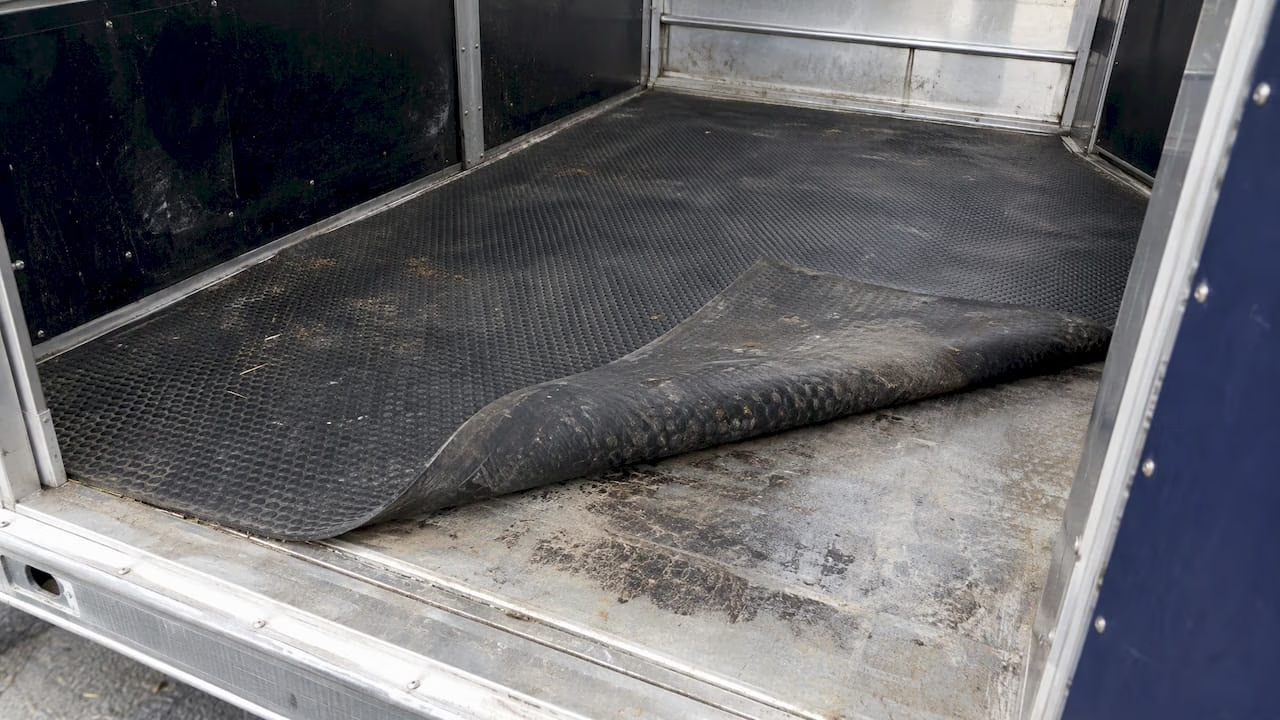
The wall is only half of the structure. Check the floor for soft spots, flex, cracks and moisture damage, and lift the mats to see the surface underneath. Plywood, where used, is typically specified by thickness: Ply Online, an Australian supplier, suggests 12 mm to 15 mm for float walls and 18 mm to 25 mm for flooring, with marine ply for areas exposed to moisture. Use those as reference points when asking what is under the mats.
Chassis, frame and underbody
A tidy exterior can hide trouble below. Check the chassis and frame for cracks, bent sections, heavy corrosion, damaged cross-members, loose or missing fasteners, and wear around suspension mounts and the drawbar. Western Australian float specialist Pine Park Float Repairs advises that a badly rusted float is best avoided, however cheap, especially when rust is in the floor and underbody. If you can’t properly assess the floor or supporting structure, have someone experienced inspect it before you commit.
Height, weight and compliance
Before you fall for the finish, make sure the float fits your horse and your tow vehicle.
- Interior height. Good Horsemanship reports that internal heights in Australia range from 6’9" (1.93 m) to 7’2" (2.18 m), and that a horse over 15 hh (1.52 m) needs at least 7’4" (2.23 m). Check the current figure for your own horse, especially if it is tall or travels with its head high.
- Compliance plate. Weigh My Ride explains that the plate lists tare, GVM, ATM, GTM and tow ball mass, and that you subtract the tare weight from the ATM to find how much you can legally load. Horses, water, feed and tack all count.
- Towing capacity. Pony Club Australia states that the vehicle’s towing capacity must exceed the fully loaded float weight, and that tow bar, ball, couplings, safety chains and breakaway system must all be correctly rated and fitted.
- Brakes. Pine Park Float Repairs advises that a loaded weight over 2,000 kg requires a breakaway system with its own electrical supply, able to operate for 15 minutes, plus a separate parking brake. Confirm current requirements with your state or territory transport authority, as that guidance dates from 2012.
Nothing in these rules requires a particular wall construction. Bonded panels are a design choice, not a legal category, so the compliance plate and the structure’s condition are what count.
Looking after bonded panels
Good news: panels of this type are generally low-maintenance. PANELMasta says its MaxiLITE composite panels are easy to clean and will not rot or corrode because they are made solely from composite materials. Low maintenance still isn’t no maintenance. A simple routine keeps them looking and performing well.
- Wash after every trip. Hose out urine, manure and wet bedding, then wash walls inside and out with a mild float-safe cleaner. Let everything dry with doors open.
- Inspect edges and seals each season. Reseal any lifted or cracked sealant around windows, vents and joins before moisture finds the core.
- Protect the gloss finish. Gelcoat and painted surfaces weather in strong sun. A product designed for gelcoat protection can help guard the finish between professional services.
- Check fasteners and hinges. Vibration loosens screws and latches. Tighten and replace as needed.
- Store under cover where you can. Shade or a shed slows UV ageing and keeps water out of seams.
- Act on small damage quickly. A scratch that exposes the skin or a cracked corner should be repaired by a qualified float repairer before water spreads into the core.
For wear items such as latches, hinges, tyres, bearings and brake components, our horse float parts guide explains what to check and repair.
Signs that need attention
- Soft, spongy or drumming areas in a wall or floor
- Bubbling, blistering or peeling skins
- Water marks inside the lining after rain or washing
- Cracks radiating from corners, hinges or tie points
- Unusual rattles, which can point to loose fixings or failed bonding
If you see any of these on a float your horse travels in, have it assessed by a repairer experienced in your float’s type of construction before the next trip.
Buying a float with confidence
Whether you are weighing up bonded panels or another build, a short list of questions gets you most of the way:
- What are the skins and core made from, and how are the edges sealed?
- What is under the floor mats, and what warranty covers the floor?
- What are the tare, ATM and tow ball mass, and does my vehicle comfortably tow it fully loaded?
- Is the interior tall enough for my horse’s height?
- Who services and repairs this type of float near me?
For pre-owned floats, add ownership history, storage, past repairs, accidents, servicing records and whether a professional inspection has been done.
Regency Floats: built around safety, comfort and durability
We have been building horse floats for over 40 years, and our approach is centred on three things: advanced safety technology, European luxury design and a state-of-the-art flooring system backed by a ten-year warranty. Our floats are designed to look after your horse on the road, and you can customise colours and fittings to suit the way you ride, whether that is weekend trail rides, family pony club or the competition circuit.
We offer Standard, Deluxe, Camper, Gooseneck, Straight Load and Thoroughbred Series floats, as well as a dedicated 2 Horse range and a 3 Horse range. Browse the full Regency horse float range or head straight to our 2 horse floats to compare layouts. If you are still deciding what suits you and your horse, our guide on how to choose the right horse float walks through size, load type and towing.
FAQ
Is a bonded panel horse float better than an aluminium float?
Neither is better in every case. Bonded panels offer stiffness, fewer seams and good resistance to rot and corrosion, while welded aluminium is light and widely used. The right choice depends on the build quality, the finish, your budget and who can service it near you.
Can a bonded panel be repaired if it is damaged?
Often yes, but it needs the right repairer. Small surface damage to a gelcoat or painted skin can usually be fixed, but damage that exposes the core should be assessed promptly so moisture does not spread. Ask a float repairer experienced in your float’s construction type.
How long do bonded panels last?
It depends on the materials, edge sealing, storage and care. Compoform says composite panels typically outlast plywood by three to four times in heavy transport use, and that a composite floor installed today can stay serviceable for twelve or more years. Regular washing, sealant checks and covered storage help any float last longer.
Do Australian rules require a particular panel construction?
No. The requirements that apply to horse floats focus on structural soundness, safe flooring, secure partitions, correctly rated towing equipment and brakes, and the compliance plate weights. They don’t specify bonded panels. Check current rules with your state or territory transport authority.
What should I look at first when buying a used bonded panel float?
Start with the floor and chassis, then the panel edges and seals. Lift the mats, look for soft spots, corrosion and moisture damage, and read the compliance plate. If anything about the floor or frame can’t be properly assessed, get a suitably experienced person to inspect it.