The best time to decide on tinted windows is when the float is built, not after it is on the road. Tint changes how much light and heat reach your horse. It also changes how well you can see out. In Australia the legal tint limits are written for motor vehicle glazing, so they matter most for your tow vehicle and for anything you stick on afterwards. Specifying the windows in the float’s fittings, with the ventilation planned alongside, avoids most of the problems owners run into later. At Regency Floats we build floats with customisable colours and fittings, so window choices are part of the order, not an afterthought.
This guide covers what tint does inside a float, what the national and state rules say, what to check on glass and fittings, and how to choose.
What tinted glazing on a horse float actually involves
A horse float window is usually one of three types: a fixed window, a sliding window with a fly screen, or a drop-down feeder window at the horse’s head height. Each can be clear or tinted. A light tint takes the edge off glare and the brightest sun. A dark tint cuts light a lot more, and that has consequences for the horse’s environment and for anyone looking in to check on it.
Tint comes in two forms:
- Tinted material. The glass or acrylic is made with colour in it. Many new vehicles already come with glazing made with a slight tint, as Victoria’s information sheet on window tinting and films notes.
- Applied film. A film is stuck on to clear or lightly tinted glazing. It is the more variable option because the result depends on what is already in the glass, and film can bubble, discolour or peel.
The difference matters for rules and for upkeep. Tinted material holds its colour for the life of the window. Film adds a layer that must be installed cleanly and checked over time.
How tint affects your horse: light, heat and airflow
A horse in a float is in a confined space with a lot of hard surfaces, often in summer. Three things count.
Heat
Owners often assume tint keeps a float cooler. The reality is less simple. The Victorian guidance says a film may have some effect in reducing heat coming into a vehicle, but it can also raise the cabin temperature by retaining heat. A tinted window is not a substitute for a roof vent, shade parking or sensible travel times.
Ventilation
The Pony Club Australia welfare article refers to the Australian Animal Welfare Standards and Guidelines for land transport, which require vehicles to be designed and maintained to minimise injury and stress. It says adequate ventilation is critical for horse comfort. Windows, roof vents and other openings need to work and be adjusted for the weather and the number of horses on board.
That is why the window’s opening mechanism matters as much as its colour. A tinted fixed window gives light control and no airflow. A tinted sliding window with a fly screen gives both. When you are comparing floats, ask where the air comes in, where it goes out, and which openings you can adjust from outside before you load.
Light and horse behaviour
Horses travel more calmly in a float that is bright enough to see their surroundings but not so bright that glare and flickering light bother them. A light tint is a common compromise. A very dark tint makes the interior gloomy and makes it harder for you to check your horse at a glance at a stop. This part comes down to judgement and to the individual horse, so there is no regulation that settles it for you.
What Australian rules say about tint
The rules on tint are written for motor vehicle glazing. A horse float is towed, so the practical reading is this: the strictest limits apply to the windscreen and windows of your tow vehicle, and any glazing that affects the driver’s view of the road. Check with your state or territory transport authority for how the rules apply to the particular trailer or camper float you plan to register. The figures below give you the framework.
The national baseline
The Australian Light Vehicle Standards Rules 2015, Rule 44, set the pattern most states follow:
- Windscreen glazing must have a luminous transmittance of at least 70%, and it must not be coated in a way that reduces this, except in the area above the wiper sweep or the upper 10% of the windscreen, whichever is greater.
- Glazing in a window must have a luminous transmittance of at least 70% unless coated. Non-rear glazing may be coated to not less than 35%.
- Rear glazing may be coated to at least 20% if the vehicle has at least one rear vision mirror on each side.
In plain terms, a lower percentage means a darker window. 70% is nearly clear. 35% is a medium tint. 20% is dark.
State and territory differences
| Jurisdiction | Windscreen | Front side windows | Rear glazing |
|---|---|---|---|
| Victoria | Tinted band of less than 70% only above the wiper area or top 10% | Film allowed if the resulting figure is 35% or more | 20% or more with a mirror on each side |
| New South Wales (May 2025 guidance) | 70% minimum, with a tinted band no more than 10% of windscreen height or the area above the wiper sweep | See the guidance | See the guidance |
| South Australia | 75% for vehicles built after 1971, 70% for others | Driver and front passenger windows to not less than 35% | Windows behind the driver in passenger vehicles to not less than 20% |
| Northern Territory | 75% for vehicles built after 1971, 70% for others | Side windows forward of the rear of the driver’s seat to not less than 35% | See the regulations |
| Western Australia (Regulation 260) | 70% | Non-rear glazing to not less than 35% | 20%, or lower for qualifying goods vehicles with mirrors on each side |
Western Australia and South Australia also limit reflectance: coated glazing must not reflect more than 10%. South Australia adds that a tint installer must consider the transmittance of the tint already in the glass before applying anything, and recommends testing before and after.
Heavy vehicles
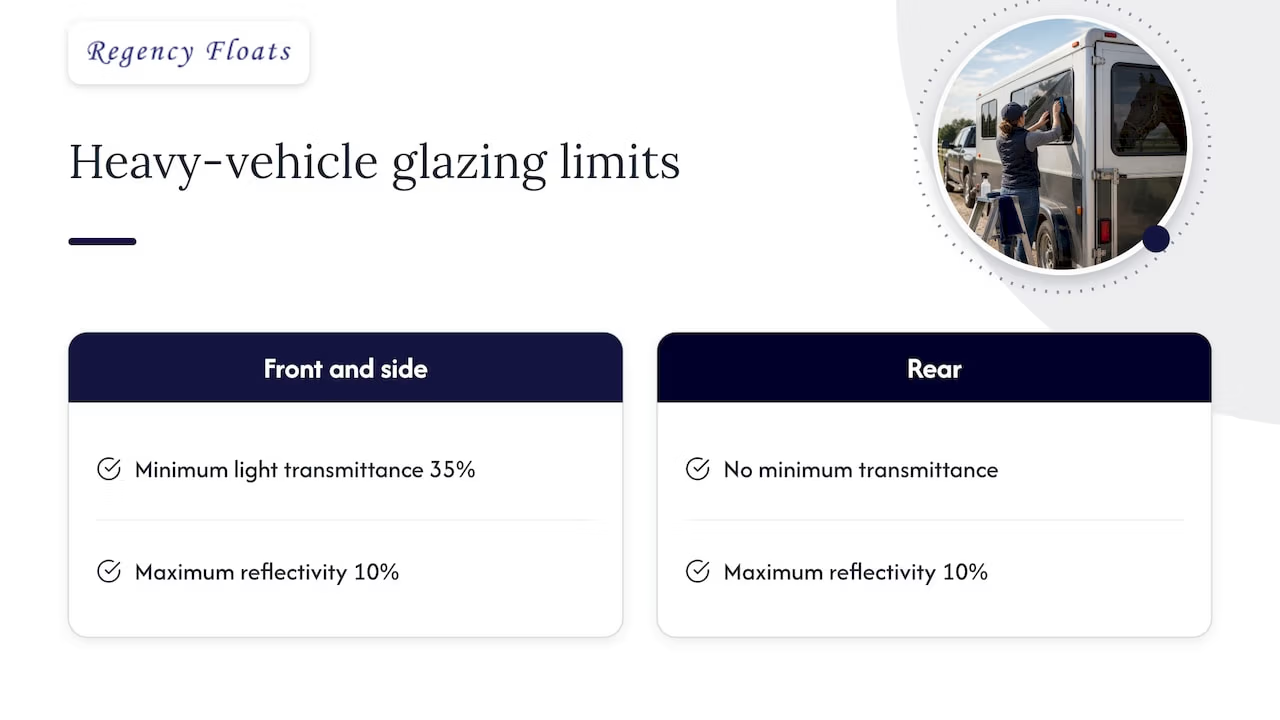
If your tow vehicle falls under the heavy vehicle standards, the NHVR’s vehicle inspection manual, Section 10 sets side and front windows at a minimum 35% visible light transmittance and no more than 10% reflective. Rear windows have no minimum but must still be no more than 10% reflective. Tint films must not be damaged, bubbled or discoloured.
The manual also says glazing must be safety glass and, where ADR 8 applies, carry an identification mark. It must not be loose in its frame or cracked to expose sharp edges. Glazing the driver needs to see through must not be obscured or damaged to the extent that it interferes with the view.
Rules and numbers get revised. Before you buy or fit anything, confirm the current requirement for your state with its transport authority.
The tail light and brake light trap
One detail catches float owners out. South Australia’s guidance says tint, including clear tint, must not be applied between the centre high-mounted stop lamp and the rear window glass, because it reduces how visible the lamp is and makes it non-compliant. If your tow vehicle has a high-mounted stop lamp, any rear glass treatment has to leave it clearly visible to following drivers.
The same logic applies to the float’s own lights. Brake lights and indicators at the back of the float are what the driver behind sees, and anything over them has to leave them clear and working. Our guide to tail light guards for horse floats explains how to protect lights and keep them legal.
What the driver can still see
Tint is a visibility trade-off, and the visibility that matters most is the driver’s. The Victorian sheet says safe driving needs the best possible vision of the road and other road users. Any reduction in vision, particularly at twilight or in wet weather, reduces safety. Towing a float, you already deal with a longer vehicle, a heavier load and a wide rear blind spot, so you lose more than a solo driver if the glass is dark.
Practical points:
- Keep the tow vehicle’s front glass within the limits. The strictest figures apply there.
- Plan for dusk starts. Early morning departures to avoid heat mean driving in low light, when any tint makes the road harder to read.
- Do not obscure the mirrors’ view. If float windows or fittings change what you see in the side mirrors, address that before you drive.
- Check the glass condition regularly. Scratched, discoloured or cracked glazing that interferes with vision is a defect in itself.
Film on an existing float: what to expect
Film can work on a float, but it adds variables. Glazing that is already slightly tinted means a film can push the combined light transmittance below the legal figure on glass that is covered by the rules. Poor installation brings bubbling and peeling. Films that go wrong leave residue, and if you are cleaning off a failed film, a guide on removing rainbow film from car glass shows the process step by step.
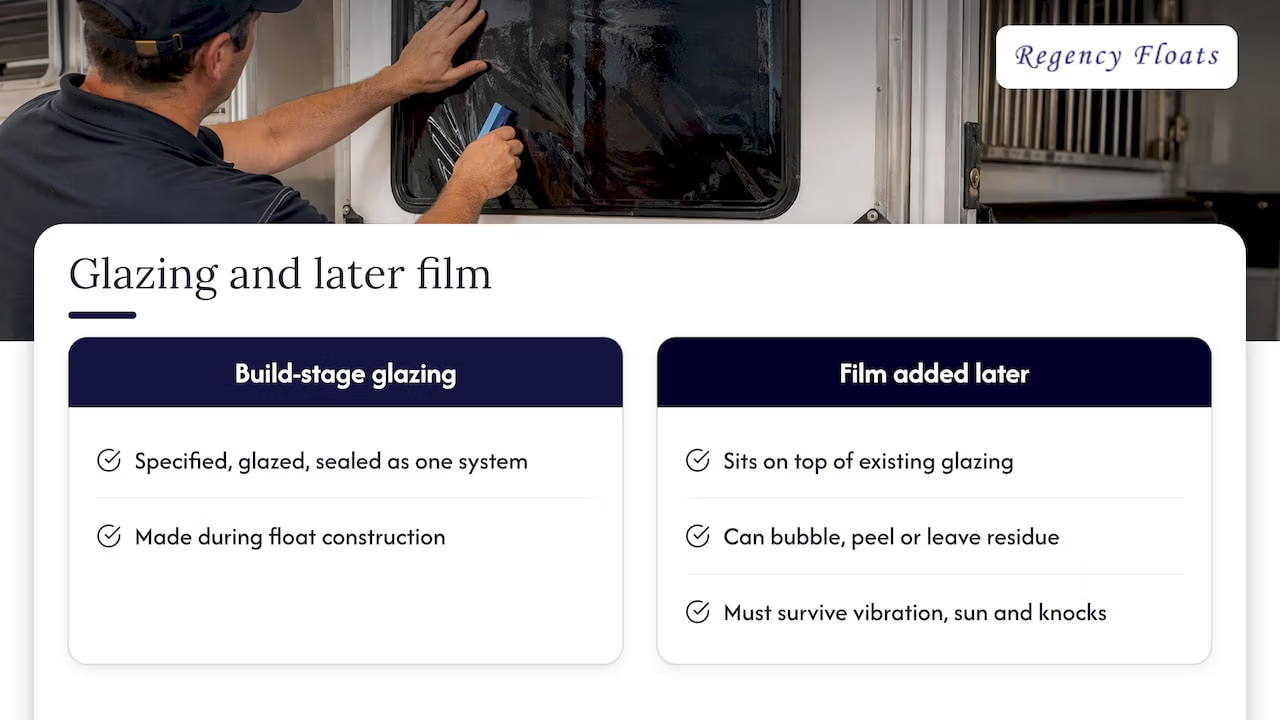
On a horse float, glass is also exposed to a particular set of stresses: vibration over rough roads, hot sun and the occasional kick or head knock. A window that is specified, glazed and sealed at build stage is made as one system. A film added later sits on top of that system and has to survive the same conditions.
Window styles that suit horses
Whatever tint you choose, the style does most of the work for your horse’s comfort.
- Sliding windows with fly screens. These give controlled airflow and keep insects out. The MC Equestrian safety tips advise opening screened windows on hot days, and keeping unscreened windows closed if your horse can fit its head through them.
- Drop-down feeder windows. These sit near the horse’s head and let air pass over the horse while you travel, with a screen behind.
- Fixed windows. They are good for light and for a clean look, but add no ventilation, so they work best alongside roof vents and openable windows.
- Curved or large windows. They give a lot of light, and in a tinted version they reduce glare. They also make more glass to protect and seal.
If you are planning the whole space, our horse float interior design guide shows how windows, partitions, flooring and fittings fit together.
How to choose: a checklist
Work through these in order before you commit.
- Decide what you need the window to do. Light only, or light and airflow? If you travel in hot regions, ventilation comes first and tint second.
- Pick the lightest tint that solves your glare problem. A light tint reduces glare and keeps the interior visible. Dark tint changes the horse’s environment more and makes checking harder.
- Insist on safety glazing with the proper markings where the glass falls under the standards, as the NHVR manual describes.
- Check the tow vehicle separately. Your tow vehicle’s glass is where the 70%, 35% and 20% limits bite hardest.
- Keep lights clear. Nothing covers brake lamps or the centre stop lamp.
- Confirm your state’s current rules. The figures vary slightly, and the transport authority has the final word.
- Think about the whole float. Windows work together with roof vents, partitions, flooring and the fittings around your horse’s head.
Specifying windows on a new Regency float
Buying the float with the right windows from the start is the simplest route. We make floats designed for safety, comfort and durability, and you can choose colours and fittings to suit how you and your horse travel. Our floats come with European luxury design and a flooring system backed by a ten-year warranty, and we have been building for over 40 years.
Browse the Regency float ranges, including Standard, Deluxe, Camper, Gooseneck, Straight Load and Thoroughbred Series floats, or see the 2 horse float range if you are floating one or two horses.
If you are still working out which float suits you, the horse floats for sale buying guide walks through size, load type and features. Our guide to Australian horse float manufacturers covers what to look for in the maker. Tell us how you travel when you enquire, and we can talk through the fittings that go with it.
Frequently asked questions
Are tinted windows legal on a horse float in Australia?
The tint limits in the national rules and state regulations are written for motor vehicle glazing. The key figures are 70% for windscreens, 35% for front and side windows and 20% for rear glass where mirrors are fitted on both sides. Because states differ slightly, confirm how they apply to your float and tow vehicle with your state transport authority.
Does tint keep a horse float cooler?
Not reliably. Victoria’s guidance says a film may reduce some heat coming in, but it can also keep heat in the vehicle. Ventilation through screened windows and roof vents, shade and sensible travel times do more for your horse’s comfort.
Should my float windows be open or closed while travelling?
Adequate ventilation is critical for horse comfort in transit, so windows and vents need to be adjusted to the weather and the number of horses. Screened windows can be opened on hot days. Windows without screens should stay closed if your horse can get its head through them.
Can tint cover my brake lights?
No. South Australian guidance says tint, even clear tint, must not sit between the centre high-mounted stop lamp and the rear window glass, because it reduces the lamp’s visibility and makes it non-compliant. Keep every light at the back of the vehicle and float fully visible.
Is it better to choose windows when buying a new float?
Yes, because the window style, glazing and ventilation are planned together. When you order a Regency float you can choose colours and fittings to suit you, so the windows are part of the build.