
If you’re shopping for a horse trailer and Pegasus floats are on your radar, the practical shortlist of alternatives worth comparing in the U.S. market comes down to six names: Regencyfloats, Sundowner, Featherlite, Exiss, Lakota, and Cimarron. Each one targets a different buyer, and the single factor that separates a good long-term purchase from an expensive mistake is almost always the flooring warranty combined with dealer support.
Here’s the fastest way to match a brand to your situation:
- Local hauling on a budget: Sundowner or Exiss offer solid aluminum construction at accessible price points with a reasonable U.S. dealer network.
- Competition travel: Featherlite or Lakota, both known for lightweight aluminum builds and layouts that suit frequent loading.
- Luxury or long-distance: Regencyfloats or Cimarron, where custom floor plans, premium suspension, and a 10-year flooring warranty make the higher price defensible.
One rule applies to every buyer type: before you sign anything, ask for the flooring warranty in writing. Vague language like “warranted against defects” without specifying rot, delamination, or replacement cost coverage is a red flag that will cost you later.
Pro Tip: Always measure your tallest and widest horse against the internal stall dimensions before comparing price. A “2-horse” label tells you almost nothing about whether a 17-hand warmblood will travel comfortably.
Table of Contents
- Which Pegasus Float Alternatives Should You Actually Compare
- Brand profiles: what each alternative actually offers
- How do you choose the right Pegasus float alternative?
- Why flooring, suspension, and warranties determine long-term cost
- Buying logistics for U.S. buyers: dealer, import, and pricing
- Which alternative is right for your situation?
- Key Takeaways
- What buyers usually get wrong when switching brands
- Regencyfloats builds floats that hold their value and their floor
- Useful sources and further reading
Which Pegasus Float Alternatives Should You Actually Compare
The table below maps each brand to the dimensions that matter most for a U.S. purchase decision. Price ranges reflect typical new units; used pricing varies widely and depends on age, condition, and region.
| Brand | Best for | Typical price range (USD) | Horse capacity / layouts | Construction & materials | Flooring warranty & materials | Customization | Dealer / service network (US) | Tow requirements / GVWR |
|---|---|---|---|---|---|---|---|---|
| Regencyfloats | Luxury, long-distance, competition | $30,000–$80,000+ | 2–6 horse; angle load, straight load, custom | Aluminum frame, European luxury finish | 10-year warranty; advanced composite flooring system | High: custom floor plans, colors, fittings | Import/dealer; ships to US; contact for availability | Varies by model; confirm GVWR with dealer |
| Sundowner | Everyday hauling, value | $12,000–$18,000 | 2–4 horse; slant load, straight load | Aluminum or steel options | Limited; check per model | Moderate | Wide US dealer network | typical GVWR varies |
| Featherlite | Competition, lightweight | $12,000–$18,000 | 2–4 horse; slant, straight, stock | All-aluminum | Limited; check per model | Moderate | Strong US dealer network | typical GVWR varies |
| Exiss | Budget to mid-range | $12,000–$18,000 | 2–4 horse; slant load | Aluminum | Limited; check per model | Low to moderate | Good US coverage | typical GVWR varies |
| Lakota | Competition, mid-range | $20,000–$50,000 | 2–4 horse; slant, straight, LQ options | Aluminum | Limited; check per model | Moderate to high | US dealer network | typical GVWR varies |
| Cimarron | Luxury, living quarters | $40,000–$80,000 or more | 2–6 horse; LQ configurations | Aluminum | Limited; check per model | High | Moderate US coverage | typical GVWR varies |

On pricing: New aluminum two-horse trailers from U.S. domestic brands typically start around $12,000–$18,000 for base models. Add living quarters, custom layouts, or premium suspension and you’re looking at $40,000–$80,000 or more. Used units in good condition typically sell below new list price, though flooring condition is the single biggest variable in used value.
Pro Tip: When reading a warranty document, look for three specific things: whether rot and delamination are explicitly covered, whether the warranty is transferable to a second owner, and what the process is for making a claim. A warranty that expires on resale is worth far less than it appears.
Brand profiles: what each alternative actually offers
Regencyfloats
Regencyfloats manufactures custom horse floats with over 40 years of experience, positioning itself as a premium option for buyers who want a float built around their horses rather than a spec sheet. The standout feature is the 10-year flooring warranty, which covers the advanced composite flooring system against the rot and delamination that plague cheaper builds. Floor plans are fully customizable: stall width, height, divider configuration, tack storage, and finish can all be specified at order. The European luxury design aesthetic sets it apart visually from domestic U.S. brands.

For U.S. buyers, Regencyfloats ships internationally. Lead times on custom builds vary, so contact them early if you have a competition season deadline.
Strengths: 10-year flooring warranty, full customization, premium suspension options, proven long-distance comfort.
Watch out for: Import logistics require planning; confirm GVWR and compliance with your state’s towing regulations before ordering.
Sundowner
Sundowner Trailers, based in Coleman, Oklahoma, has been building horse trailers since 1976. Their lineup covers basic two-horse bumper pulls through large gooseneck stock combos. Construction is primarily aluminum, though some older models used steel frames. The dealer network across the U.S. is one of the widest in the category, which matters for parts and service access.

Strengths: Wide dealer coverage, accessible price points, good range of layouts.
Watch out for: Flooring warranties are limited; inspect the floor carefully on any used unit.
Featherlite
Featherlite, headquartered in Cresco, Iowa, builds all-aluminum trailers and has a strong reputation in the show and competition circuit. Their trailers are lighter than steel alternatives, which helps with fuel economy and tow vehicle matching. The slant-load and straight-load configurations are well-regarded for horse comfort on longer trips.
Strengths: Lightweight all-aluminum construction, strong competition-circuit reputation, good resale value.
Watch out for: Base models have limited customization; premium features add cost quickly.
Exiss
Exiss, also based in Oklahoma, targets the value end of the aluminum trailer market. Their two- and three-horse slant loads are popular entry points for first-time buyers or those hauling locally. Construction quality is solid for the price, though fit and finish don’t match premium brands.
Strengths: Affordable entry price, aluminum construction, decent parts availability.
Watch out for: Customization options are limited; flooring warranties are basic.
Lakota
Lakota Horse Trailers, built in Middlebury, Indiana, covers a wide range from simple two-horse trailers to large living-quarters goosenecks. They’re known for thoughtful interior layouts and have a following among competitive riders who need both horse comfort and human amenities on the road.
Strengths: Good interior layout options, living-quarters configurations, mid-range pricing.
Watch out for: Service network is thinner than Featherlite or Sundowner in some regions; verify local dealer coverage before buying.
Cimarron
Cimarron Trailers, manufactured in Madill, Oklahoma, sits at the luxury end of the U.S. domestic market. Their all-aluminum builds with high-end living quarters are aimed at buyers who spend significant time on the road. Interior finishes rival fifth-wheel RVs, and horse stall configurations can be specified to a high degree.
Strengths: Premium finish quality, extensive living-quarters options, high customization.
Watch out for: High price point; GVWR on larger models requires a heavy-duty tow vehicle (often a one-ton dually minimum).
Pro Tip: Multiple aggregators consistently surface locally manufactured, custom-focused brands as the top alternatives buyers research when moving away from mass-produced models. Custom-built options tend to deliver better long-term value than off-the-shelf specs, because the floor plan and flooring system are built to your horses rather than an average.
How do you choose the right Pegasus float alternative?
The decision comes down to eight factors, roughly in priority order:
- Stall dimensions. Measure your tallest and widest horse. Internal stall height and width vary significantly between brands and even between models from the same brand. A standard “2-horse” label does not guarantee a comfortable fit for a 17-hand warmblood or a draft cross. Use a horse float size guide to confirm minimum clearances before shortlisting models.
- Flooring type and warranty. Experienced owners consistently cite flooring warranty length and clarity as the primary driver of long-term cost of ownership, often more than purchase price. Rubber over plywood degrades faster than composite systems; ask for the warranty document, not just a verbal assurance.
- Suspension type. Independent rubber torsion suspension reduces road vibration compared with slipper springs, which matters on hauls over two hours. Prioritize suspension type over cosmetic upgrades when comparing models.
- GVWR and tow rating. Match the trailer’s GVWR to your tow vehicle’s rated capacity with a safety margin. Overloading is both dangerous and illegal in most states.
- Ventilation and ramp design. Horses that travel in poorly ventilated trailers show elevated stress markers. Check the number and placement of windows, roof vents, and whether the ramp angle is shallow enough for easy loading.
- Electrics and lighting. LED interior lighting, electric brakes, and a 12V power supply are standard on quality builds. Verify brake controller compatibility with your tow vehicle.
- Customization options. If your horses have specific needs (extra width, padded dividers, specific tack storage), confirm what the manufacturer can build before committing.
- Dealer support and parts availability. A brand with no service center within 200 miles of your barn is a liability when something breaks on the road.
Questions to ask every dealer before you buy
- What does the flooring warranty cover exactly? Does it include rot, delamination, and structural failure?
- Is the warranty transferable to a second owner?
- What is the process and typical cost for a flooring replacement claim?
- Where is the nearest authorized service center?
- What is the lead time for a custom build versus an in-stock unit?
- Can I inspect the manufacturer’s plate and chassis number to verify build origin?
- What axle rating is specified, and does it match the GVWR on the compliance plate?
Red flags to watch for
- Warranty language that says “warranted against defects” without specifying what defects are covered.
- No flooring warranty at all, or a warranty that expires at 12 months.
- Axle ratings that don’t match the stated GVWR on the spec sheet.
- A dealer who can’t name the nearest service center or provide a parts catalog.
- Exterior branding that doesn’t match the manufacturer plate. Older floats are sometimes coachbuilt by third parties; always verify the chassis plate rather than trusting the badge on the side.
- Vague or missing stall dimension specs in the brochure.
Why flooring, suspension, and warranties determine long-term cost
Flooring materials and what they actually mean
The floor is the single most expensive component to replace and the one most likely to fail first. Three systems dominate the market:
Rubber over plywood is the most common entry-level approach. The rubber mat protects the plywood from urine and moisture, but plywood is inherently vulnerable to rot if the mat seals are compromised. Replacement costs for a full floor on a two-horse trailer can run into the thousands of dollars, and the work requires the trailer to be out of service.
Composite floors (fiberglass or aluminum composite panels) resist moisture far better and typically carry longer warranties. They cost more upfront but reduce lifetime maintenance spend significantly.
Sacrificial mats are removable rubber mats placed over a structural floor. They’re easy to replace and allow inspection of the floor beneath, which is a practical advantage for used-trailer buyers.
| Flooring type | Typical warranty | Moisture resistance | Replacement cost range | Notes |
|---|---|---|---|---|
| Rubber over plywood | 1–3 years | Low | High (full floor replacement) | Inspect seals regularly |
| Composite / aluminum composite | 5–10 years | High | Moderate (panel replacement) | Regencyfloats offers 10-year coverage |
| Sacrificial mats over structural floor | Mat: 1–2 years | Moderate | Low (mat only) | Allows floor inspection; best for used units |
Suspension: slipper springs vs. independent torsion
Forum threads from long-term owners are consistent on this point: independent rubber torsion suspension reduces road vibration and improves comfort on long hauls compared with slipper springs. Slipper springs are cheaper to manufacture and easier to replace in the field, which is why they remain common on entry-level and mid-range trailers. If your horses travel more than two hours regularly, or if you’re hauling a horse that loads reluctantly or is prone to travel stress, torsion suspension is worth the premium.
The practical test: ask the dealer to show you the suspension setup on the actual unit, not just the brochure. Some brands offer torsion as an upgrade rather than standard.
Pro Tip: Before accepting a warranty claim, most manufacturers require documentation that the floor was maintained correctly (mats cleaned, drains clear, no pooling water). Keep a simple maintenance log from day one. A dated photo record of the floor condition after each clean takes two minutes and can be the difference between a covered claim and a denied one.
Buying logistics for U.S. buyers: dealer, import, and pricing
Domestic dealer vs. direct import
For U.S.-based brands (Sundowner, Featherlite, Exiss, Lakota, Cimarron), the path is straightforward: find an authorized dealer, inspect in person, and negotiate. Most carry in-stock units for immediate delivery, with custom builds adding 8–20 weeks depending on the manufacturer’s order book.
Importing a float from Australia (Regencyfloats and similar) involves additional steps but is entirely manageable:
- Contact the manufacturer to confirm export availability, current lead times, and whether the unit can be built to U.S. compliance specs (lighting, brake controller compatibility, GVWR plate).
- Arrange shipping. Roll-on/roll-off (RoRo) shipping from Australian ports to U.S. West Coast ports typically takes 4–6 weeks; East Coast ports add transit time.
- Customs clearance. Horse trailers imported into the U.S. are subject to standard vehicle import duties and EPA/DOT compliance checks. Work with a licensed customs broker.
- State registration. Once cleared, register the trailer in your state. GVWR and axle ratings on the compliance plate must match your state’s registration category.
- Warranty service. Confirm with the manufacturer how warranty claims are handled for international buyers before you order.
Typical price bands and lead times
- In-stock domestic unit: $12,000–$50,000 depending on brand and configuration; delivery within days to two weeks.
- Custom domestic build: $20,000–$80,000+; 8–20 weeks lead time.
- Imported custom build (e.g., Regencyfloats): $30,000–$80,000+; allow 12–24 weeks from order to delivery including shipping.
- Used domestic unit: 30–50% below new list price; inspect flooring and suspension before committing.
Pre-purchase checklist
- Confirm GVWR against your tow vehicle’s rated capacity.
- Inspect the floor: lift mats, check for soft spots, discoloration, or delamination.
- Verify the manufacturer plate matches the stated brand and build year.
- Request the warranty document in writing and check transferability.
- Test all electrics: brake controller, interior lights, external markers.
- Walk the ramp: check angle, grip surface, and hinge condition.
- Ask for a parts catalog or confirm parts availability for your region.
Which alternative is right for your situation?
The honest answer depends on three variables: how far you haul, how often, and what your horses need.
- Local hauling (under 2 hours, occasional): Sundowner or Exiss. Both offer solid aluminum construction, wide U.S. dealer coverage, and accessible pricing. You don’t need a 10-year composite floor warranty if the trailer lives in a dry barn and hauls twice a month.
- Competition travel (regular, multi-state): Featherlite or Lakota. Lightweight aluminum keeps your tow vehicle fuel costs manageable, and both brands have layouts designed for horses that load and unload repeatedly. Verify local dealer coverage for your region before buying.
- Long-distance or luxury: Regencyfloats or Cimarron. If your horses spend nights in the trailer, travel interstate regularly, or you’re investing in a float that will hold resale value over a decade, the flooring warranty and suspension quality at this tier justify the price difference. Regencyfloats’ 10-year flooring warranty is the longest in the comparison and covers the component most likely to drive your biggest maintenance bill.
Request a detailed spec sheet from any manufacturer before visiting a dealer. For Regencyfloats, ask specifically about export builds and U.S. compliance specs.
Pro Tip: If you’re torn between two brands at similar price points, ask each dealer for the flooring replacement cost on a 5-year-old unit of the model you’re considering. The answer tells you more about long-term ownership cost than any brochure.
Key Takeaways
Flooring warranty and suspension type are the two most consequential factors in any horse float purchase, and the brand that offers the longest, clearest flooring warranty in this comparison is Regencyfloats at 10 years.
| Point | Details |
|---|---|
| Flooring warranty is decisive | Ask for the warranty document before any other spec; vague language or short terms signal high future cost. |
| Suspension type affects horse welfare | Independent rubber torsion suspension reduces vibration on long hauls; prioritize it over cosmetic upgrades. |
| Measure your horse first | Internal stall dimensions vary widely; confirm height and width against your tallest and widest horse before shortlisting. |
| Match brand to use case | Local hauling suits Sundowner or Exiss; competition travel suits Featherlite or Lakota; long-distance or luxury suits Regencyfloats or Cimarron. |
| Regencyfloats leads on warranty | Regencyfloats offers a 10-year flooring warranty and full customization, making it the strongest long-term option for buyers who haul regularly. |
What buyers usually get wrong when switching brands
The most common mistake I see when horse owners switch from a familiar brand is treating the purchase like a car trade-in: they focus on the sticker price and the layout photos, then discover six months later that the floor is rubber over plywood with a 12-month warranty, the nearest service center is four states away, and the suspension is slipper springs that transmit every highway expansion joint straight to the horse’s legs.
The brands in this comparison are genuinely different products, not just different badges. Featherlite and Sundowner are built for the U.S. market with wide dealer networks, which matters enormously when you need a brake controller replaced at 7 PM before a show. Regencyfloats is built for buyers who want a float that lasts 15–20 years without a floor replacement, with a warranty document that actually backs that claim. Cimarron is for buyers who want a rolling apartment for their horses and themselves.
The trade-off that most buyers underestimate is the import logistics on a premium Australian float versus the convenience of a domestic brand with a dealer 40 miles away. That convenience has real value. But so does a 10-year flooring warranty when you’re looking at a $3,000–$6,000 floor replacement on a trailer that’s only five years old.
My honest advice: decide first whether you’re optimizing for convenience and immediate availability, or for long-term quality and warranty protection. Those two priorities point to different brands, and trying to split the difference usually means you end up with neither.
Regencyfloats builds floats that hold their value and their floor
If you’ve worked through this comparison and long-term flooring protection, full customization, and a warranty you can actually claim are your priorities, Regencyfloats is the option that delivers all three in one build.
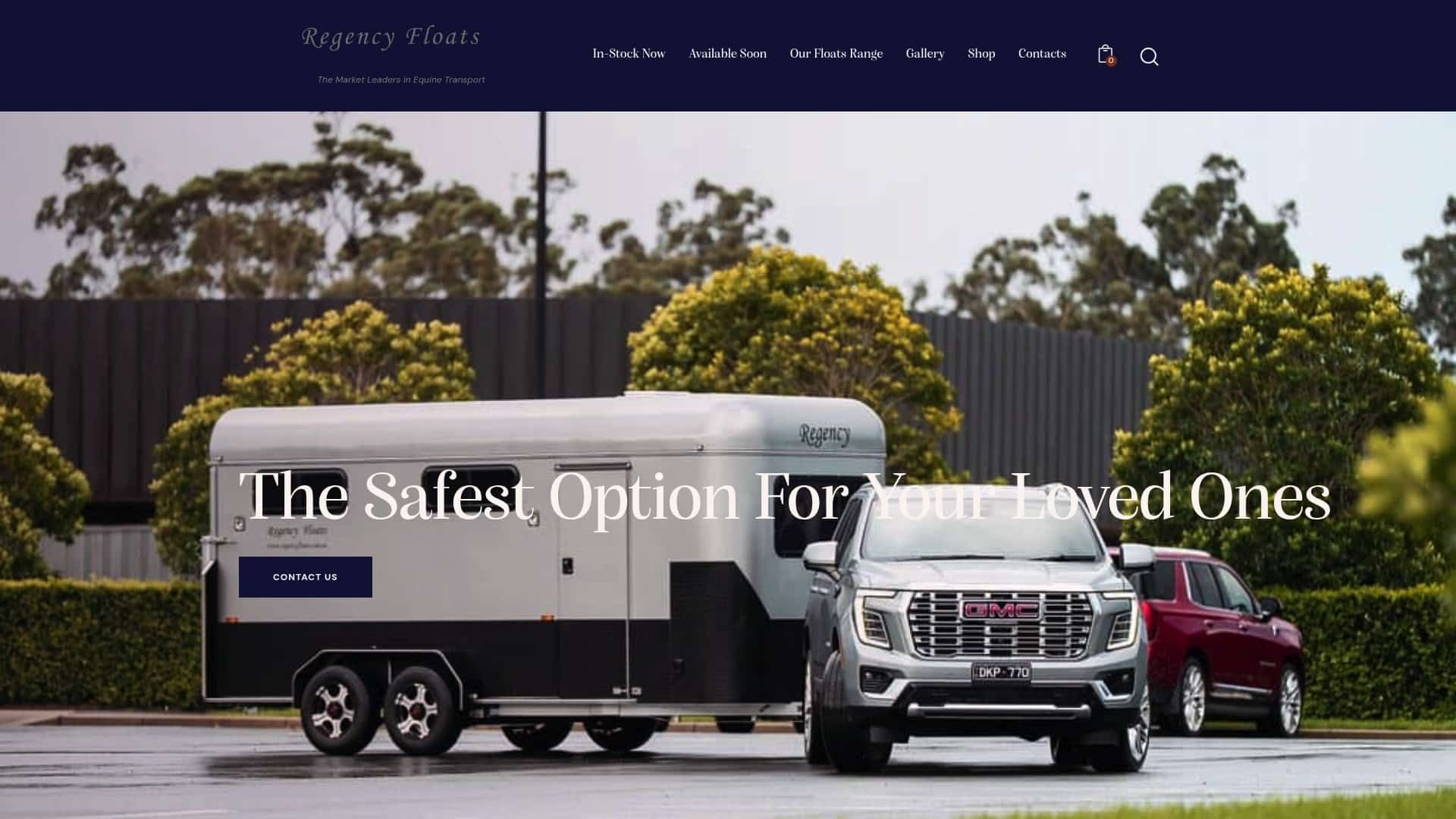
With over 40 years of manufacturing experience, Regencyfloats backs every float with a 10-year flooring warranty that covers the component most likely to generate your biggest maintenance bill. Floor plans are built to your horses, not to a catalog spec: stall width, height, divider configuration, tack storage, and finish are all specifiable at order. For U.S. buyers, export builds are available with U.S. compliance specs; contact the team early to confirm lead times and shipping options.
Ready to see what’s available? Browse the current float range or get in touch to request a custom spec sheet and quote for your horses.
Useful sources and further reading
Before you commit to any purchase, pull the spec sheet and warranty document from the manufacturer directly. These resources are the most useful starting points:
- Regencyfloats Warranty Page: The full warranty terms for Regencyfloats floats, including flooring coverage details. Read this before comparing warranty language from other brands.
- Australian Horse Float Manufacturers: 2026 Buyer’s Guide: Covers manufacturer differences, sizing guidance, and measurement tips relevant to any buyer comparing custom-built options.
- Horse Float Size Guide: Practical dimensions guide for matching stall size to your horse’s measurements.
- Best Horse Floats in Australia: Top Brands Compared: Comparative feature and after-sales support analysis across leading brands.
- Best Luxury Horse Floats: Top Picks: Useful for buyers comparing premium feature sets and understanding what separates entry-level from luxury builds.
- Rubber Flooring for Horse Floats: Detailed breakdown of flooring materials, maintenance, and why flooring choice affects long-term cost.
- Stockyard Horse Forums: Pegasus Floats Thread: Real owner experiences discussing suspension, build quality, and the importance of checking manufacturer plates on branded floats. One of the most candid sources in this comparison.
- Horse Float Sales Online: Pegasus 2026 2HSL Deluxe Listing: Current marketplace listing showing standard Pegasus feature sets, useful as a baseline for comparison.
- SiteLike: Pegasus Floats Alternatives: Aggregated list of brands buyers research when looking for alternatives, useful for confirming which names appear consistently across comparison sites.

