An extended drawbar horse float has a longer A-frame, the section of chassis between the float body and the coupling, than a standard float of the same size. Buyers usually look for one when they have a tall horse, want a roomier float, or want more space between the tow vehicle and the float. The longer drawbar changes how the float sits behind the car, how it turns and how you weigh it. This guide covers what to check before you buy and how to tow one well in Australia.
What an extended drawbar actually is
The drawbar, also called the A-frame, is the front part of the trailer chassis. The coupling body bolts to it. The Caravan Industry Towing Guide says the Australian Design Rules require it to be strong enough for the trailer’s specified ATM, proven by engineering calculation. That rule is the starting point for any float, extended or not.
An extended drawbar simply lengthens that front section. Sellers often use the phrase loosely, so two floats advertised as “extended” can differ a lot. The extra length may be:
- a longer A-frame ahead of the float body, giving more clearance at the tow vehicle end;
- a longer float body with the bays pushed further back, sometimes sold as an “extended” or “long” float;
- extra length behind the bays, such as an extended bum bar option or a bigger rear tack area.
Ask the seller to measure and state exactly which of these you are looking at, and read the length from the compliance plate and the spec sheet, not from the advert headline.
Who an extended drawbar float suits
Three kinds of owner tend to ask for the extra length.
Owners of tall or long-bodied horses. Extra bay length and height give a big horse room to stand naturally. Agriculture Victoria advises that horses should be able to stand naturally with adequate head room in transport. Thoroughbreds, warmbloods and draught crosses are the usual cases.
Owners with high-set tow vehicles. A long, tall four-wheel drive with a spare wheel on the back, a canopy or a bull bar leaves less swing room between the car and the float nose on tight turns. More distance at the coupling helps.
Owners who want storage and a roomier layout. A longer front section can allow a bigger front tack area or a feed bin, and a longer overall float can carry a third horse or a larger tack room. The configurations vary by builder, so confirm what the specific float carries before you commit.
How it tows, turns and reverses
Every horse float cuts in on corners, and that tendency is worth planning around. Horses and People notes that floats tend to cut in on corners and can sway, so the driver should use the accelerator, brakes and steering smoothly. Take wider arcs than you think you need at roundabouts, servo entrances and farm gates.
A longer drawbar changes the geometry in a few practical ways:
- Turning: the pivot point sits further from the float body, so you will feel the float track slightly differently through tight corners. Practise in an empty paddock or car park before you load a horse.
- Reversing: the same source advises having someone outside to give directions when you reverse. With a longer front section, small steering corrections show up more slowly, so go gently and use a spotter.
- Tow ball weight: the position of the weight relative to the axles matters. The Caravan Industry Towing Guide cautions that adding items to the drawbar increases the downward load and so the tow ball weight, and excessive ball weight can affect the towbar’s performance and may void its warranty. Keep gas bottles, spare tyres and feed bins in mind when you plan what rides on the front.
We cover how the pieces add up in our guide to horse float weight and safe towing.
Check the numbers before you buy
When you assess any float for sale, the compliance plate is your first stop. Weigh My Ride says buyers should read the ATM and Tare from it and work out the legal payload by subtracting Tare from ATM. The plate also lists the GTM.
Here is how to read the main terms:
| Term | What it means for you |
|---|---|
| ATM (Aggregate Trailer Mass) | The most the float may weigh fully loaded, with horses, tack, feed and water |
| Tare | The empty weight of the float |
| GTM (Gross Trailer Mass) | The weight carried on the axles with the float coupled to the tow vehicle |
| Payload | ATM minus Tare: what you can legally load |
A worked example: a float with an ATM of 3,000 kg and a Tare of 1,500 kg has a payload of 1,500 kg. Two horses of around 550 kg each use 1,100 kg of that before you add saddles, rugs, hay and water. Longer floats often have a higher Tare because of the extra steel and body, so payload is worth checking on every model rather than assuming. These figures are an illustration only, so use the numbers from the float you are buying.
Then match the float to the car. Horse SA stresses checking the manufacturer’s information so the float is not overloaded and that the ATM does not exceed the vehicle’s towing capacity. Queensland’s transport authority makes clear that the driver is legally responsible for keeping the whole combination within safe limits, including modifications to the tow vehicle such as bull bars. Our towing capacity guide walks through the calculation step by step.
Brakes, coupling and safety chains
Brake rules depend on the loaded weight. According to Horses and People, a loaded trailer between 751 and 2,000 kg needs brakes on at least one axle, and one between 2,001 and 4,500 kg needs all-wheel brakes and an automatic breakaway system. Horse SA gives a slightly different framing, saying trailers with a GTM above 750 kg must be fitted with brakes and those over 2,000 kg need electric breakaway systems. Rules are set by state and territory, so confirm the current requirement with your road authority.
Safety chains are compulsory. Horses and People reports that floats under 2,500 kg ATM need one chain and those over 2,500 kg need two. Horse SA adds that the chain’s rating must be adequate for the float’s ATM. With a longer drawbar, check that the chain length suits the coupling position and that it cannot drag on the road.
Our checklist of common legal traps and pre-departure checks is worth reading before your first trip.
Safety and comfort features the horse needs
The length of the drawbar does nothing for your horse if the inside of the float is wrong. Use these checks, drawn from official welfare guidance.
Structure and surfaces. Pony Club Australia, summarising the Australian Animal Welfare Standards and Guidelines for land transport, lists solid flooring with good grip, smooth internal surfaces with no sharp edges, secure partitions and padding, and doors and latches that close properly. The structure should be sound and free of corrosion or damage. Flooring is where many buyers look first, and for good reason: it takes the weight and the wear on every trip.
Partitions. Agriculture Victoria says adjustable partitions at least 600 mm high and placed at least 600 mm off the floor should always be used when carrying more than one horse. A rigid roof is desirable.
Ventilation. Pony Club Australia points out that poor airflow lets heat, humidity and dust build up, raising the risk of dehydration, heat stress and respiratory irritation. Windows, roof vents and openings should work and be adjusted to the weather and the number of horses. A longer float has more internal volume to ventilate, so look at how many vents and openings it has and whether you can adjust them from outside.
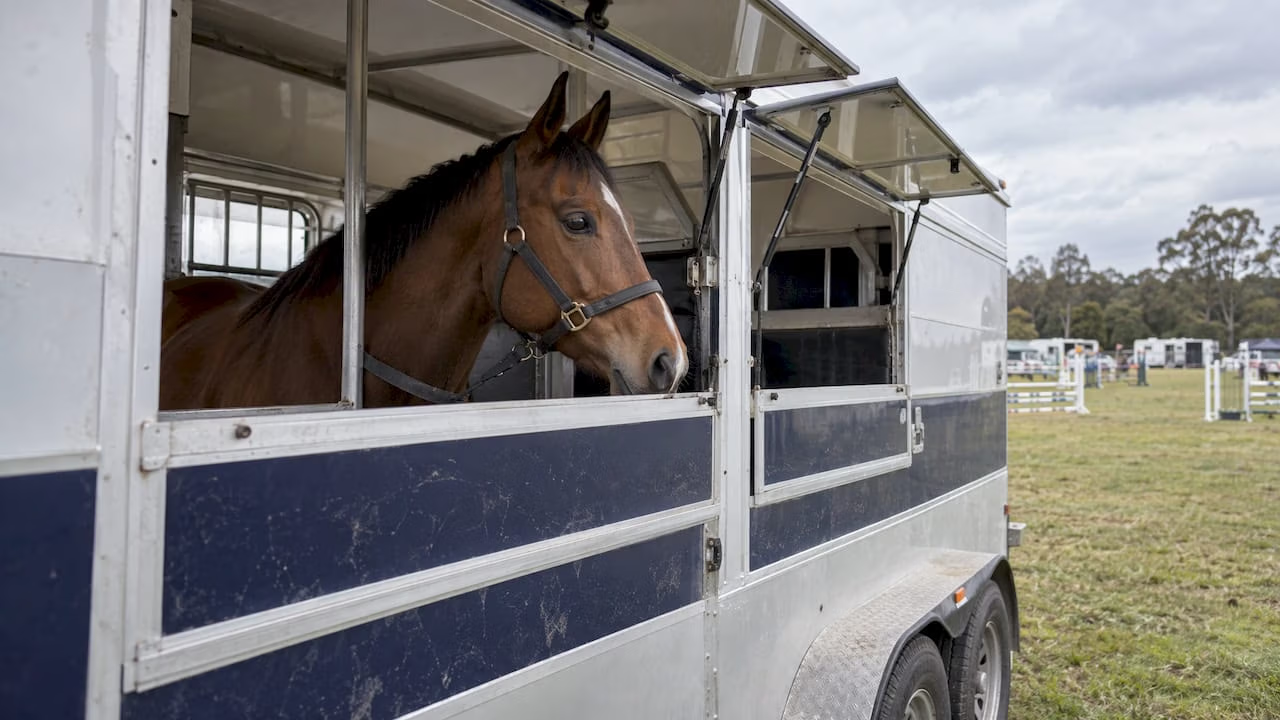
Head room and emergency access. A horse needs space to lower its head, so check the height of the head divider area and the clearance in the front of the bay. A head divider should also be easy to remove if a horse gets into difficulty. Practise removing it before you need to.
For layout choices, see our horse float interior design guide.
Which layout fits which horse
The research on extended drawbar floats is thin on exact configurations, so use this as a practical framework and confirm the details with the builder.
| Your situation | What to look for |
|---|---|
| One tall horse, occasional trips | A two horse float with extra bay height and length, and a head divider you can remove quickly |
| Two large horses | Wide enough bays for both to stand naturally, with a payload that covers two horses plus tack and feed |
| Competition travel with tack and feed | A float with a generous front tack area, and a payload you have calculated with a full load |
| Long trips or overnight stays | A camper style layout, with careful ball weight and ATM checks |
| Mixed horses and ponies | Adjustable partitions so you can change bay widths |
We build floats in several layouts, including straight load, gooseneck, Thoroughbred series, deluxe and camper ranges. They are customisable, so tell us your horse’s height and what you need to carry. We will point you to the layout that fits.
Loading and travelling day
A good float is only as safe as the way you use it. Agriculture Victoria advises:
- fit protective equipment correctly before loading;
- keep the transport area clean and dry;
- make sure the vehicle is not polluting the air inside the transport area;
- on long trips, check the horse after 30 minutes and then every 4 hours.
A quick pre-departure routine for an extended drawbar float:
- Check the coupling is latched and the safety chain is crossed and attached.
- Test the lights, brakes and the breakaway cable.
- Check tyre pressures on the car and float.
- Set the vents for the weather and the number of horses.
- Load the horse, secure the partitions and check the doors and latches.
- Drive smoothly, with wide turns and long braking distances, and stop to check the horse as above.
Our safe loading and towing practices section covers this in more detail.
Choosing your float with us
Regency Floats has built horse floats for over 40 years. Our floats are designed with safety technology, European luxury design and a state-of-the-art flooring system backed by a ten-year warranty. You can choose colours and fittings to suit you.
If you have a large horse or want extra room, talk to us about floor plans before you pick a model. Browse our full float range or look at the 2 horse float range. Prices are not listed online, so contact us for a quote on the float that fits your horse and tow vehicle.
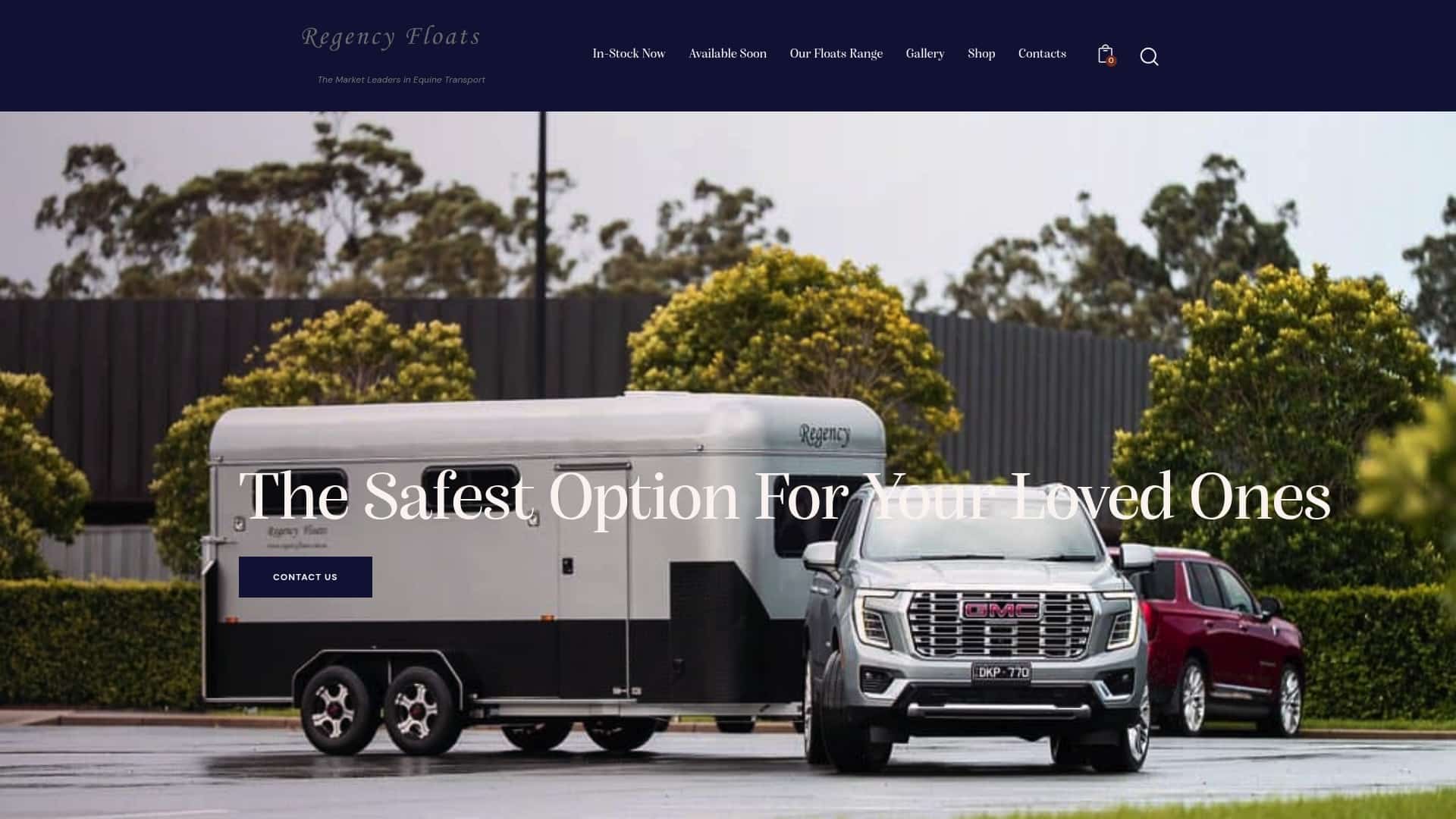
We also sell new and pre-owned floats and accessories and parts. Check the current in-stock specials with delivery across Australia.
Frequently asked questions
Is an extended drawbar float harder to tow?
It tows like any horse float, with its own feel on corners and in reverse. Floats tend to cut in on corners, so take wide, smooth turns and use a spotter when you reverse. Practise empty before your first trip with a horse on board.
Can I fit a longer drawbar to my existing float?
The drawbar must be strong enough for the float’s ATM and proven by engineering calculation under the Australian Design Rules. Changing the chassis changes weights and compliance, so do not alter it yourself. Speak to the builder and your state road authority first.
What should I check on the compliance plate?
Read the ATM, GTM and Tare, then subtract Tare from ATM to find the payload. Compare the ATM with your vehicle’s towing capacity and the towbar and coupling ratings. Our horse float weight guide shows the sums.
Do I need a second safety chain?
According to Horses and People, floats over 2,500 kg ATM need two safety chains, while lighter floats need one. The chain must be rated for the float’s ATM. Confirm the rule with your state road authority before you tow.
How often should I check my horse on a long trip?
Agriculture Victoria advises checking after 30 minutes, then every 4 hours on long-distance transport. Stop in a safe place to do it. Offer water and watch for signs of heat stress or distress.